




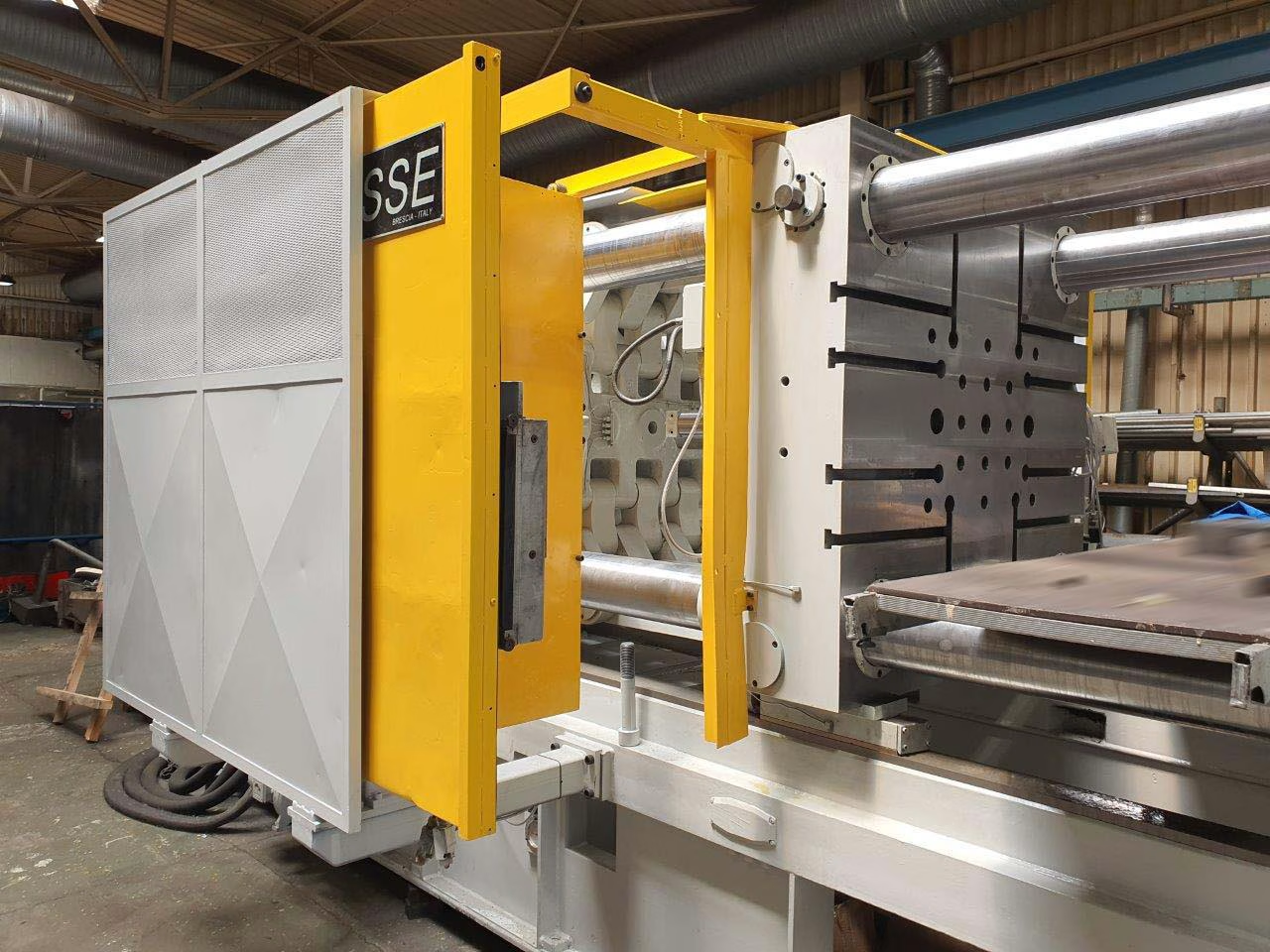
Partially Overhauled Italpresse IP 750 SC Cold-Chamber Die Casting Machine
The Italpresse IP 750 SC, built in 2002, underwent an extensive partial overhaul and maintenance project in which key machine areas were technically inspected and reconditioned. The equipment includes an Italpresse VS-2 ALL metal dosing unit for aluminium die casting.
Which Italpresse die casting machine was partially overhauled?
The work was carried out on an Italpresse IP 750 SC cold-chamber die casting machine built in 2002.
The documented work included the clamping unit, toggle system, crosshead, hydraulic ejector, machine bed, cylinders and seals, injection system, hydraulics, wiring, control system, interfaces and safety equipment.
Cleaning, dismantling and technical visual inspection
Before the actual repair work began, the machine was cleaned, dismantled and subjected to a visual inspection.
Mechanical components were then inspected and measured to assess the condition of the relevant machine areas.
Prepare the machine for inspection
Contamination is removed so that mechanical areas and wear points can be reliably assessed.
Make assemblies accessible
Relevant components are carefully dismantled so that inspections and repair work can be carried out.
Assess the mechanical condition
Mechanical parts are inspected and measured to determine wear and the necessary repair measures.
New guide columns and reworked clamping platens
One focus of the partial overhaul was the mechanical guidance and die mounting surfaces of the clamping unit.
Four new guide columns
- 4 new guide columns
- 4 new front column nuts
- Inspection of mounting holes
- Reworking where required
Machining of the die mounting surface
- Fixed clamping platen surface-ground
- Column mounting holes inspected
- Geometry checked
- Mounting areas reworked where required
Guides and T-slots reworked
- Clamping platen face-milled
- T-slots reworked where required
- Guide bushings inspected or replaced
- Slide shoe surfaces inspected
Pins, bushings and guides systematically inspected
The toggle system was comprehensively inspected. Defective guide pins and guide bushings were reworked or replaced.
- Complete toggle system inspected
- Defective guide pins reworked
- Defective guide bushings reworked or replaced
- Crosshead bores inspected
- Clamping cylinder mounting inspected
- Guide components checked
- Central lubrication system inspected
- Motorised lubrication functionally tested
From condition assessment to final acceptance
Inspection
Clean, dismantle and measure the machine and record its technical condition.
Mechanical rework
Rework platens, bores, guides and other relevant machine areas.
Component replacement
Replace worn guide components, seals and other stressed components.
Assembly
Professionally assemble the reworked assemblies and reintegrate them into the machine.
Final inspection
Carry out a trial run with functional testing followed by final customer acceptance.
Guide system, column nuts and clamping cylinder reworked
On the crosshead, guide bores, guide pins, guide bushings and components of the central mould height adjustment were inspected.
Inspect and rework bores
The bores for guide bushings were inspected and mechanically reworked where required.
Replace pins and bushings
Defective guide pins and guide bushings were replaced and reinstalled.
Inspect column nuts
The column nuts of the central mould height adjustment were inspected and replaced where required.
Inspect cylinder and piston
The clamping cylinder and piston were inspected and, where required, overhauled and fitted with new seals.
Guide components replaced and hydraulic system resealed
Replace pins and bushings
Defective guide pins and guide bushings of the hydraulic ejector were replaced.
Reseal the hydraulic ejector
The ejector system was fitted with new seals to restore its hydraulic function.
Tank, guide surfaces and hydraulic connections inspected
- Hydraulic tank cleaned
- Guide rail mounting surfaces inspected
- Mounting surfaces reworked where required
- Hydraulic pump inspected for wear
- Pump drive checked
- Hydraulic line connections inspected
- System checked for leaks
- Lines inspected for cracks
Clamping, ejector and injection systems technically reworked
Several hydraulic cylinders and the intensifier were dismantled, measured and resealed.
Inspect cylinders individually
Clamping, ejector and injection cylinders as well as the intensifier were dismantled and measured.
Replace seals and guide bands
Seals and guide bands were replaced according to the documented maintenance scope.
Reseal hydraulic components
Cylinders and the intensifier were professionally resealed after inspection.
Injection unit, intensifier and pressure accumulator inspected
The injection system was also part of the documented maintenance scope.
Dismantling and inspection
The complete injection unit was dismantled and inspected for its technical condition.
Rework the piston rod
The intensifier and piston rod were ground and hard chrome plated.
New components with test certificate
A new piston accumulator and pressure vessel were accepted with a test certificate.
Wiring, machine control system and interfaces checked
Wiring
Connection cables between the machine and control cabinet were inspected and replaced where required.
Control system
The existing machine control system and monitor were inspected.
Monitor
A new GEFRAN monitor with software was part of the planned control-system scope.
Interfaces
Interfaces to the metal dosing unit, dosing furnace, spraying machine and robot were inspected.
Safety
The motorised safety door as well as front and rear protective covers were inspected.
Preparing peripherals for an automated die casting cell
On a used die casting machine, functional interfaces to peripheral equipment are essential for subsequent integration into a die casting cell.
Metal dosing unit
Inspect the interface to the Italpresse VS-2 ALL metal dosing unit.
Dosing furnace
Check the connection and signal exchange with the dosing furnace.
Spraying machine
Inspect the interface for automated die spraying.
Robot
Check the robot interface for automated extraction processes.
Machine and protective areas repainted
RAL 7035 Grey
The machine components were prepared for painting and subsequently painted in RAL 7035 grey.
RAL 1004 Yellow
Safety doors and protective covers were painted in RAL 1004 yellow.
Functional testing before final customer acceptance
After completion of the documented work, the machine underwent a trial run with functional testing. Final acceptance by the customer then took place.
Check machine functions
The main machine movements and systems are functionally checked during operation.
Complete customer acceptance
Following successful functional testing, final documented acceptance by the customer took place.
Protect bare machine surfaces against corrosion
Before shipping, bare components were treated with corrosion protection to protect the machined surfaces during storage and transport.
Why can a partially overhauled die casting machine be economical?
If the basic machine, clamping-force range and equipment concept suit the planned production requirements, a targeted partial overhaul can provide an economical alternative to purchasing a completely new machine.
Investment
Existing machine technology can remain in use and be modernised in a targeted manner.
Wear
Critical assemblies can be specifically inspected, reworked or replaced.
Availability
Depending on the project, an existing machine can potentially be returned to production more quickly.
Sustainability
Continued use of industrial machine technology extends the life cycle of existing resources.
Overhaul of used cold-chamber die casting machines
FISS supports the technical assessment, inspection, partial overhaul and complete overhaul of used die casting machines.
- Long-standing experience with die casting machines
- Technical machine assessment
- Partial overhaul of individual assemblies
- Complete overhaul of entire machines
- Reconditioning of the clamping unit
- Repair of hydraulic components
- Machining of clamping platens and guides
- Inspection of electrical systems and controls
- Trial run and functional testing
- Support with dismantling and transport
Further solutions for used die casting machines
Buy cold-chamber die casting machines
Used die casting machines from various manufacturers for aluminium and magnesium applications.
Machine overhaulProfessionally overhaul die casting machines
Inspection, partial overhaul and complete overhaul of mechanical, hydraulic and electrical machine systems.
DismantlingProfessionally dismantle machines
Structured dismantling, documentation and preparation for transport or site relocation.
Questions about the Italpresse IP 750 SC
Which machine was partially overhauled?
Which additional equipment is included with the machine?
Were new guide columns installed?
Were the clamping platens machined?
Was the toggle system overhauled?
Was the central lubrication system inspected?
What work was carried out on the hydraulic ejector?
What work was carried out on the injection system?
Were the control system and interfaces inspected?
Was the machine finally tested?
Are you planning a partial or complete overhaul of a used die casting machine?
Send FISS the manufacturer, model, year of manufacture, clamping force, machine location, known wear areas, maintenance history, technical documentation and available photos. Our team can support you with condition assessment, partial overhaul, complete overhaul, dismantling and subsequent recommissioning.
Telephone: +49 (0)7181 60696-0 · Email: info@fiss-machines.com


