
Skip to main content Skip to search Skip to main navigation
Experience from countless projects
Let's get started together
We are different. We are better!
Fast and direct contact
Offer
Go to homepage

Filter products

Metal Loaders

Used Metal Loaders for Cold Chamber Die Casting Machines
Metal. Dose. Cycle.

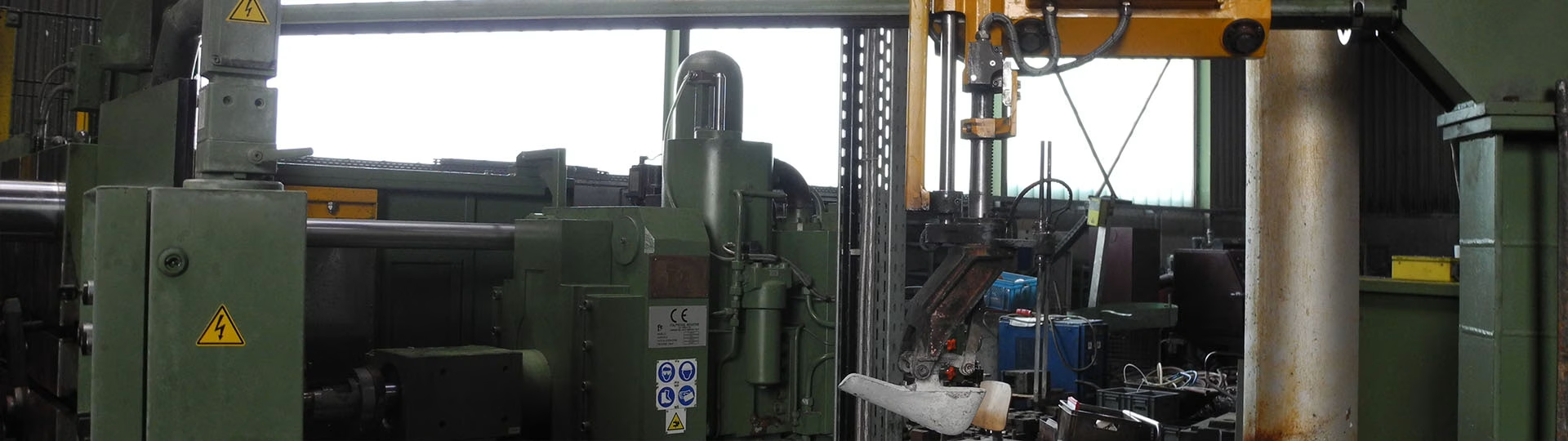
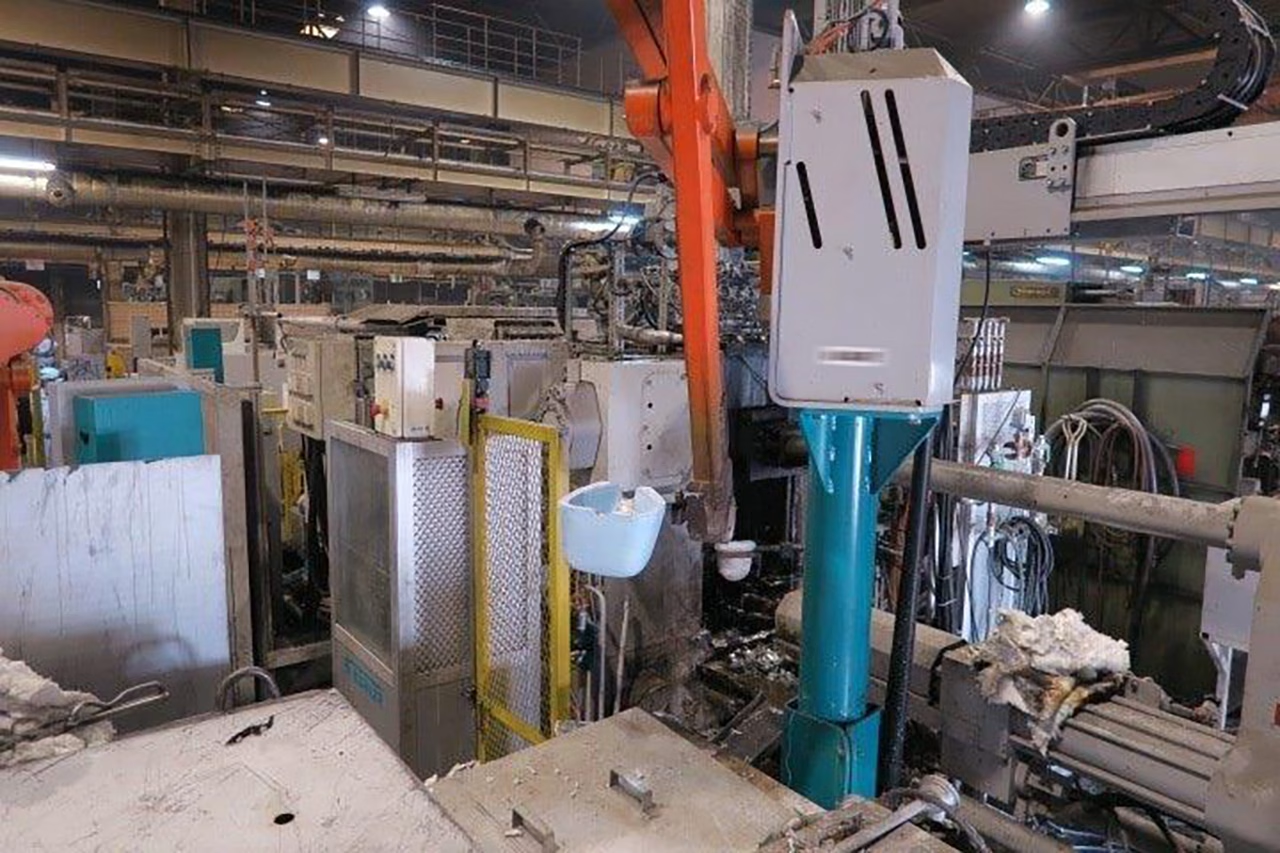
Metal loaders transfer a defined quantity of molten metal from a holding or dosing furnace to the shot sleeve of a cold chamber die casting machine. The objective is a repeatable metal quantity, a controlled transfer path and reliable coordination with the machine cycle.

The path of the molten metal to the shot sleeve

Several coordinated movements take place between collecting and transferring the metal. A short, repeatable route supports a stable process and reduces unnecessary waiting periods within the die casting cell.

Station 01 Furnace position The unit travels or rotates into the defined collection position at the holding or dosing furnace.
Station 02 Collect the metal The ladle enters the molten metal in a controlled movement and collects the required quantity.
Station 03 Transfer The molten metal is moved to the machine using a motion profile adapted to the application and cell layout.
Station 04 Pouring The ladle is positioned above the shot sleeve and transfers the molten metal in a controlled manner.
Station 05 Return movement After receiving clearance, the unit returns to the furnace and prepares for the next dosing cycle.
The illustration shows a typical sequence. The actual movement path depends on the design, furnace position, machine layout and dosing concept.

Linear or rotary?

Metal loaders differ in their type of movement. The suitable design depends on the positions of the furnace and shot sleeve, the available working space and the required movement profile.

Straight-line movement
Linear

Linear metal loaders move the ladle along a guided travel path between the furnace and shot sleeve. They can be particularly suitable when the collection and transfer positions are located directly opposite one another.

Layout Connect the furnace and machine along a defined travel path.
Guidance Check the rails, carriage, drive system and end positions.
Installation Consider the travel path, cable routing and safety enclosure.
Rotating movement
Rotary

Rotary metal loaders guide the ladle between the collection and pouring positions using a rotating movement. This can create a compact, curved working area.

Layout Connect the furnace and shot sleeve through a defined rotating range.
Mechanics Inspect the bearings, gearbox, arm, axes and end positions.
Clearance Check the rotating area, enclosure and possible interference contours.

Which parameters define the dosing cycle?

A used metal loader should not be selected solely by manufacturer and year of manufacture. Its suitability depends on the metal quantity, movement profile, machine assignment and available interfaces.

01
Filling weight The maximum and actually required ladle capacity must match the shot weight of the die casting machine and the intended casting.
02
Clamping-force range Manufacturers frequently assign metal loaders to particular die casting machine size ranges. The specific cell layout remains the decisive factor.
03
Reach and height Collection height, shot sleeve height, horizontal distance and possible interference contours determine the required working area.
04
Movement time Collection, transfer, pouring and return movements must be integrated into the cycle of the die casting machine.
05
Ladle and alloy Ladle volume, geometry, coating and temperature resistance must be suitable for the aluminium or metal alloy being processed.
06
Control system Release signals, start signals, end positions, fault messages and safety functions must communicate with the die casting machine and cell control.

Why a repeatable metal quantity matters

The metal loader creates a defined starting condition for every shot. Variations can affect the machine sequence and overall process stability.

Consistent filling level A repeatable metal quantity supports consistent conditions inside the shot sleeve and reduces unnecessary variation between cycles.
Controlled pouring The position, tilting movement and pouring speed should be coordinated so that the metal enters the shot sleeve reliably.
Coordinated cycle The dosing cycle must not unnecessarily extend the machine sequence and must match die opening, spraying and robot movements.
Reduced operator intervention Automated dosing reduces manual handling in the hot working area and supports a consistent production sequence.

The metal loader operates in time with the complete cold chamber die casting cell

Metal loading, die spraying, die temperature control, casting extraction and machine movements must be coordinated in time. The metal loader is therefore not an isolated peripheral unit, but part of the cell control system.

Cell step 01 Close the die The machine and automation signal that they are ready for the next casting cycle.
Cell step 02 Prepare the metal The metal loader collects the defined quantity of molten metal from the furnace.
Cell step 03 Fill the shot sleeve The molten metal is transferred in a controlled manner at the designated position.
Cell step 04 Release the shot After successful dosing, the die casting machine receives the required release signal.
Cell step 05 Prepare the next cycle The unit returns while the other stations in the cell continue their operations.

Metal loading as part of die casting automation

When selecting a unit, it should be checked how the metal loader will be connected to the furnace, die casting machine and other automation components.

Cold Chamber Automation Overview of metal loading, die spraying, casting extraction and other stations within the die casting cell. View category
Dosing Furnaces Furnace height, molten-metal level and accessibility influence the collection movement. View category
Spraying Machines Metal-loading and spraying movements must be integrated safely into the cycle without interfering with one another. View category
Foundry Robots Robot extraction, metal transfer and machine release signals form one coordinated sequence. View category
Temperature Control Units A constant die temperature supports repeatable conditions for the automated casting process. View category

What to check when buying a used metal loader

In addition to manufacturer, year and design, the mechanical system, ladle equipment, control system, actual working range and included scope of supply should be checked.

Design and movement path Record whether the system is linear or rotary, including its travel path, rotating range and installation position.
Dosing quantity Check the maximum ladle weight, usable volume and suitability for the planned shot weight.
Mechanical condition Inspect guides, bearings, axes, gearboxes, drives, brakes and end positions.
Metal ladle Evaluate its condition, geometry, mounting, attachment and suitability for the alloy being used.
Control and operation Check the electrical cabinet, operator panel, programs, interfaces, sensors and safety functions.
Cable and media routing Inspect cable chains, lines, protective hoses and the available cable lengths.
Scope of supply Clarify whether the base, rails, ladle, electrical cabinet, operator panel, safety fence and documentation are included.
Dismantling and integration Plan the foundation, transport position, installation area, furnace connection and commissioning at the new site.
Inspect.
Refurbish.
Integrate.
The technical condition and adaptability to the new cell determine the actual value of a used unit.

Technical inspection and adaptation

Depending on their condition, used metal loaders can be cleaned, technically inspected, mechanically refurbished and prepared for a new die casting cell. The required scope depends on the design, operating condition and intended application.

Mechanical system Inspect or refurbish guides, bearings, gearboxes, drives and end positions.
Dosing equipment Check the ladle, ladle mounting and tilting mechanism and adapt them where necessary.
Electrical system Technically assess the electrical cabinet, sensors, cables, operating controls and interfaces.
Cell integration Recoordinate the movement path, safety area, machine communication and furnace position.

Used metal loaders from various manufacturers

FISS Machines trades used linear and rotary metal loaders for aluminium die casting systems. Depending on availability, systems from Bühler, Colosio, NTP Cibis, Tecnopresse, Gauss, Italpresse, Schmitz & Apelt, Sprötze, STP, SNAIR, Toshiba, Rimrock and other manufacturers may be considered.

Bühler Colosio NTP Cibis Tecnopresse Gauss Italpresse Schmitz & Apelt Sprötze STP SNAIR Toshiba Rimrock Linear Metal Loaders Rotary Metal Loaders

Buy used metal loaders

FISS supports the selection of a suitable metal loader and the clarification of filling weight, design, working range, machine assignment, control system and scope of supply.

Dismantling, transport and technical coordination for integration into a new cold chamber die casting cell can also be taken into account.

Sell metal loaders

FISS supports the evaluation and international marketing of individual metal loaders, complete automation components and connected die casting cells.

In addition to brokerage and international marketing, direct purchase by FISS may also be an option depending on the project.
