
Skip to main content Skip to search Skip to main navigation
Experience from countless projects
Let's get started together
We are different. We are better!
Fast and direct contact
Offer
Go to homepage

Filter products

Spraying Machines

Used Die Spraying Machines for Cold Chamber Die Casting Machines
Do not simply spray the die. Condition each zone precisely.

Die spraying machines apply release agent to the open die surfaces of a cold chamber die casting machine in a controlled manner. Depending on the process, they can also blow out residues, cool individual die zones and lubricate moving tooling areas.

The spray pattern determines distribution across the die surface

A spray tool should not flood the entire die uniformly. Different cavities, cores, slides and thermally stressed zones often require individually adapted quantities of release agent, air and cooling.

Media supply Release-agent mixture Atomising air Blow air Valve control
Zone A: Cavity
Zone B: Core area
Zone C: Slide
Schematic representation of a zone-specific spray pattern. The actual nozzle positions are adapted to the die, temperature distribution and process requirements.
Nozzles can be controlled individually or in groups. Masking tools restrict application to defined areas. Blow air can remove residual water and loose particles.

The spraying operation is integrated directly into the machine cycle

Die spraying can only begin after the die has opened and the casting has been removed. The machine must not close again until the spraying unit has left the die area and reached its confirmed safe position.

Die open
Clear the die area The casting and any runner residues are removed. The spraying machine can only enter the die area after this step has been completed.
Cleaning
Blow out residues Blow air can remove loose particles, droplets or residues from cavities and critical tooling areas.
Conditioning
Apply release agent and cooling The spray tool follows its programmed path and supplies the defined zones with release agent, air or a combined spraying pulse.
Final blowing
Reduce moisture and excess material A defined air pulse can distribute the release film and remove remaining liquid from deep tooling areas.
Release
Move the spraying unit into its parking position Once the confirmed end position has been reached, the die area is released for the next machine cycle.

Which parameters belong to a spray recipe?

The appropriate spraying programme depends on the die, alloy, component, die temperature, cycle and release agent. The settings should therefore be stored reproducibly and adapted to the individual production process.

Movement path Vertical and horizontal stroke, entry depth, positions, speeds and dwell times must match the die geometry.
Spraying time Valve opening times and the duration of individual spraying zones influence the applied quantity of release agent.
Release-agent quantity Mixing ratio, delivery pressure, nozzle cross-section and valve control determine the amount of liquid applied.
Atomising air Air pressure and nozzle design influence droplet size, spray cone and distribution across the die surface.
Blow air Air can be used before or after spraying to clean the die, distribute the release film and remove remaining moisture.
Zone control Individual nozzles or groups of nozzles should be switchable separately where required and adapted to different tooling areas.

Which types of die spraying machines may be suitable?

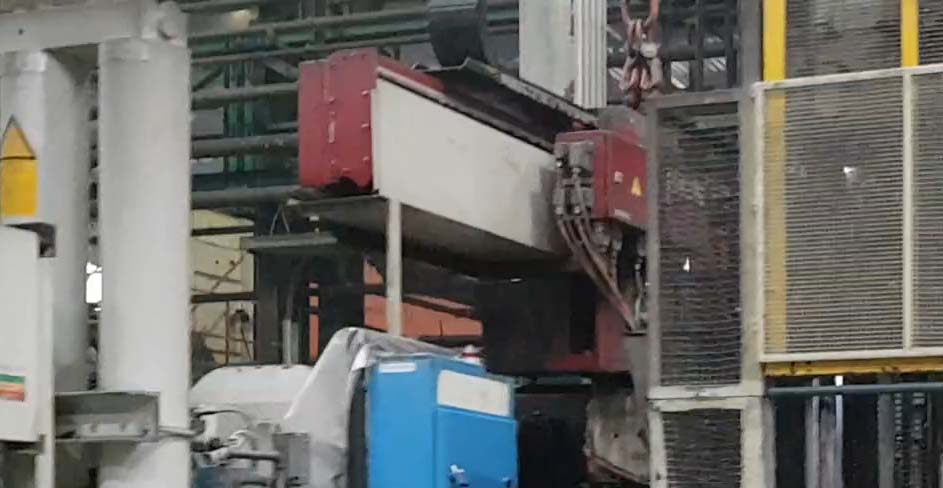
The appropriate configuration depends on die size, required freedom of movement, cycle time, spray-tool weight and the available space above or beside the die casting machine.

Simple movement Single-axis spraying units
A vertical or horizontal stroke moves the spray tool along a defined path. This configuration may be suitable for straightforward die geometries and clearly defined spraying positions.
↕↔
Flexible positioning Two-axis spraying machines
Vertical and horizontal axes allow several positions within the die area. Different cavities or tooling zones can therefore be approached more precisely.
Programmable movement path Spraying robots
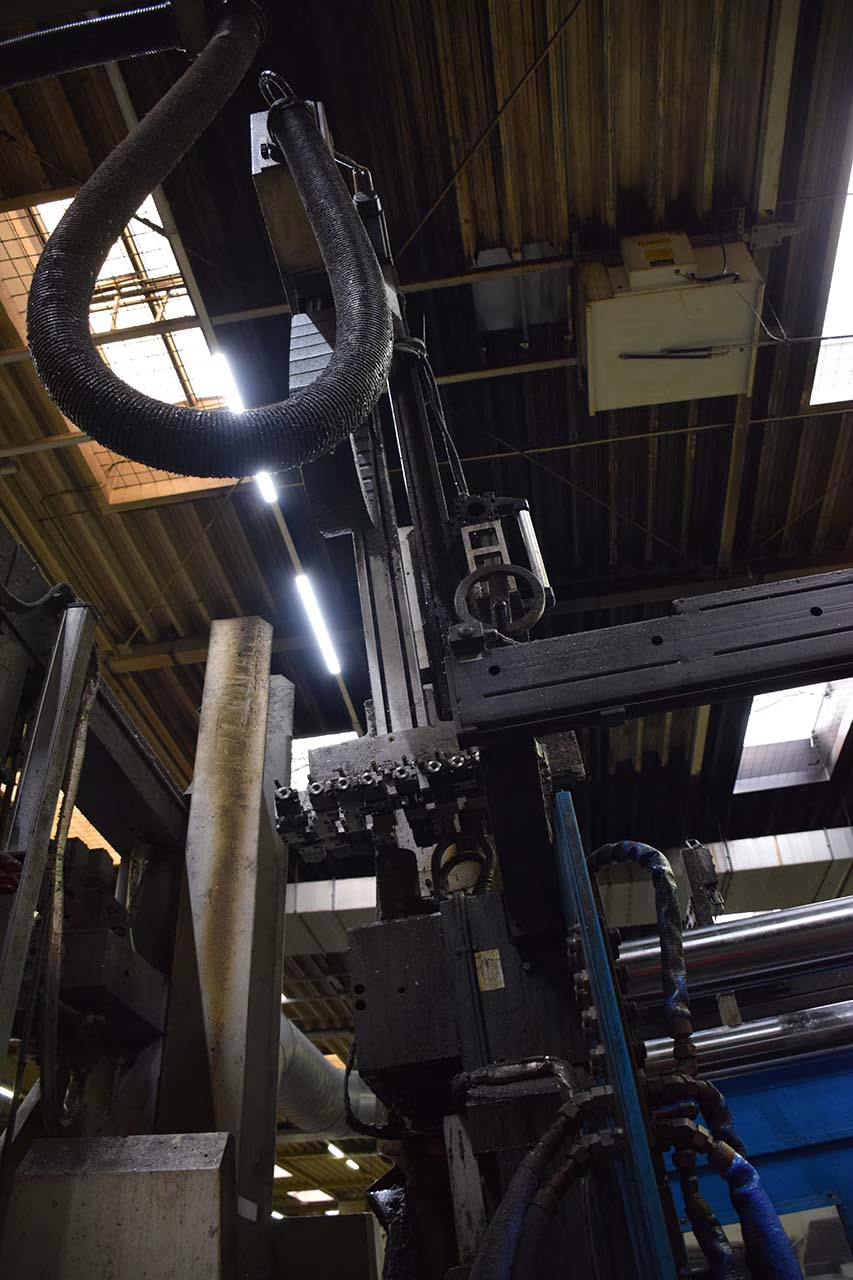
Multi-axis robots provide a high degree of movement freedom and can follow complex contours. They are particularly useful where variable spraying positions or several combined tasks are required.
P
Compact configuration Pneumatic die spraying systems
Pneumatically driven systems can be used for simple, repeatable stroke movements. Stroke, end positions, damping and compressed-air supply must match the machine cycle.

The spray tool is the interface to the die casting die

Even a technically suitable die spraying machine can only produce a repeatable result when the spray tool, nozzles, valves and media routing match the die contour.

Media connection Supply release agent, atomising air and blow air safely.
Distributor Distribute the media to the intended circuits and nozzle groups.
Valves Switch spraying and air pulses with precise timing.
Nozzles Adapt the spray cone, droplet pattern and direction to each die zone.
Masking Protect areas that do not require release-agent application.

What does a stable spraying process achieve?

Die spraying is only one part of the complete die casting process. A repeatable spray pattern nevertheless creates consistent conditions for the die surface, release film and die temperature.

Defined release film Uniform and targeted application supports casting release while reducing unnecessary accumulations of release agent.
More stable die temperature Cooling adapted to the die can help reduce strong thermal fluctuations between individual production cycles.
Cleaner cavities Controlled blow air supports the removal of loose residues, droplets and particles from areas that are difficult to access.
Lower media consumption Zone control and an adapted nozzle arrangement can help apply release agent only where it is required by the process.
Repeatable cycle Stored programmes, monitored end positions and coordinated movement times support a consistent die casting cell sequence.

The die spraying machine is part of the complete cold chamber automation system

Spraying movements, robot extraction, metal loading, die temperature control and machine release signals must operate without collisions and remain coordinated in time.

Cold Chamber Automation Overview of the connected components within an automated die casting cell. View category
Foundry Robots Robot extraction and spraying movements must share the die area safely. View category
Metal Loaders The metal-loading cycle and spraying time jointly influence the overall cycle of the die casting machine. View category
Temperature Control Units Internal die temperature control and external spray cooling should be considered as one thermal concept. View category
Die Spraying Equipment Spray tools, nozzle rails and accessories for different tooling contours and spraying applications. View accessories

What to check when buying a used die spraying machine

In addition to manufacturer and year of manufacture, the actual working range, axes, control system, media supply and included scope of supply should be checked.

Vertical and horizontal stroke Working travel, entry depth and parking position must match the die casting machine and die size.
Number and type of axes Inspect pneumatic, hydraulic or servo-electric axes as well as guides, gearboxes and drive systems.
Mechanical condition Check guides, bearings, belts, chains, carriages, dampers and end positions for wear.
Spray-tool mounting Record the permitted tool weight, mounting arrangement, media couplings and possible tool-changing options.
Control system and programmes Check the operator panel, recipe management, software version, interfaces and available backups.
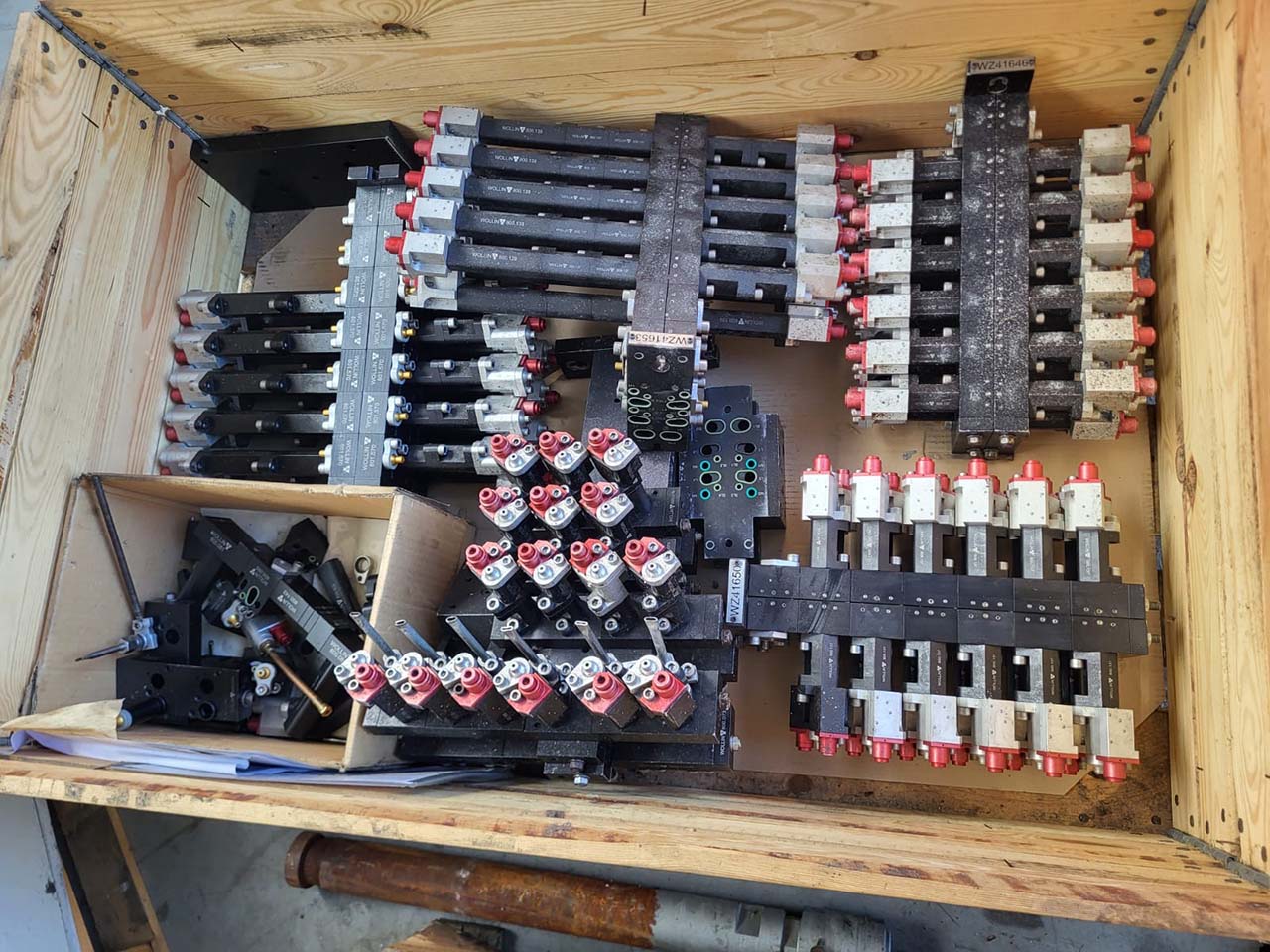
Valves and media circuits Assess release-agent, air and cooling circuits as well as valve terminals, pressure regulators and flow monitoring.
Scope of supply Clarify whether the spray tool, tank, mixing system, pumps, electrical cabinet, base, safety enclosure and documentation are included.
Integration and safety Plan machine release signals, safe end positions, collision zones, enclosure and commissioning at the new site.
Clean.
Inspect.
Reconfigure.
The condition of the mechanical system is important. For future use, however, it is equally important that the spray tool, control system and media supply can be adapted to the new die.

Refurbishment and adaptation to a new die casting cell

Depending on their condition, used die spraying machines can be cleaned, mechanically inspected, resealed and prepared for a new application. The spraying programme and often the spray tool must then be adapted to the machine, die and release agent.

Mechanical system Inspect or refurbish guides, drive systems, belts, bearings and end positions.
Media supply Clean hoses, valves, pumps, pressure regulators and connections and check them for leaks.
Spray tool Adapt nozzles, valves, distributors and masking elements to the new die contour.
Control system Configure programmes, interfaces, end positions and release signals for the new die casting cell.

Used die spraying machines from various manufacturers

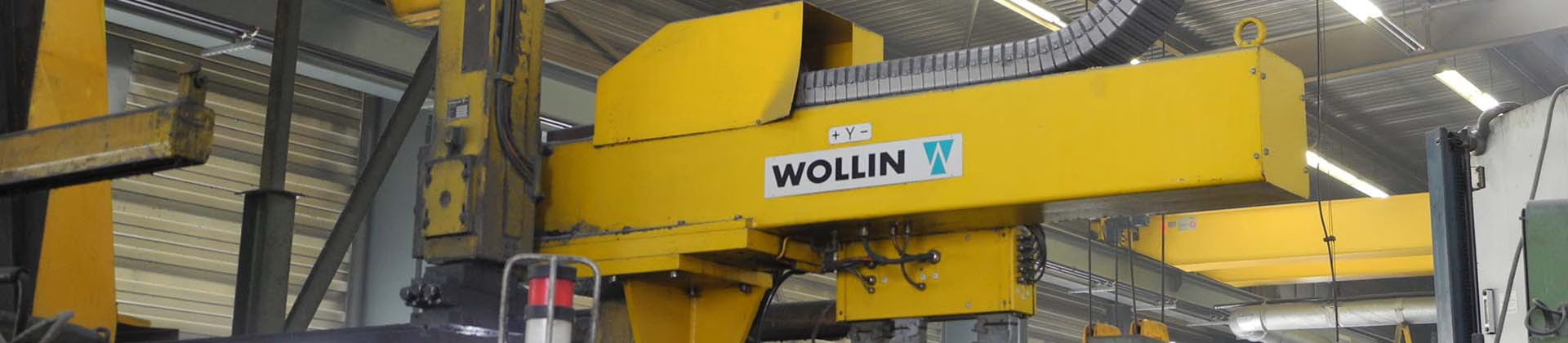
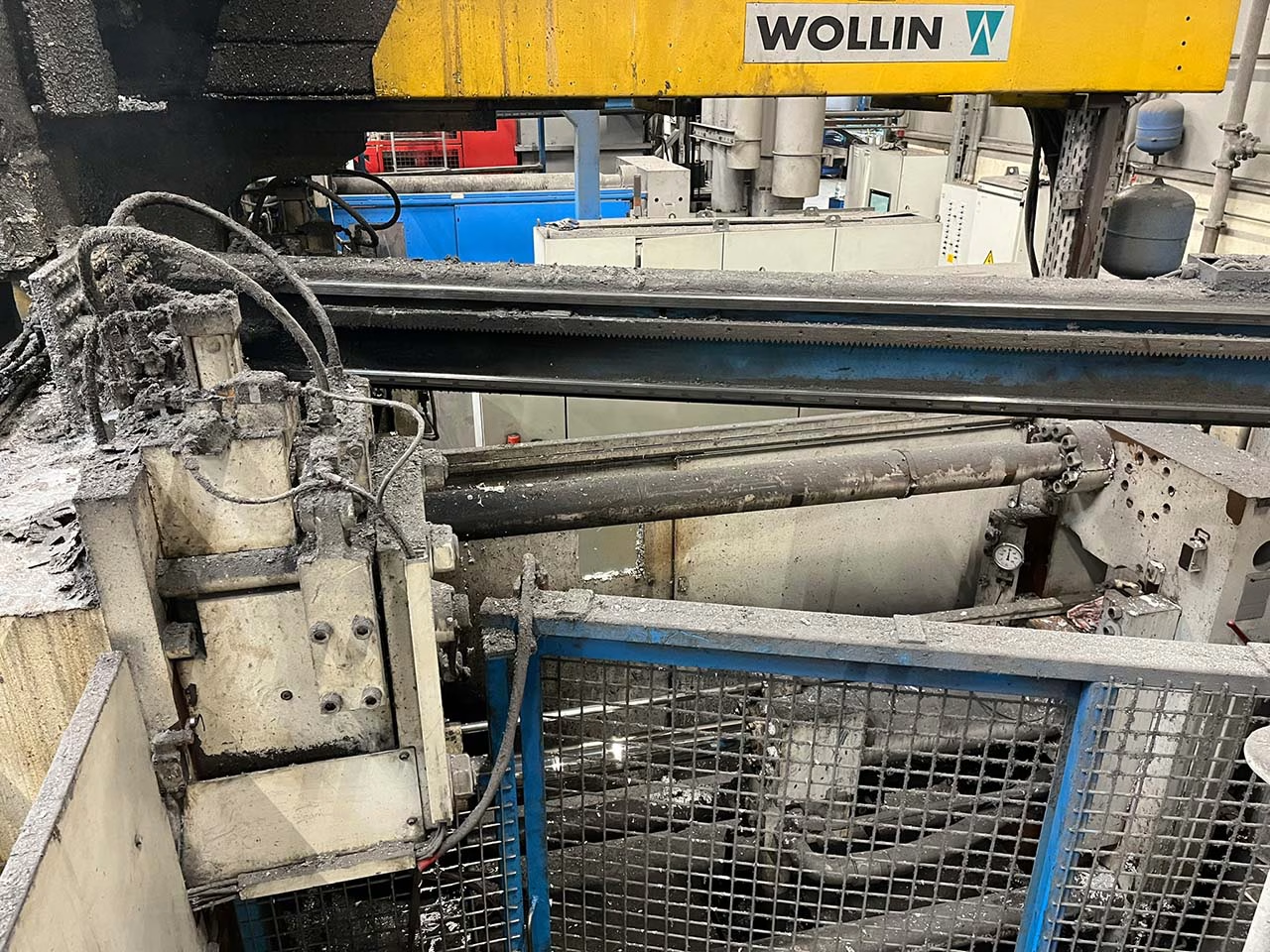
FISS Machines trades used motor-driven and pneumatic die spraying machines, spraying robots, spray tools and release-agent supply systems. Depending on availability, equipment from Wollin, Acheson, Gerlieva, Pomac, Böhmer, STP, Relbo, Maico, Rimrock and other manufacturers may be considered.

Wollin Acheson Gerlieva Pomac Böhmer STP Relbo Maico Rimrock Single-Axis Spraying Units Two-Axis Spraying Machines Spraying Robots Spray Tools

Buy used die spraying machines

FISS supports the selection of a suitable die spraying machine and the clarification of stroke, axes, spray tool, control system, media supply and scope of supply.

Dismantling, transport, technical inspection and coordination for integration into a new cold chamber die casting cell can also be taken into account.

Sell die spraying machines

FISS supports the evaluation and international marketing of individual spraying machines, complete release-agent systems, spray tools and associated automation components.

In addition to brokerage and international marketing, direct purchase by FISS may also be an option depending on the project.
