
Skip to main content Skip to search Skip to main navigation
Experience from countless projects
Let's get started together
We are different. We are better!
Fast and direct contact
Offer
Go to homepage

Filter products

Dosing Furnaces

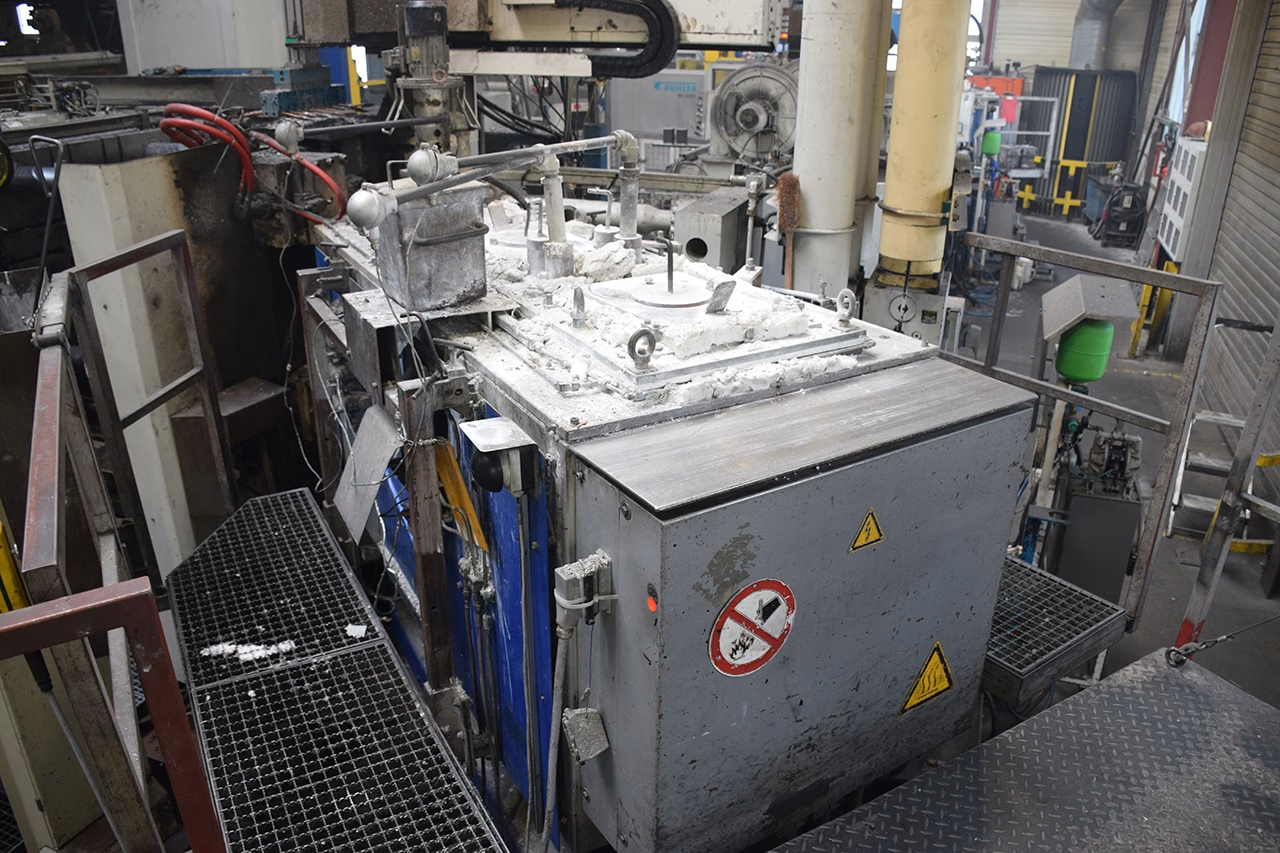
Used Dosing Furnaces Aluminium and Magnesium Casting Holding and Dosing
Keep molten metal available. Dose the required quantity reproducibly.

Dosing furnaces hold aluminium or magnesium alloys within a defined temperature range and transfer a specified quantity of molten metal to a die casting machine, gravity casting machine or another casting process. Holding, dosing movement and the machine cycle are therefore combined into one coordinated production system.

Metal Aluminium or magnesium alloys
Main duty Holding and controlled dosing of molten metal
Key value Dosing weight or delivery rate per cycle
Integration Connection to the casting machine and system control

A dosing furnace performs three connected duties

The system must keep the molten metal in a suitable condition, form the requested quantity and transfer it to the casting system within the available time window.

Temperature, metal quantity and timing form one integrated dosing process.
Hold
Keep the molten metal available at temperature Heating, insulation, bath volume and temperature control ensure that the alloy remains available for subsequent casting cycles. Long holding times and unnecessary temperature fluctuations should be avoided.
Dose
Form a defined quantity of molten metal Depending on the furnace principle, the molten metal is moved by gas pressure, a pump, a riser tube or another dosing mechanism. Parameters and mechanical components must reproduce the intended casting weight reliably.
Transfer
Guide the molten metal to the casting process The outlet, riser tube, heated launder or transfer point should provide a short and controlled metal path. Height, gradient, temperature loss and the machine interface must be checked for the specific project.

Two fundamental application areas

Aluminium and magnesium dosing furnaces may appear similar from the outside, but they differ considerably in metal handling, protective systems, dosing equipment and operation.

Application 01
Aluminium

Aluminium dosing furnaces are frequently designed as gas-tight, electrically heated holding and dosing systems. Pressurisation raises the metal level inside the riser tube and guides the specified quantity of molten metal to the casting machine.

Dosing principle Frequently a pneumatic gas-pressure displacement principle.
Metal path Riser tube, outlet and short heated or insulated pouring launder.
Process objective A defined metal quantity at a stable temperature.
Application 02
Magnesium

Magnesium holding and dosing furnaces use metal vessels, dosing equipment and protective systems designed specifically for the alloy. Depending on the design, the metal may be conveyed by a pump submerged in the molten bath.

Dosing principle Pump-based or pressure-assisted delivery depending on the design.
Metal handling Temperature-resistant pumps, pipes and transfer components.
Process environment Cover gas, safe media routing and suitable peripheral equipment.

Dosing aluminium through pressure and a riser tube

With the pneumatic dosing principle, the closed furnace chamber is pressurised in a controlled manner. This raises the molten metal through the riser tube and transfers it along the defined metal path to the casting system.

Furnace chamber
Maintain a gas-tight condition Covers, seals, closures, maintenance openings and the pressure system must provide the operating condition required for dosing.
Pressure build-up
Raise the metal level in a controlled manner Pressure level, pressure increase and dosing time influence the delivered metal quantity. Valves, pressure control and process parameters must operate reproducibly.
Riser tube
Guide molten metal out of the bath The condition, cross-section, immersion depth, mounting, temperature and deposits within the riser tube influence metal flow and dosing repeatability.
Pouring launder
Create a short and defined transfer path The length, gradient, heating, insulation and alignment of the launder determine heat loss, flow behaviour and the transfer position at the casting machine.

Dosing equipment for magnesium

Depending on their design, magnesium dosing systems can use different pump principles. Delivery rate and dosing weight are not the only decisive factors. Resistance to temperature changes, contamination behaviour, the protective system and maintenance access must also be considered.

Gas pressure
Pneumatic delivery of molten metal A defined gas pressure moves the molten metal through the dosing system. Tightness, pressure control, valves and cover gas must be matched to the specific furnace design.
Screw
Move the metal using a rotating conveying element Screw geometry, rotational speed, bearings, material and contamination condition influence delivery volume and repeatability.
Piston
Form the dosing quantity through a defined stroke Piston travel, sealing surfaces, drive system, non-return function and control parameters must match the required dosing quantity and cycle time.
Centrifugal
Generate continuous or cycled delivery Pump speed, impeller condition, immersion depth and metal cleanliness influence the delivery flow and the stability of the dosing sequence.
Contamination and deposits can significantly impair the function of dosing equipment. The condition of all metal-contacting components should therefore be inspected comprehensively before purchase.

The dosing weight must remain within a stable process window

The target value alone is not sufficient. Repeatability results from the interaction between metal temperature, bath level, pressure curve or pump movement, dosing time and the condition of the metal path.

Too little
The requested metal quantity is not achieved Possible causes include a different bath level, pressure loss, a contaminated riser tube, pump wear, unsuitable parameters or an excessively short dosing pulse.
Casting weight below target
Target range
Dosing quantity and transfer time match the casting process The furnace supplies the intended metal quantity within the available machine window and reports completion of the dosing cycle to the casting system.
Dosing process released
Too much
The delivered metal quantity exceeds the target value Pressure increase, pump stroke, dosing time, parameter settings and the actual bath level should be checked together.
Casting weight above target

Which technical data determine suitability?

The manufacturer, model and year of manufacture provide initial guidance. For a reliable technical assignment of a used dosing furnace, however, the metal, capacity, dosing equipment, performance, interfaces and actual scope of supply are decisive.

Alloy
Aluminium or magnesium The metal vessel, refractory lining, pumps, pipes, seals, protective systems and temperature range must be suitable for the intended alloy.
Bath volume
Total and working capacity Total capacity, usable bath volume, minimum fill level and the refilling concept should be documented separately and compared with production demand.
Dosing range
Minimum and maximum dosing weight The required casting weight must remain within the technically controllable range. Dosing accuracy and repeatability must also be considered.
Speed
Delivery rate and dosing time The dosing quantity, metal path and available machine time determine the required delivery rate and the permissible pressure or pump cycle.
Temperature
Operating range and control system The target temperature, measuring points, heating zones, control accuracy and safety temperature limitation must match the alloy and casting process.
Heating
Electrical connected load and heating capacity Document the heating elements, zone arrangement, contactors, power modules, operating voltage and available electrical capacity at the new location.
Metal path
Riser tube, pump, outlet and pouring launder The dimensions, materials, heating, insulation, position and condition of all metal-conveying components influence the actual usability of the furnace.
Installation
Dimensions and transfer height Footprint, working height, maintenance access, filling position, metal transfer point and collision areas must be compatible with the existing system layout.
Control system
PLC, operation and machine interface Programmes, recipe management, dosing release, target values, feedback signals, faults, remote access and the safety circuit must be coordinated with the new production system.

The PLC connects the dosing parameters with the machine cycle

Modern dosing furnaces can store different parameter sets for different dies or casting weights. This requires clearly defined communication between the furnace, casting machine and, where applicable, the higher-level production control system.

The dosing cycle can start safely only when the furnace and machine share the same operating status.
Dosing request The casting machine requests the metal quantity required for the next cycle and may also transmit recipe or die data.
Furnace ready The temperature, bath level, pressure system or pump and all required safety conditions are within their released operating states.
Dosing parameters active The target weight, pressure curve, pump stroke, speed, dosing time and other process values are loaded from the selected recipe.
Metal transfer completed The furnace reports completion of the dosing operation and releases the subsequent machine sequence.
Fault and diagnostics Temperature deviations, pressure faults, pump faults, low fill levels or unconfirmed end positions must be reported and documented clearly.
Operating data Depending on the control system, dosing values, counters, temperature profiles and fault data may be provided for process analysis or remote diagnostics.

Metal condition and dosing accuracy belong together

Even technically functional dosing equipment can operate consistently only when the temperature, bath level, metal cleanliness and condition of the metal-conveying components remain controlled.

Keep the temperature as constant as possible The viscosity and flow behaviour of molten metal change with temperature. The measuring points, heating capacity and control system must therefore match the actual bath volume and metal withdrawal.
Consider the bath level Refilling and metal withdrawal change the operating condition of the furnace. Fill-level measurement and the control strategy should support the most stable dosing conditions possible.
Limit deposits and contamination Residues inside the riser tube, on pump components or at the outlet change the cross-section and delivery behaviour. Cleaning access and maintenance intervals are therefore important selection criteria.
Keep the metal path short and controlled Long or insufficiently heated transfer paths increase heat loss and can influence the dosing sequence. The furnace and casting machine should therefore be arranged sensibly in relation to one another.

Used dosing furnaces from various manufacturers

The available equipment may include aluminium dosing furnaces, magnesium holding and dosing systems and associated cover-gas, preheating and control equipment. The data in the individual machine listing are authoritative.

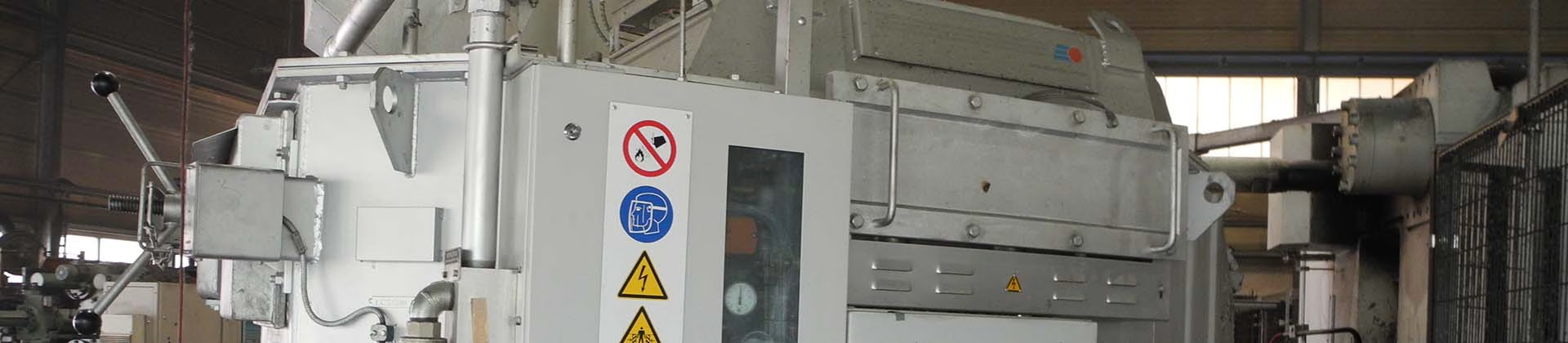
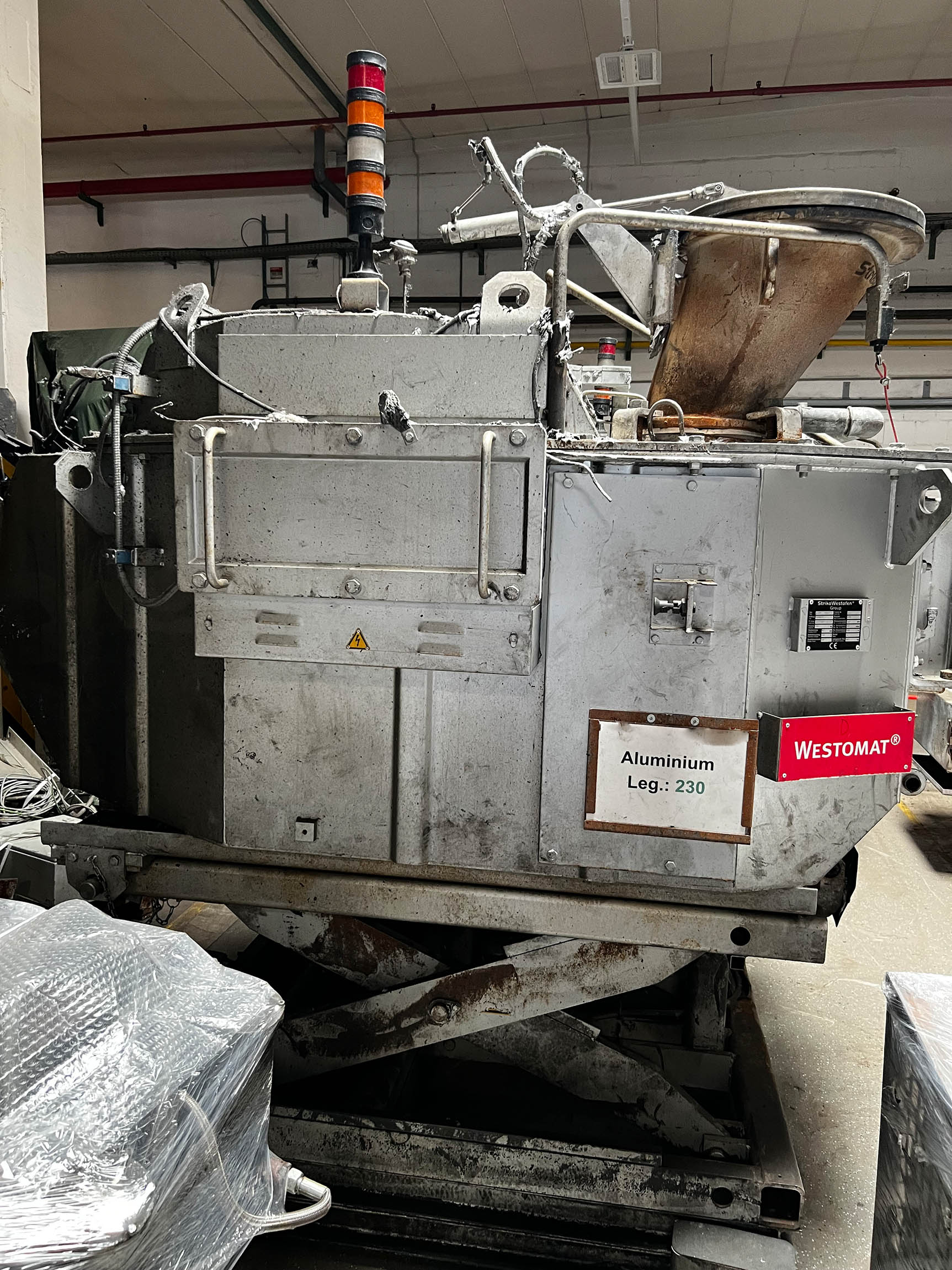
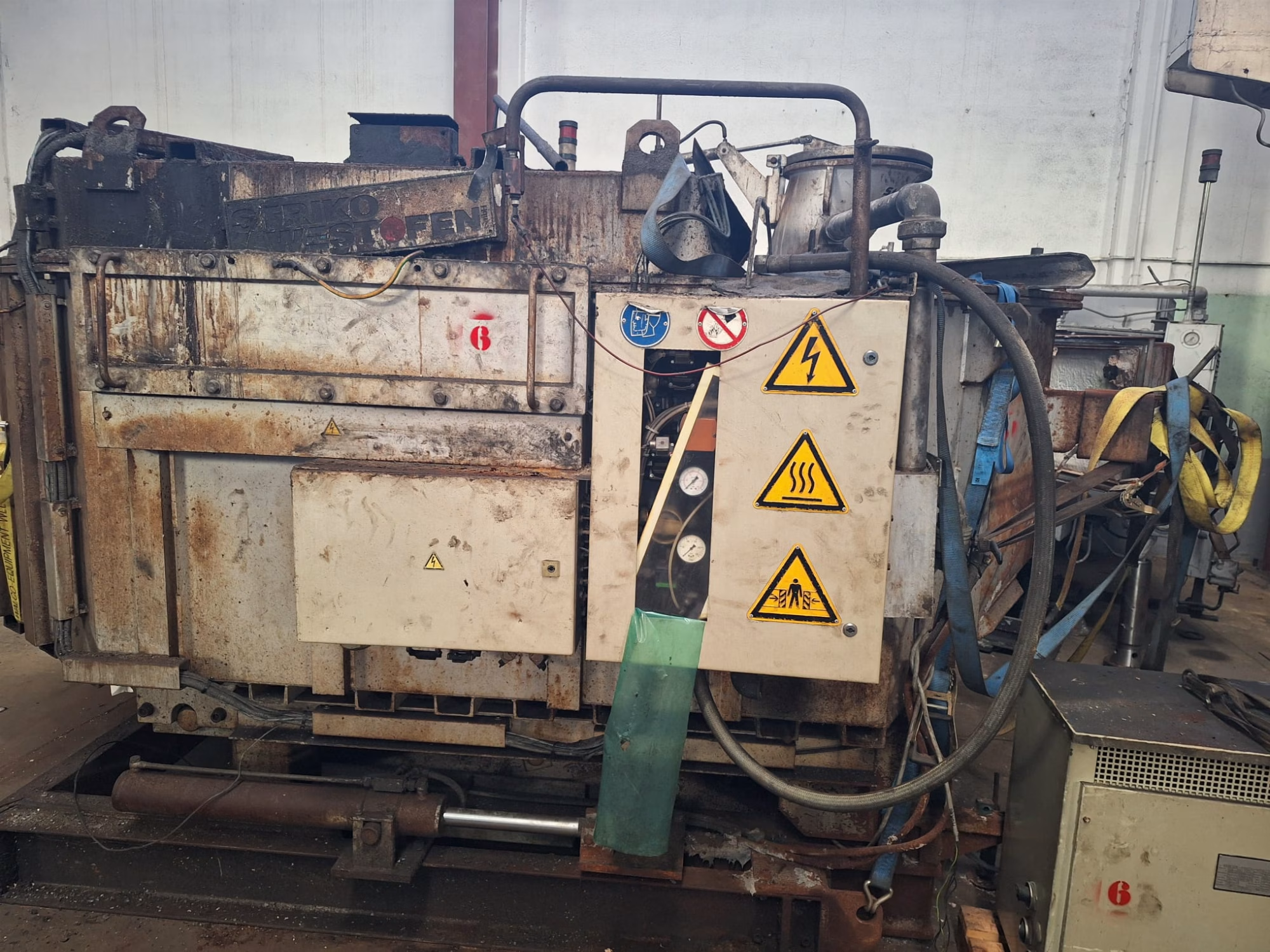
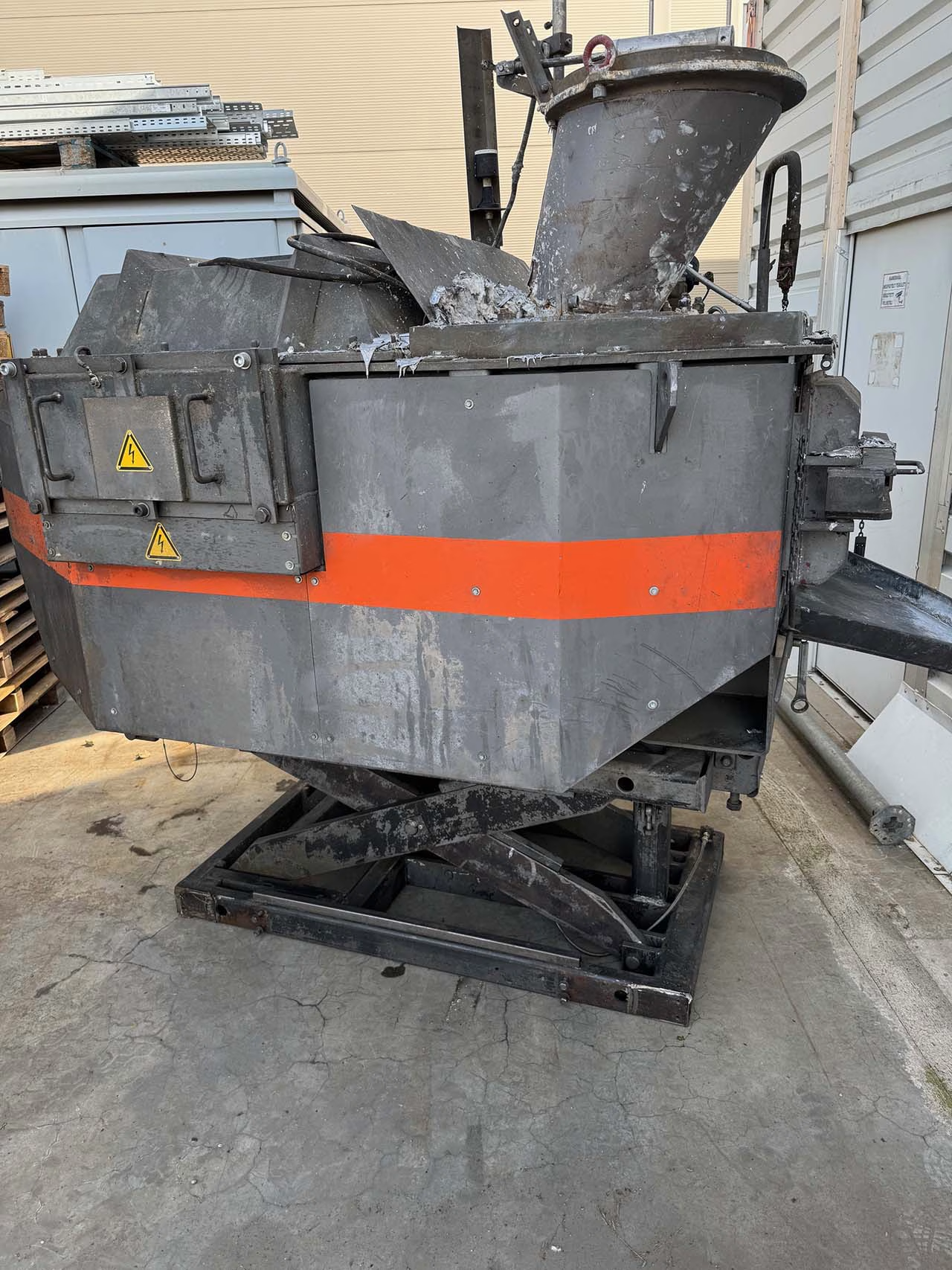
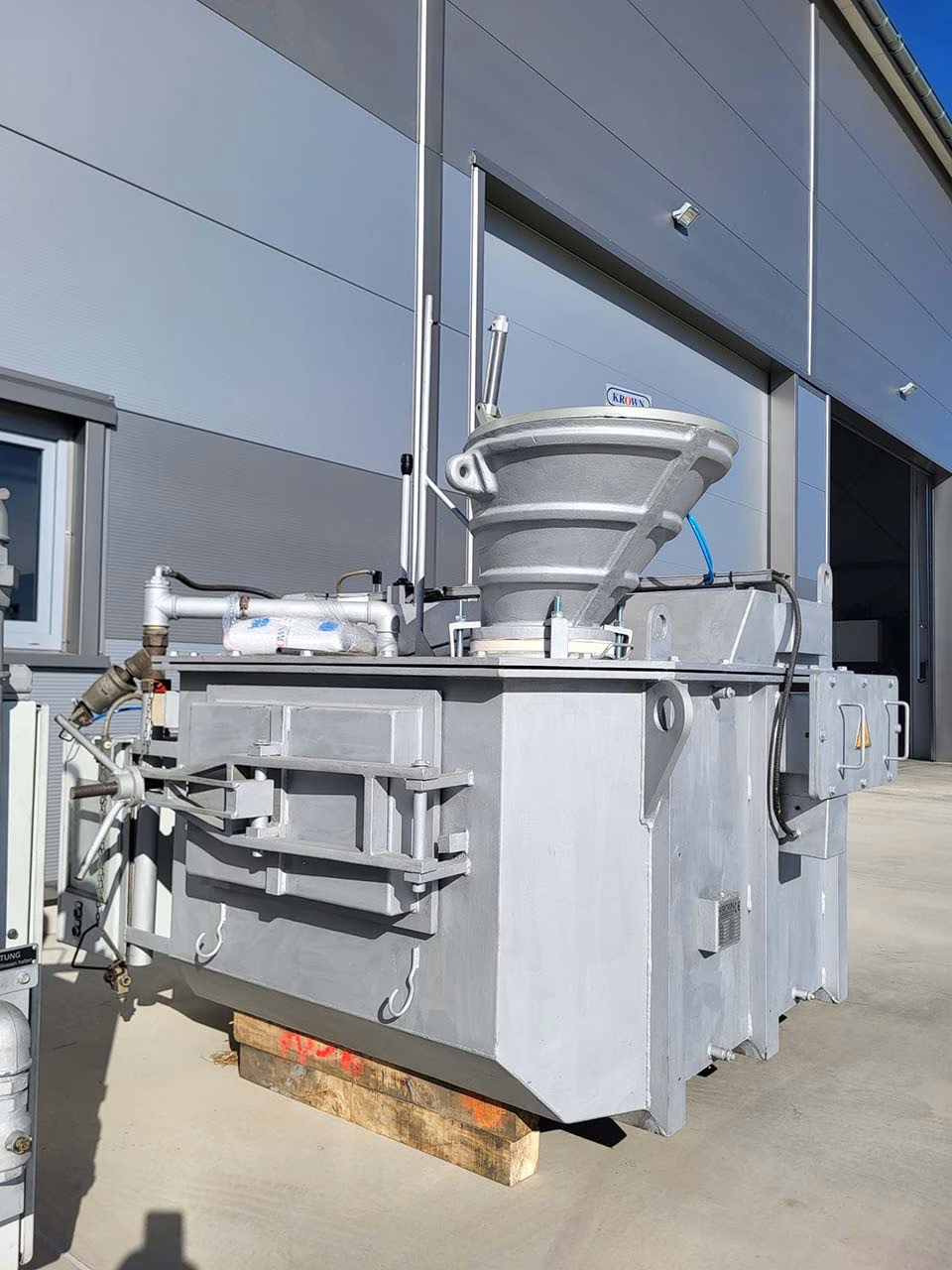
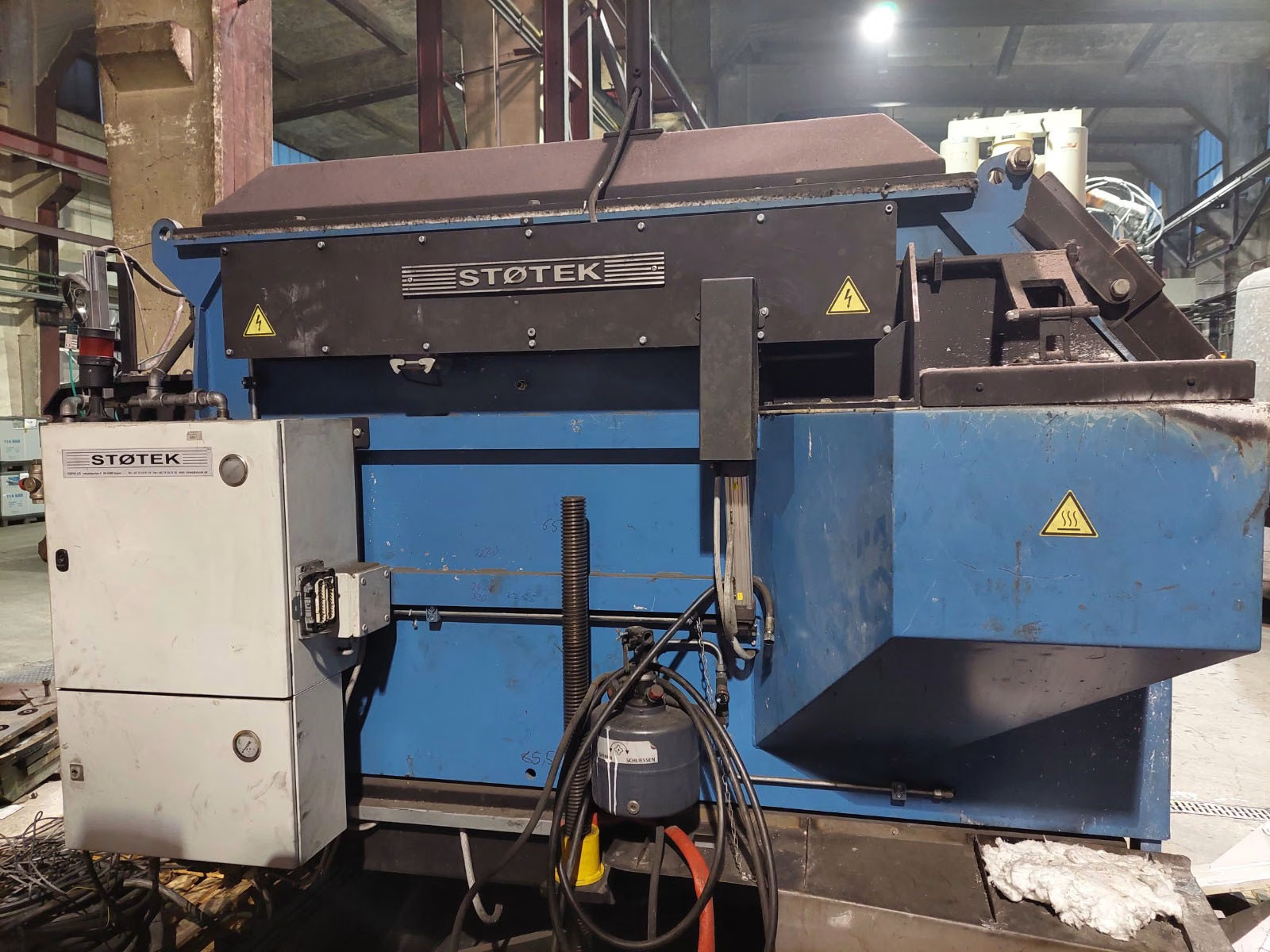
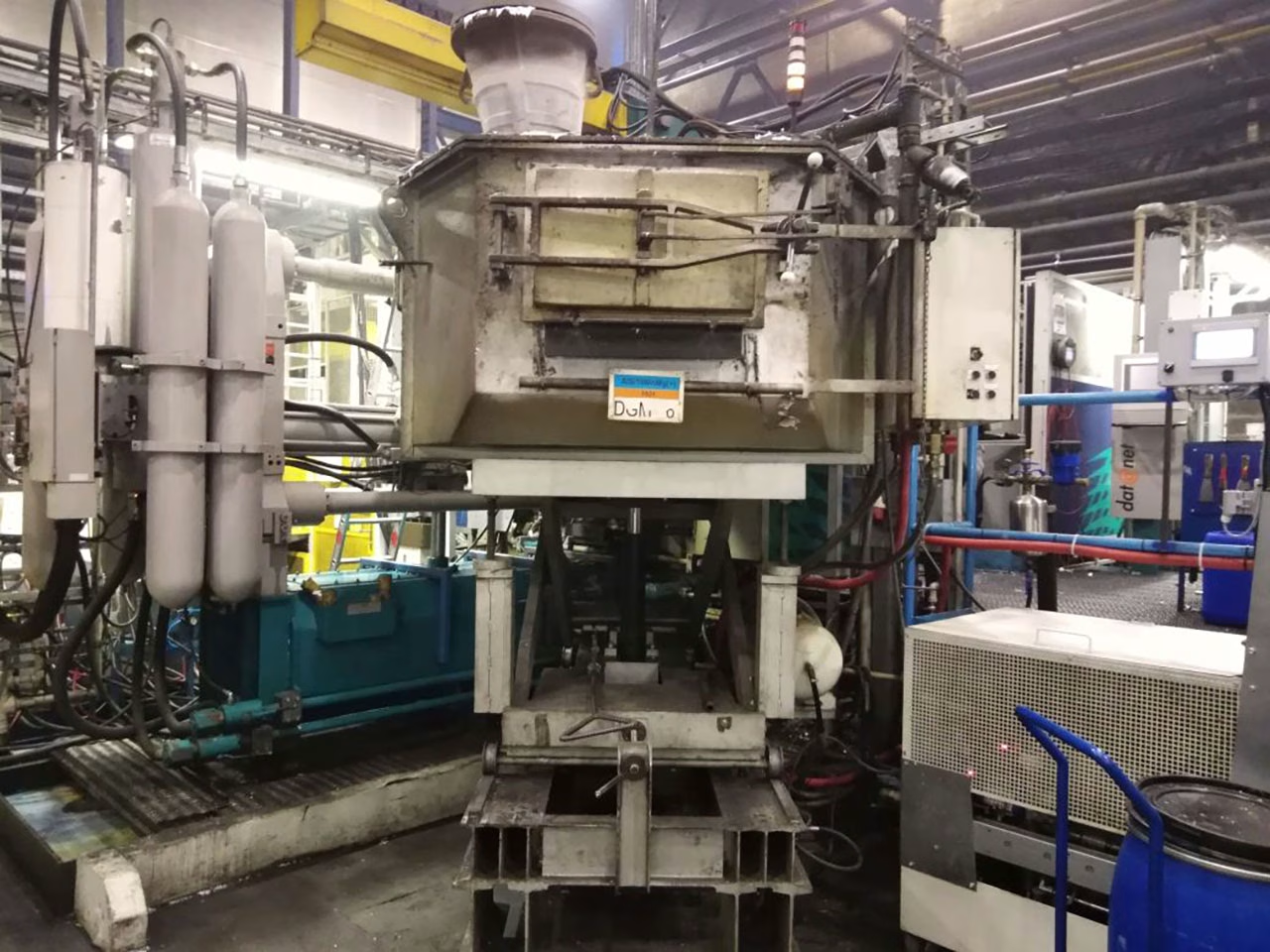
Manufacturer StrikoWestofen
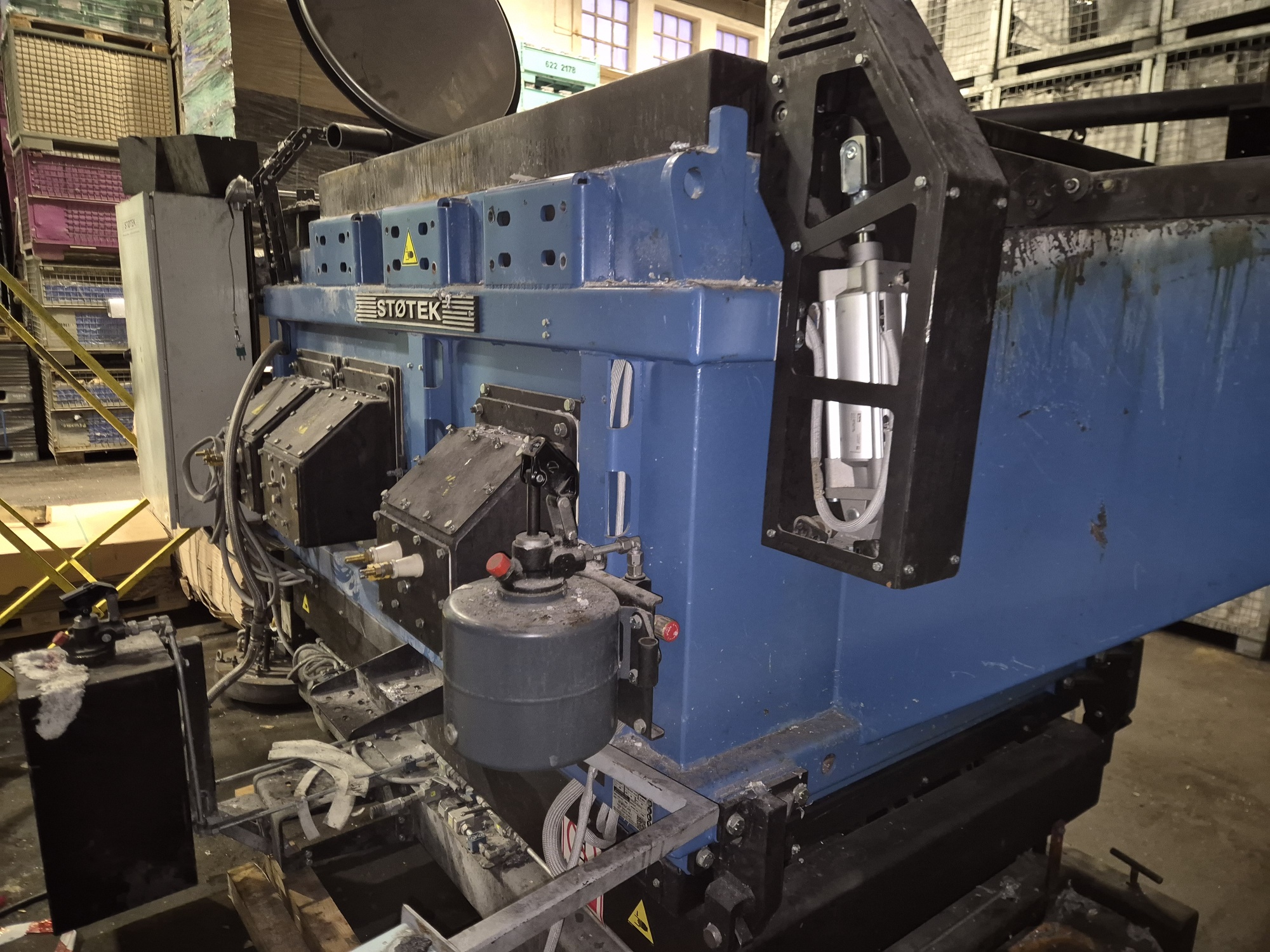
Manufacturer Stotek
Manufacturer ZPF Therm
Manufacturer Krown
Manufacturer Rauch
Availability, year of manufacture, capacity, dosing range, alloy, heating system and scope of supply can change continuously. The technical specifications should be confirmed for the individual project before purchase.

Technical inspection of a used dosing furnace

A reliable condition assessment covers the furnace body, refractory lining, heating equipment, dosing equipment, metal handling, control system, safety equipment and all auxiliary units required for operation.

Furnace body and refractory lining Document the housing, steel structure, covers, openings, insulation, refractory lining, cracks, broken areas and visible thermal damage.
Heating and temperature control Test the heating elements, connection cables, contactors, power modules, thermocouples, controllers, limit values and achievable operating temperature.
Pressure system and tightness For pneumatic dosing furnaces, inspect the furnace chamber, cover seals, pressure lines, valves, regulators and pressure retention behaviour.
Pump and dosing equipment Inspect the pump housing, drive, bearings, stroke system, screw, piston, impeller and metal-contacting components for wear, deposits and correct function.
Riser tube and outlet Record the cross-section, material, mounting, heating, insulation, sealing surfaces and indications of deposits or damage.
Dosing repeatability Perform several dosing cycles under comparable conditions and document the actual metal or test quantities, dosing times and deviations.
Cover gas and magnesium peripherals Record the gas mixing system, lines, valves, measurement equipment, extraction system and available safety equipment completely.
Control system and documentation Secure the PLC, operator panel, programmes, recipe data, circuit diagrams, parameter records, interfaces and operating documentation as completely as possible.

Reuse begins with documenting the interfaces

A used dosing furnace may be technically functional and still be unsuitable for the new casting cell. The transfer height, metal demand, control system, energy supply and safety concept should therefore be checked before dismantling and transport.

Application
Define the alloy and casting process Metal type, casting weight, cycle time, machine, die families and required dosing accuracy form the basis of the technical selection.
Interface
Measure the metal transfer arrangement Furnace height, outlet, riser tube, launder length, gradient, machine opening and available installation space must match the new layout.
Utilities
Check energy and media supplies Document the electrical power, compressed air, cooling, cover gas, extraction and other required connections at the new location.
Integration
Coordinate the control system and safety circuit Dosing requests, machine releases, feedback signals, faults, recipe data and safe shutdown functions must be reconfigured.
Commissioning
Optimise the parameters under production conditions Temperature, dosing time, pressure curve or pump movement and the transfer behaviour are adjusted to the actual casting weight and machine cycle.

Additional furnace equipment for metal supply and foundries

Dosing furnaces are frequently part of a complete metal supply system. Depending on the production concept, additional melting, holding, recycling and transfer equipment may be required.

Used Furnaces Overview of melting, dosing, crucible, recycling, induction and special-purpose furnaces. View overview
Melting Furnaces Systems for melting ingots, return material and suitable metal scrap. View category
Crucible Furnaces Melting and holding furnaces with a separate crucible in ladling or tilting configurations. View category
Aluminium Recycling Furnaces Systems for remelting aluminium scrap, chips and return material. View category
Induction Furnaces Electrically heated furnace systems for melting and holding using electromagnetic induction. View category
Furnace Reconditioning Inspection, repair, refractory relining and adaptation of used furnace systems to new production requirements. View service
Buy or sell used dosing furnaces

FISS supports the search for a suitable aluminium or magnesium dosing furnace and its technical assignment based on the alloy, holding capacity, dosing weight, delivery rate, temperature range, heating system, metal path, dosing equipment, control system and existing casting machine. If no suitable furnace is currently listed, FISS can conduct a targeted search through its international network for an appropriate solution.

When selling equipment, FISS supports condition assessment, technical documentation, dismantling planning and international marketing of individual dosing furnaces and complete metal-supply and foundry systems. In addition to brokerage and international marketing, direct purchase by FISS may also be an option depending on the project.
