
Skip to main content Skip to search Skip to main navigation
Experience from countless projects
Let's get started together
We are different. We are better!
Fast and direct contact
Offer
Go to homepage

Filter products

Melting Furnaces

Used Melting Furnaces Foundry Equipment Melting and Holding
Solid charge material becomes a defined molten metal supply.

Melting furnaces and combined melting and holding furnaces prepare metal alloys for die casting, gravity die casting, low-pressure casting, sand casting and other foundry processes. They melt ingots, return material or suitable scrap and provide the quantity of molten metal required for production.

Charge material Ingots, return material or suitable metal scrap
Performance rating Melting capacity in kilograms or tonnes per hour
Metal inventory Furnace and holding capacity for production demand
Energy Gas, oil, electric resistance heating or induction

The actual metal demand determines the furnace size

A furnace should not be selected solely according to its maximum temperature or holding capacity. The decisive factor is how much molten metal production actually requires during a shift and when this demand occurs.

Production demand, shift profile and reserve determine the required melting capacity.
Hourly demand
Metal consumption of the connected casting systems Casting weight, sprue proportion, scrap rate, number of machines and actual cycle times form the basis for the required molten metal flow.
Shift profile
Constant or fluctuating metal withdrawal Production starts, die changes, breaks and different utilisation levels do not create a constant metal demand. The furnace must be matched to these load changes.
Process reserve
Sufficient capacity without permanent oversizing A reserve can compensate for production fluctuations and heat losses. A permanently oversized system may, however, cause unnecessary standby losses and additional space requirements.
Molten metal buffer
Consider melting capacity and holding volume together The available bath volume must bridge metal withdrawal without causing unnecessarily long holding times or frequent major temperature fluctuations.

Melting and holding are different operating duties

Combined systems frequently perform both tasks. For technical assessment, however, the capacity required for melting and the volume required for providing molten metal should be considered separately.

Duty 01
Melting

The solid charge material is heated, melted and brought to the intended processing temperature. Material shape, initial temperature and charging sequence influence the actual energy requirement.

Key value Melting capacity in kilograms or tonnes per hour.
Material flow Size, condition and composition of the charged material.
System equipment Charging machine, preheating, burner capacity and furnace geometry.
Duty 02
Holding

The molten alloy is kept available within the intended temperature window. The metal volume, withdrawal sequence, heat losses and connection to the casting machines are decisive.

Key value Usable holding capacity and permissible bath volume.
Temperature Control range, measuring points and actual heat distribution.
Supply method Ladling, tilting, molten metal transport or direct transfer.

The furnace design follows the charge material and operating method

Different designs perform different duties. With used systems, the melting chamber, holding area, charging opening and metal removal arrangement must therefore match the intended production concept.

Shaft furnace
Continuous melting with a vertical material route Cold charge material is loaded into the shaft and preheated on its way to the melting zone. Shaft geometry, material size, burner technology and charging sequence must be coordinated.
Hearth and chamber furnace
Melt or hold large quantities of metal Hearth and chamber designs can be configured for different charges, holding volumes and withdrawal concepts. Bath geometry, doors, burner arrangement and refractory lining determine the actual application.
Crucible furnace
Hold the metal inside a separate crucible Crucible furnaces can be used for melting or holding and may be designed as tilting or ladling furnaces. Crucible material, load capacity, heating system and replacement concept are important inspection points.

The heating system and energy supply must match the site

The available energy infrastructure influences more than operating costs. It also determines connected load, exhaust routing, the safety concept, installation location and possible melting capacity.

Gas
High melting capacity for larger systems Gas-heated melting furnaces are frequently used for central melting and larger metal volumes. The burner system, gas type, supply pressure, heat recovery, exhaust routing and approval requirements must be checked.
Electric
Resistance heating for flexible temperature control Electrically heated systems are used for melting and especially for holding. The connected load, heating stages, heating elements, control system and available electrical capacity must be documented.
Induction
Electrical heating through electromagnetic induction Induction furnaces form a separate furnace category. Metal type, frequency, electrical power, coil condition, cooling, power supply and available converter technology are decisive for technical assignment.
The economically appropriate heating method depends on energy prices, production profile, utilisation, metal type and the exhaust and approval requirements at the individual site.

The furnace influences the condition of the supplied molten metal

Metal quality is not created by the furnace alone. Charge material, alloy management, temperature, holding time, cleaning and subsequent metal transport form one connected process system.

Maintain the temperature window Measuring points, control equipment and heat distribution must ensure that the molten metal is available within a suitable temperature range for the downstream casting process.
Avoid unnecessary holding time Furnace capacity and production withdrawal should be coordinated so that the molten metal does not remain within the system longer than technically necessary.
Charge material in a controlled manner Moisture, heavy contamination, foreign material and unsuitable piece sizes can impair both the melting process and operational safety. The charging concept must match the charge material.
Consider dross and residues Bath accessibility, cleaning openings, working space and the disposal route influence the effort required for regular cleaning and maintenance.

Which technical data determine suitability?

When assessing a used melting furnace, the actual operating data and complete scope of supply should be documented. The manufacturer and year of manufacture alone are not sufficient for a reliable technical assignment.

Material
Alloy and charge material Aluminium, magnesium, brass, zinc, tin, lead and other alloys place different requirements on the furnace design, temperature range and construction materials.
Capacity
Melting capacity The documented capacity in kilograms or tonnes per hour must match the planned metal consumption under realistic operating conditions.
Volume
Total and usable capacity Total volume, working bath, minimum fill level and the actually usable metal volume should be distinguished from one another.
Temperature
Operating and maximum temperature The permissible range, temperature sensors, measuring points, control accuracy and safety temperature limitation must be checked.
Heating
Burner or electrical heating capacity Document the capacity, quantity, control range, age, manufacturer and condition of the burners, heating elements, contactors or power modules.
Charging
Charging opening and charging machine Loading height, charge size, filling opening, shaft dimensions and available lifting or charging equipment must match the material flow.
Withdrawal
Ladling, tilting or molten metal transfer The outlet, tilting mechanism, ladling opening, launders and connected transport or dosing systems determine the transfer to the casting process.
Installation
Dimensions, weight and foundation Record the external dimensions, operating weight, centres of gravity, maintenance areas, foundation loads and accessibility at the new location.
Control system
Control equipment, sensors and interfaces Check the electrical cabinet, PLC, operator panel, temperature control, fill level, burner control, fault messages and connection to production equipment.

Used melting furnaces from various manufacturers

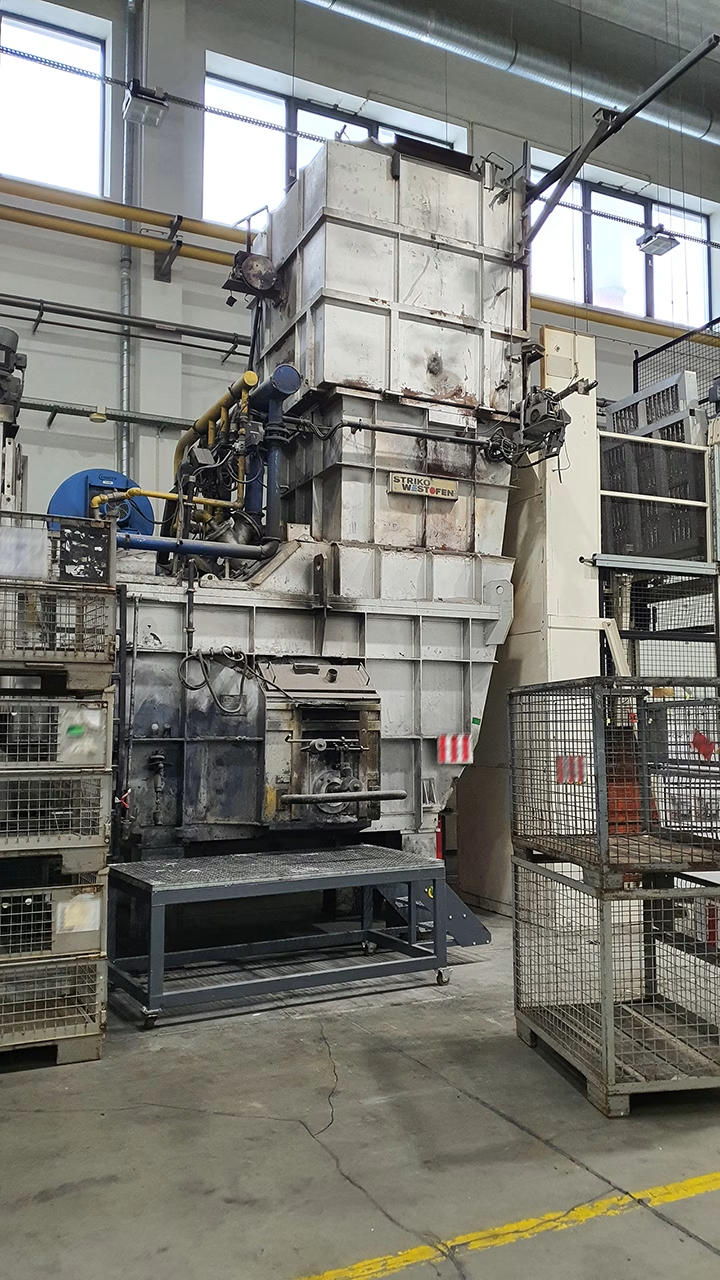
The available equipment may include shaft furnaces, hearth furnaces, crucible furnaces and combined melting and holding furnaces. Availability, year of manufacture, capacity and equipment change with the current machine inventory.

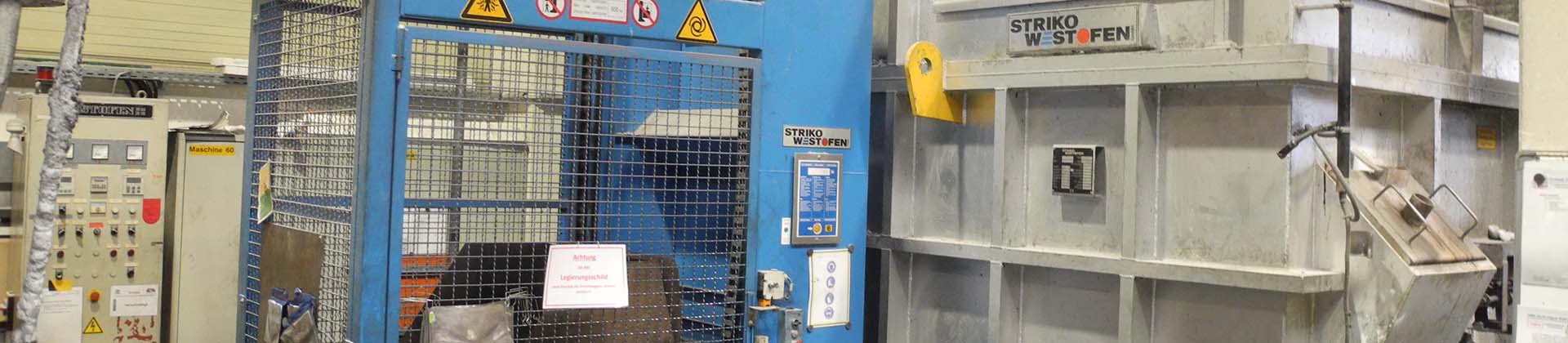
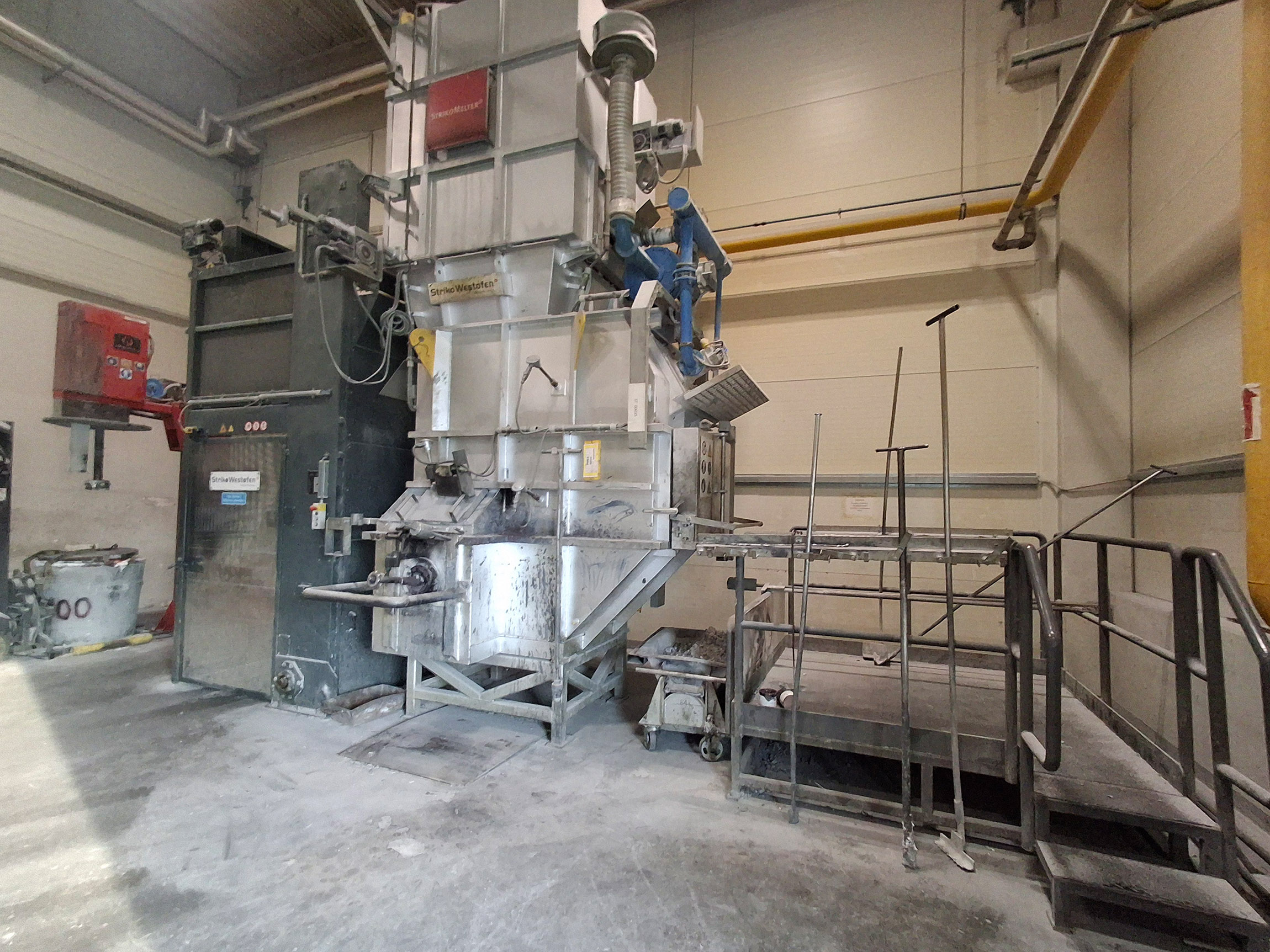
Manufacturer StrikoWestofen
Manufacturer ZPF Therm
Manufacturer Hindenlang
Manufacturer HORMESA
Manufacturer FRAMA
Manufacturer Jasper
The information in the individual machine listing is always authoritative. Technical data, scope of supply and operating condition should be confirmed for the specific project before purchase.

Technical inspection of a used melting furnace

A meaningful condition assessment covers the furnace body, refractory lining, heating equipment, control system, safety equipment and all auxiliary units required for operation.

Refractory lining and insulation Document the refractory material, cracks, broken areas, joints, furnace floor, melting area, holding bath and visible thermal damage. The remaining service life and possible relining requirements should be professionally assessed.
Furnace body and steel structure Inspect the housing, frame, doors, covers, hinges, supports, mountings and areas affected by corrosion or thermal deformation.
Burners and gas train Check burner condition, ignition, flame monitoring, blowers, fittings, valves, pressure control, tightness and the available safety control system.
Electrical heating Inspect heating elements, connections, contactors, power modules, current consumption, insulation condition and control equipment under suitable test conditions.
Temperature measurement Check thermocouples, protective tubes, measuring points, displays, target values, limits and overtemperature protection for correct function and plausibility.
Charging and withdrawal equipment Inspect the charging machine, flaps, lifting units, tilting drive, launders, outlets, hydraulics and end positions for condition and completeness.
Exhaust and filtration system Record exhaust ducts, dampers, heat recovery, fans, measuring points and available filtration or extraction systems.
Control system and documentation Secure the PLC, operator panel, programmes, electrical diagrams, gas diagrams, operating manuals, maintenance documents and parameter records as completely as possible.

Dismantling and reassembly are part of furnace planning

Melting furnaces are heavy, thermally stressed systems with project-specific utility connections. Successful implementation therefore begins before dismantling at the previous location.

Survey
Document the system and its connections Record the dimensions, weight, utilities, exhaust routes, foundation, cables, gas train, peripheral equipment and transport options completely.
Dismantling
Prepare the furnace for transport Disconnect the energy supply, remove residual metal, secure sensitive components and clearly label all removable assemblies.
Transport
Consider weight and centre of gravity Plan lifting points, crane capacity, vehicle dimensions, transport securing and any special transport requirements at an early stage.
Reassembly
Coordinate the foundation, energy supply and exhaust system Coordinate installation, connections, refractory condition, burner adjustment, control equipment, safety equipment and trial operation at the new location.

Additional furnace equipment for foundries and die casting

Melting furnaces are frequently part of a larger metal supply system. Depending on the casting process, dosing, holding, recycling or specialised electrical heating may require additional equipment.

Used Furnaces Overview of melting, holding, dosing, crucible, recycling and special-purpose furnaces. View overview
Dosing Furnaces Hold molten metal and dose it reproducibly into die casting or other casting cells. View category
Crucible Furnaces Melting and holding furnaces with a separate crucible in tilting or ladling configurations. View category
Aluminium Recycling Furnaces Systems for remelting aluminium scrap, chips and return material. View category
Induction Furnaces Electrical systems for melting, holding and casting using electromagnetic induction. View category
Other Furnaces Furnace systems for magnesium, zinc, brass and other industrial applications. View category
Furnace Refurbishment Technical inspection, relining, repair and adaptation of used furnace systems. View service
Buy or sell used melting furnaces

FISS supports the search for a suitable melting or holding furnace and its technical assignment based on the alloy, charge material, melting capacity, holding capacity, heating system, charging concept, metal withdrawal and available energy infrastructure. If no suitable furnace is currently listed, FISS can search its international network specifically for an appropriate solution.

When selling equipment, FISS supports condition assessment, technical documentation, dismantling planning and international marketing of individual melting furnaces and complete foundry systems. In addition to brokerage and international marketing, direct purchase by FISS may also be an option depending on the project.
