





 Details
Foundry Robots
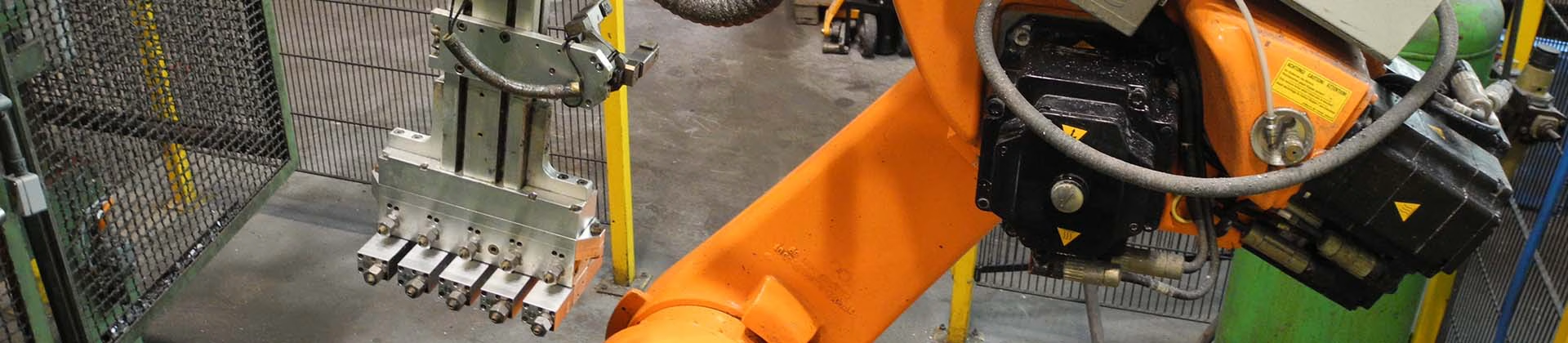
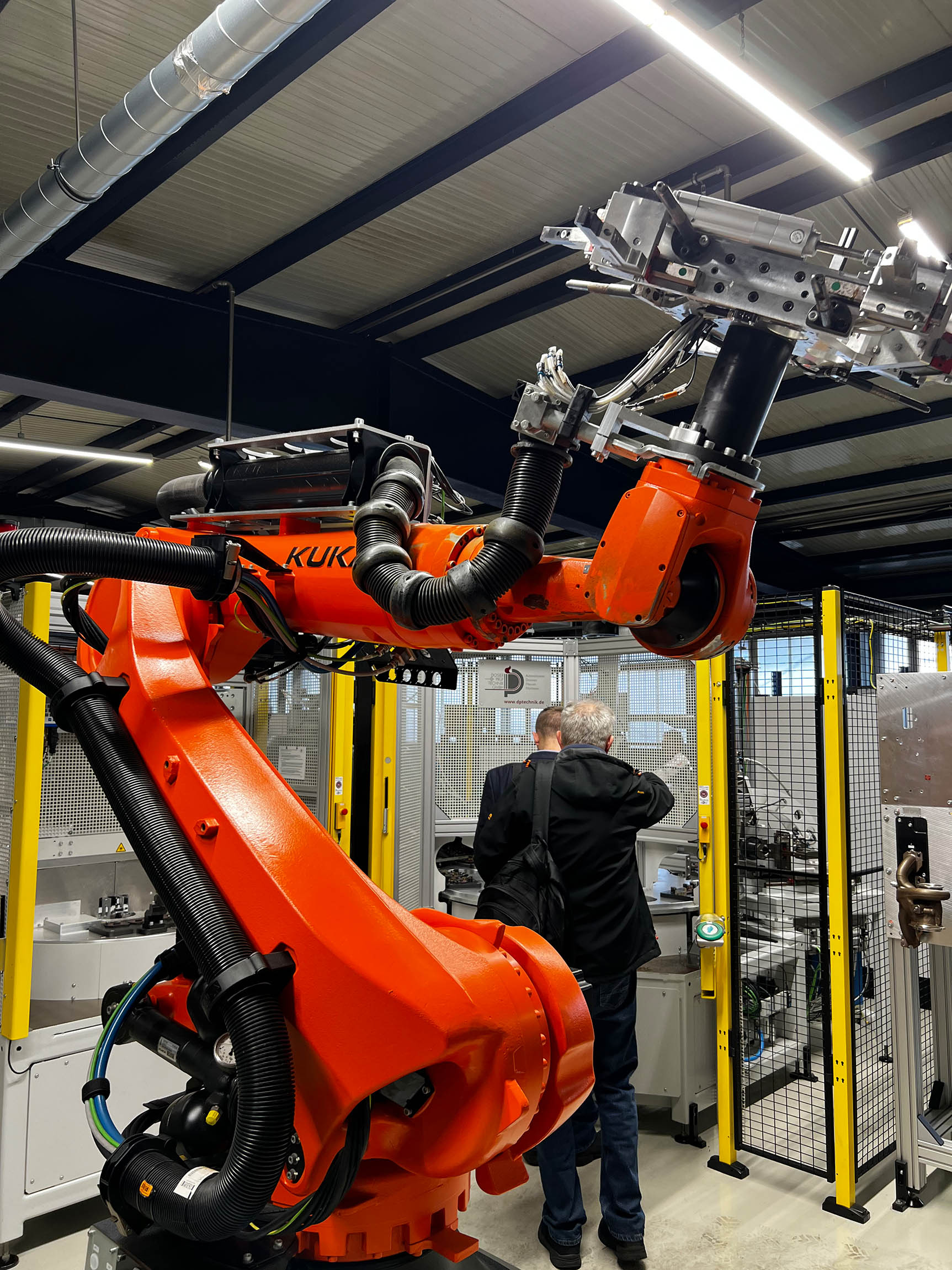
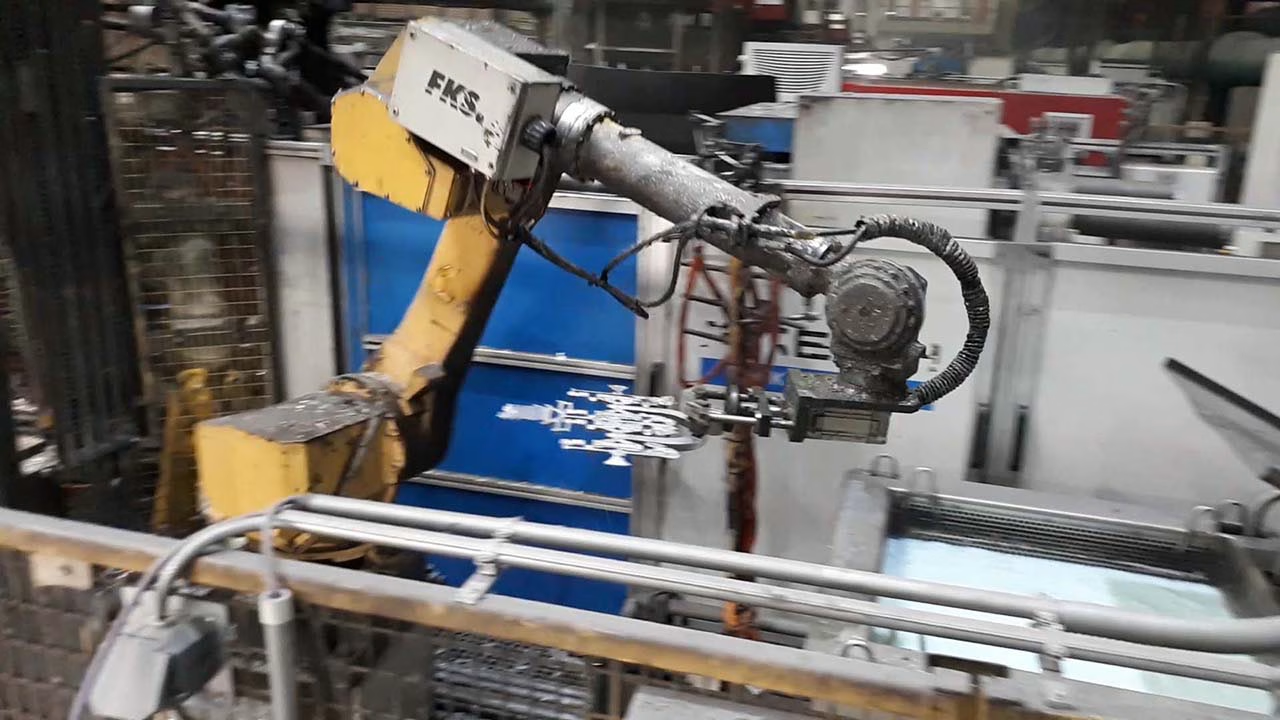
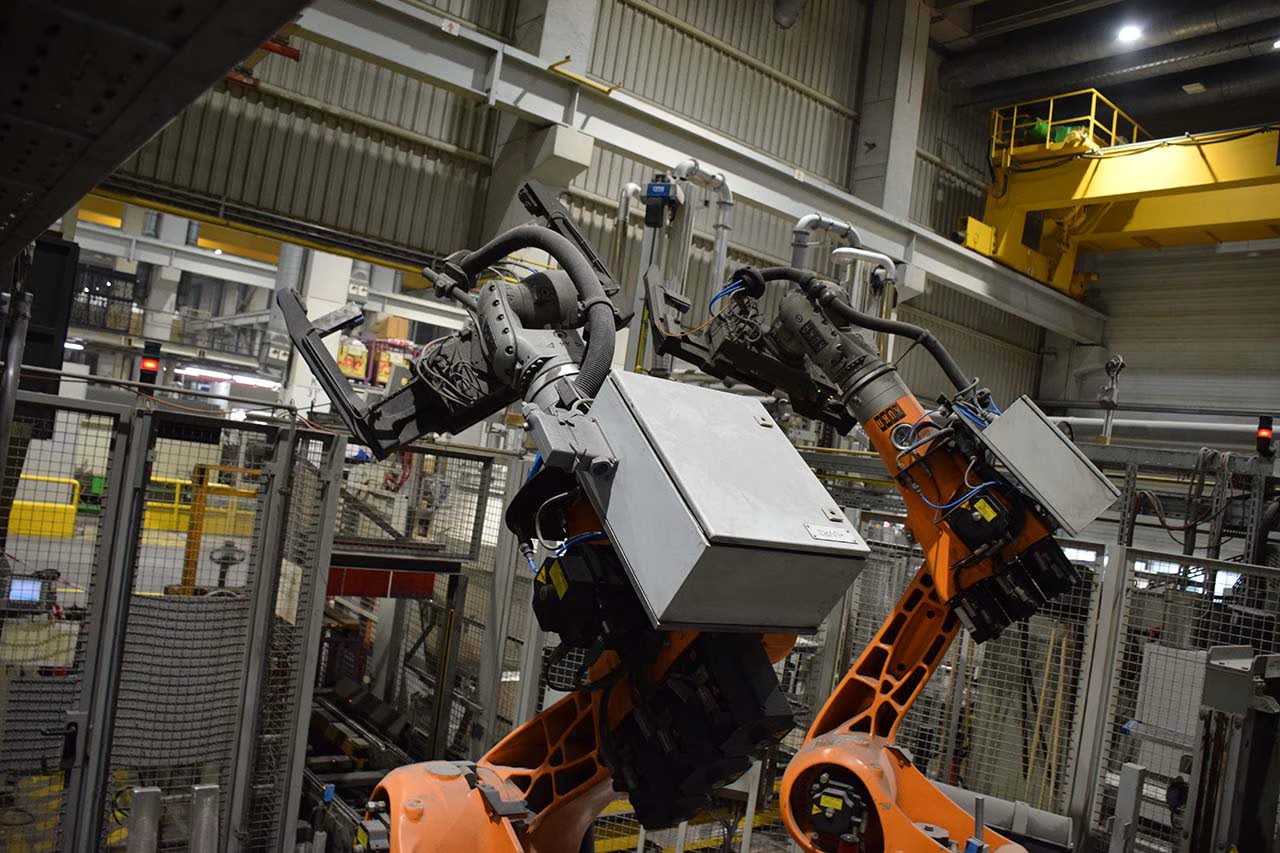
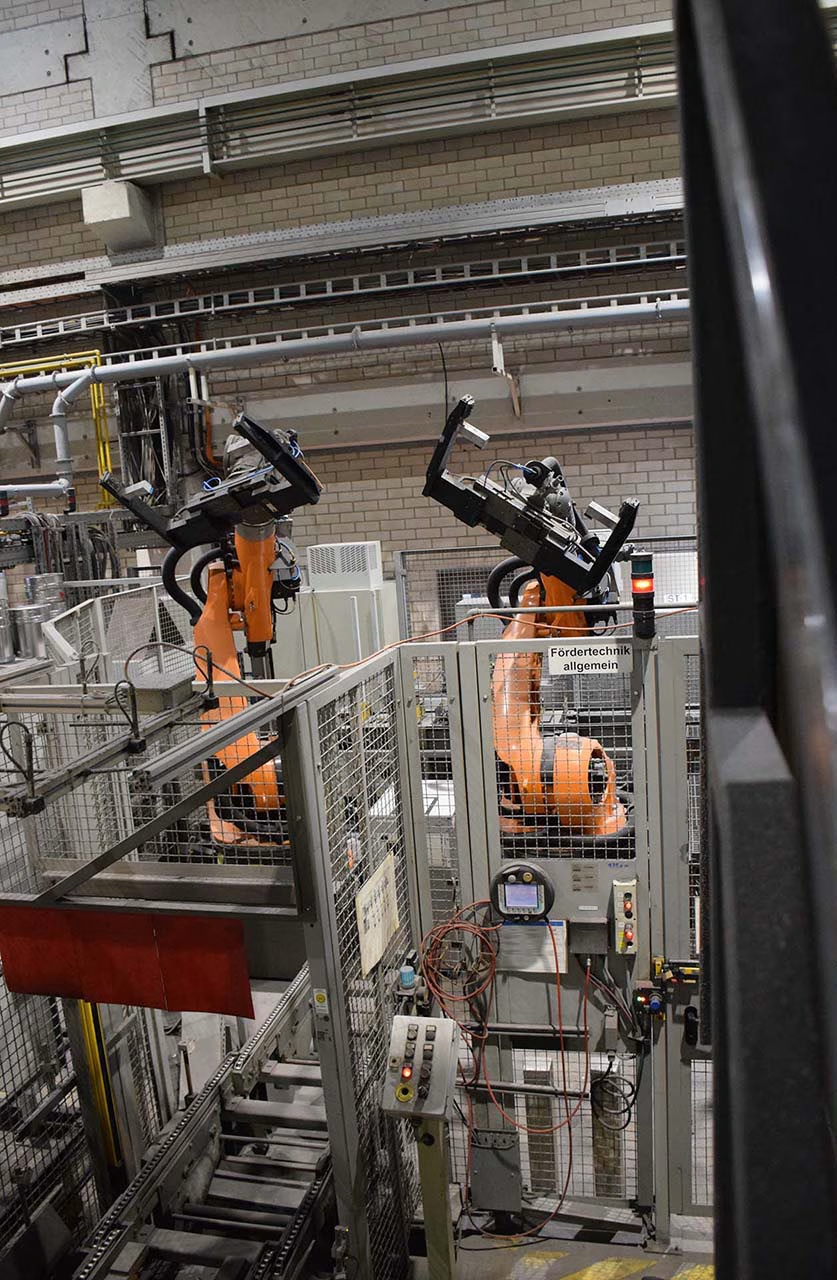
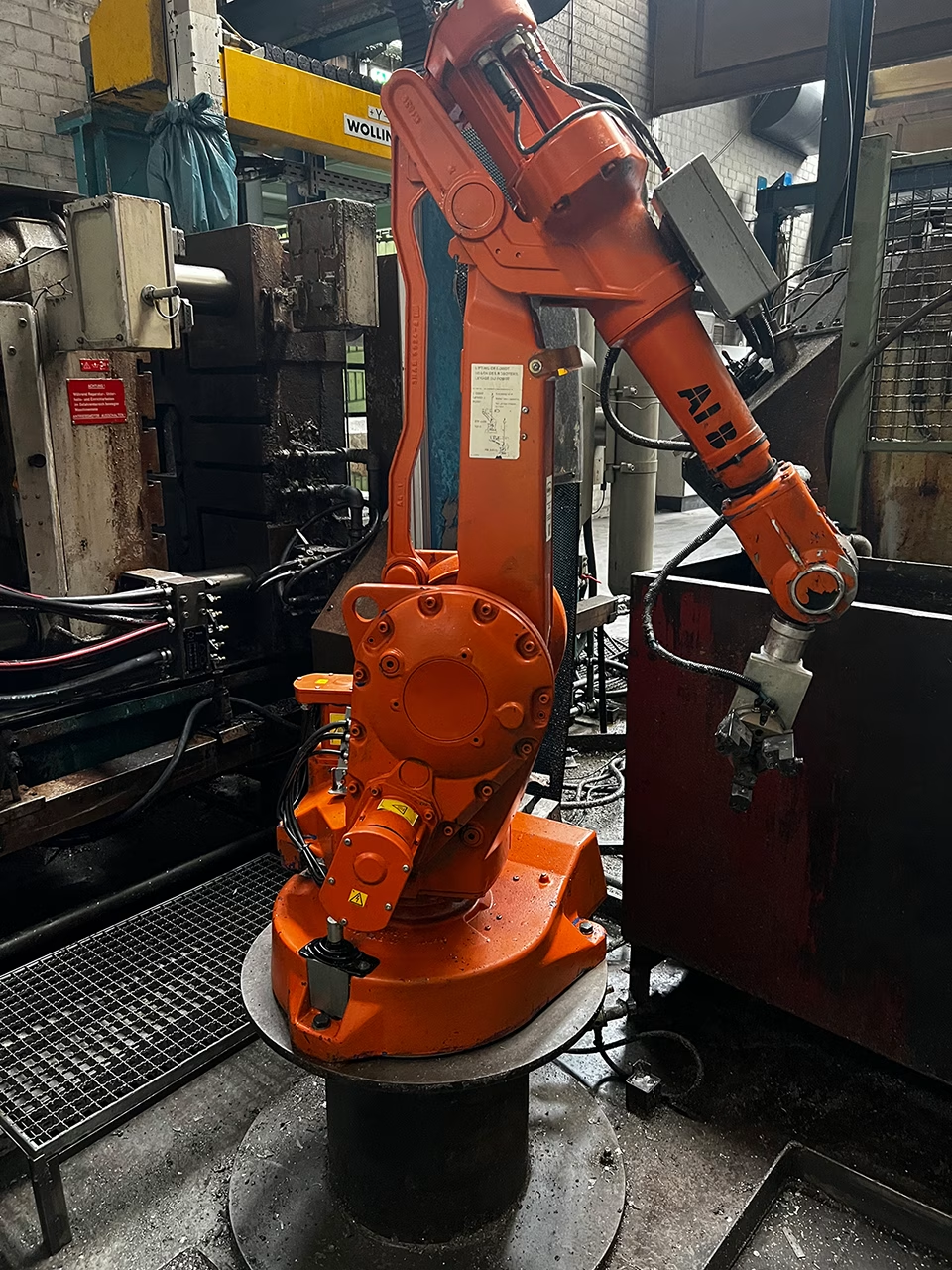
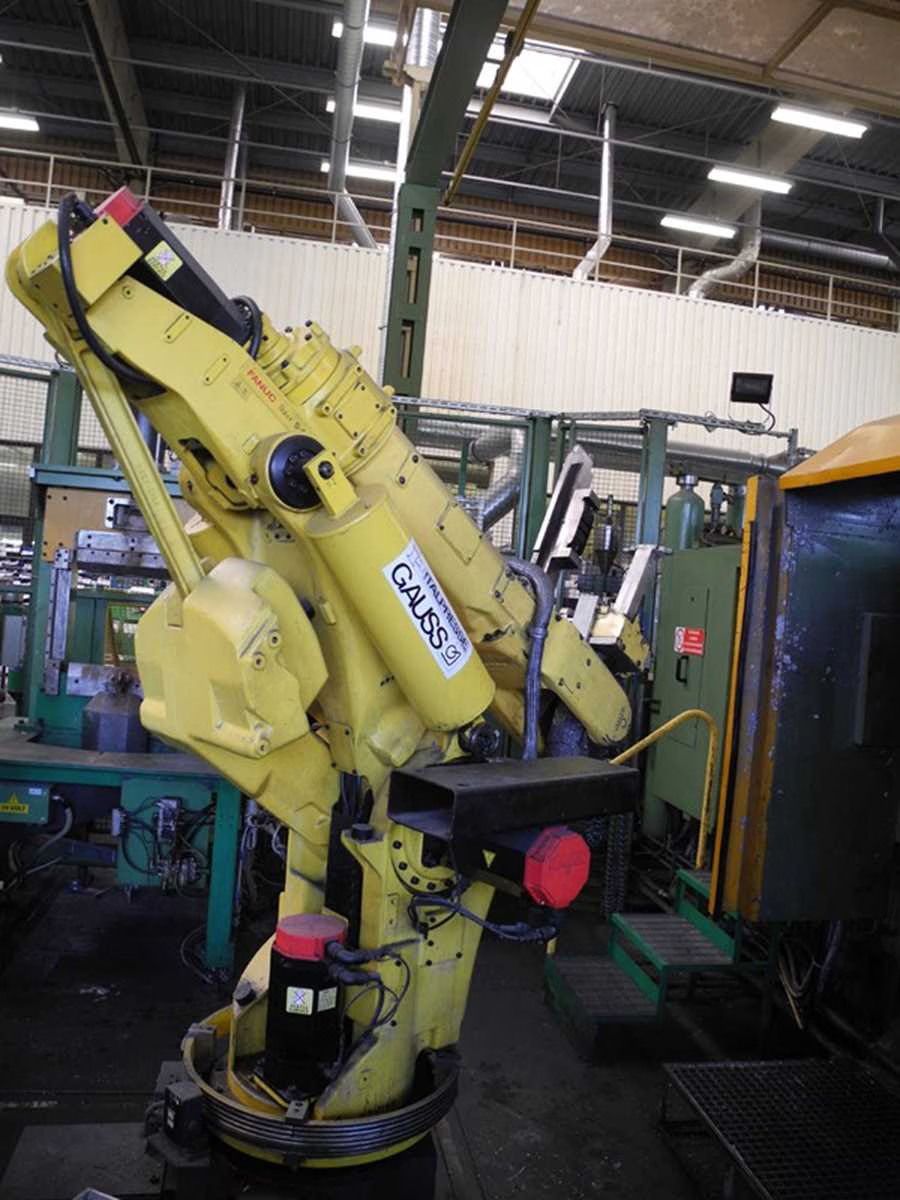
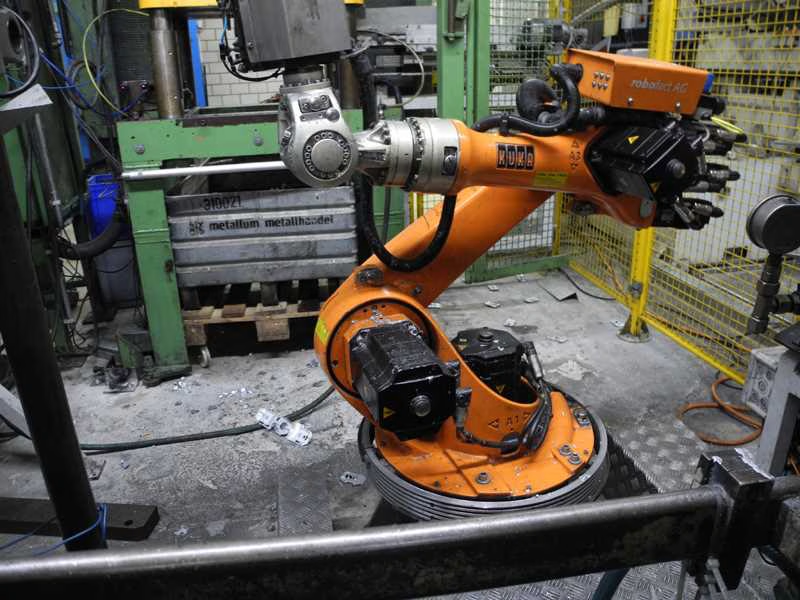
Foundry robots perform handling tasks under the demanding conditions of a die casting foundry. They can feed inserts, remove castings from the opened die, guide parts through cooling stations and then transfer them to a trimming press, inspection station or conveyor system.
Working area of an automated die casting cell
The robot forms the moving connection between the individual process stations. The specific layout depends on the machine, casting, extraction direction, cooling concept, trimming process and available installation space.
Robot
Which tasks can a foundry robot perform?
Not every die casting cell requires the same level of automation. Tasks may range from basic casting extraction to the complete linking of several processing stages.
Three basic parameters define the possible working envelope
The technical specifications must match not only the casting, but also the gripper, extraction position, surrounding stations, interference contours and required cycle time.
The required payload includes the casting, runner, gripper, sensors, cables and any additional tools mounted on the robot flange.
The robot must reach the extraction point, cooling station, trimming press and unloading position without continuously operating at the limits of its working envelope.
Axis speeds, acceleration, robot paths and waiting periods determine whether the required cycle time can be achieved reliably.
The gripper determines safe contact with the component
An existing robot may be technically suitable even when its current gripper does not match the new component. The robot and end effector should therefore be evaluated separately.
With hot, irregularly shaped castings, the gripping position, clamping force, distance from heat sources and possible component deformation are particularly important.
Foundry design, safety enclosure and control system must work together
Foundry robots operate in an environment with heat, dust, release agents, spraying mist and hot components. In addition to the robot itself, the cable package, gripper, controller, enclosure and safety concept must therefore be suitable for the application.
The robot as part of cold chamber automation
The best robot solution is not created in isolation. Metal loading, die spraying, temperature control, casting extraction and trimming influence each other and should be assessed as one complete cell.
Assessing a used foundry robot
The individual areas can be opened one after another for a technical preliminary assessment. In addition to the robot itself, the actual scope of supply is decisive.
Robot model, payload and reach
The model, number of axes, maximum payload, reach, wrist load and permitted mounting position must match the planned task.
The gripper weight, casting, runner and cables must be considered together when calculating the required payload.
Condition of the mechanical system and axes
Gearboxes, motors, brakes, bearings, axis play, lubrication and possible unusual noises should be checked.
Oil leaks, damaged covers and the condition of the robot wrist are also relevant.
Controller, teach pendant and software
Record the robot controller, teach pendant, programs, software options, interfaces, safety functions and available backups.
The controller generation and availability of spare parts affect the later integration effort.
Foundry protection and cable package
Check the protective package, paintwork, seals, protective hoses, wrist cables and media packages for heat exposure and wear.
A different installation arrangement may require an adapted cable or hose package.
Gripper and included peripheral equipment
Clarify whether the gripper, robot base, controller, teach pendant, cables, safety fence, electrical cabinet and other stations are included.
An existing gripper is not automatically suitable for the new casting.
Dismantling, transport and recommissioning
Prepare the installation position, mounting points, centre of gravity, transport frame, cable identification, program backups and safe axis positions for transport.
At the new site, the foundation, robot base, safety enclosure, control system and cell communication must be coordinated again.
For simple, repetitive extraction movements, an electropneumatic or hydraulic extraction unit may be an economical solution. A multi-axis foundry robot offers greater flexibility when several stations must be reached, components must be reoriented or different tasks are to be combined within one cell.
The decision should therefore be based on the movement sequence, component variants, cycle time, available space and future automation requirements.
Used foundry robots from established manufacturers
FISS Machines trades used foundry and handling robots in different payload and reach classes. Depending on availability, systems from ABB, KUKA, FANUC, Reis, Stäubli, Kawasaki and other manufacturers may be considered.
Buy used foundry robots
FISS supports the selection of suitable robots, clarification of payload, reach, control system and scope of supply, as well as dismantling, transport and technical coordination for the new die casting cell.
If no suitable robot is currently available online, FISS can search its international network and evaluate suitable systems.
Sell foundry robots
FISS supports the evaluation and international marketing of individual robots, complete automation cells and associated peripheral equipment.
In addition to brokerage and international marketing, direct purchase by FISS may also be an option depending on the project.
