
Skip to main content Skip to search Skip to main navigation
Experience from countless projects
Let's get started together
We are different. We are better!
Fast and direct contact
Offer
Go to homepage

Filter products

Other Furnaces

Used Other Furnaces Special Applications Foundry and Thermal Processing Technology
Not every thermal process fits into a standard category.

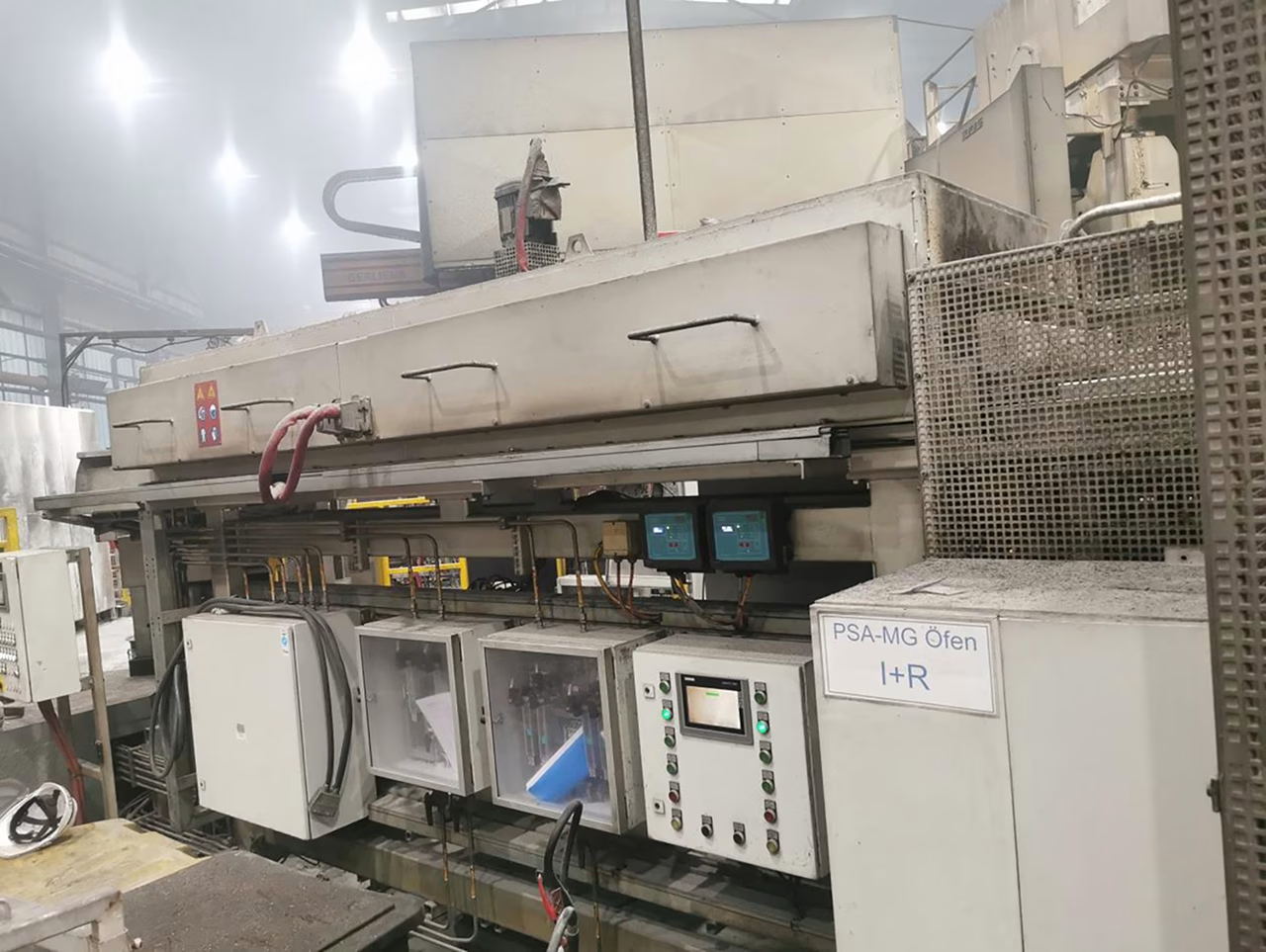
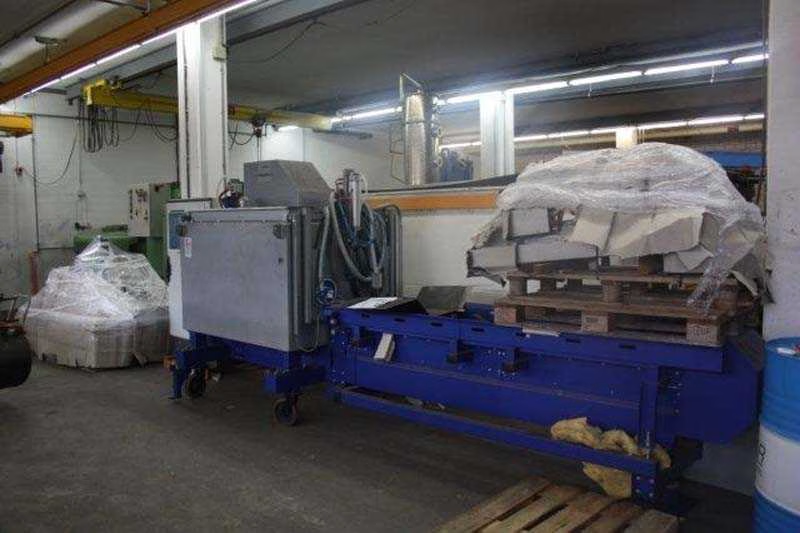
The Other Furnaces category includes used furnace systems and thermal processing equipment whose duties extend beyond conventional melting, holding or dosing. These may include heat treatment furnaces, magnesium melting and dosing systems, in-cell recycling systems, preheating equipment and specially configured melting and holding systems.

Technical selection is therefore not based on one standard furnace design, but on the material, process stage, temperature profile, throughput, protective atmosphere, material flow and complete system peripherals.

What belongs in the Other Furnaces category?

The category covers applications that cannot be assigned clearly to a conventional furnace group because of special materials, temperature profiles, process atmospheres or system combinations.

The furnace designation is secondary. The thermal process duty is decisive.
Special alloy Magnesium, zinc and brass alloys place different requirements on metal vessels, temperature ranges, protective atmospheres, heating, extraction and safety than typical aluminium applications.
Special process sequence Preheating, drying, annealing, solution heat treatment, quenching, ageing, melting, recycling and dosing may be combined within a single system or an interconnected furnace line.
Special integration Some systems are connected directly to a die casting machine, charging system, recycling equipment, cover-gas supply, molten-metal transport or automated component handling.
Special design Continuous, chamber, preheating, casting, recycling and combined melting-and-dosing systems each require an individual assessment of geometry, temperature control and material flow.

Typical systems within the available range

Depending on current inventory, the category may include individual furnaces, interconnected subsystems or almost complete systems for heat treatment, magnesium supply and internal recycling.

Heat treatment
Continuous and annealing furnaces for cast components Systems for controlled heating, holding and, where applicable, cooling of aluminium structural castings or other metal components.
Magnesium
Melting, holding and dosing systems Combined systems with preheating, ingot charging, melting furnace, casting or holding furnace, dosing furnace and cover-gas peripherals.
In-cell recycling
Process return material within the casting cell Systems for returning runners and production residues using drying, charging, melting, casting and, where applicable, conversion into reusable feedstock.
Preheating
Thermally prepare ingots or charge material Preheating equipment reduces temperature differences before charging and can be integrated into automated material-feeding systems.
Special metals
Melting and holding furnaces for zinc or brass Material-specific systems with adapted temperature ranges, crucible or bath construction, heating, extraction and metal removal equipment.

Different process families require different inspections

The construction of a special-purpose system results from the complete process chain. A single performance value is not sufficient for technical assignment.

Process family Heat Treatment

Treat components according to a defined temperature-time profile

Heat treatment furnaces heat castings or other workpieces to a specified temperature and hold them for a defined period within a prescribed process window. Depending on the application, cooling, quenching or ageing may follow.

Important data Operating temperature, temperature uniformity, throughput, component dimensions, conveying speed and holding time.
System peripherals Loading, conveying equipment, recirculated air, cooling zone, quenching system, exhaust air and process documentation.

Process family Magnesium Supply

Preheat, melt, protect, hold and dose

A magnesium system can combine several thermal and mechanical stages. Material compatibility, cover gas, enclosed metal handling and controlled transfer to the die casting machine are central elements.

Important data Alloy, melting performance, working bath, dosing range, temperature, cover gas and machine cycle.
System peripherals Depalletiser, preheating, charging, melting furnace, holding furnace, dosing furnace and control system.
Process family In-Cell Recycling

Reuse production returns directly within the casting-cell environment

Runners and suitable return components are collected, prepared and remelted. Depending on the system concept, the recovered metal can be returned directly to the production cycle or processed into new feedstock.

Important data Return quantity, alloy separation, material temperature, contamination, throughput and required metal quality.
System peripherals Material collection, drying, charging, melting, casting, cooling and return transport.

Heat treatment furnaces for aluminium castings

Heat treatment involves more than reaching the selected furnace temperature. The decisive factors are how uniformly all components are heated, how long they remain in the process and how the subsequent cooling stage is performed.

Temperature uniformity Recirculated-air routing, heating capacity, furnace geometry, loading density and the position of measuring points influence temperature distribution within the usable chamber.
Component transport Conveyor belts, roller conveyors, overhead transport or batch trolleys must accommodate component weight, dimensions, throughput and the required residence time.
Process time Heating time, holding time, conveying speed and transition into the cooling or quenching zone must be documented as one connected profile.
Cooling and quenching Air, water or other cooling systems require suitable conveying equipment, media supplies, temperature monitoring and safe discharge.
Process documentation Temperature profiles, belt speed, batch data, faults and recipe values should be stored traceably or transferred to a higher-level system.

Assess magnesium systems as a complete metal-supply solution

In magnesium applications, the melting furnace, casting furnace, dosing furnace, feedstock preparation and protective systems are closely connected. The scope of supply of a used system is therefore especially important.

Feedstock
Provide and preheat ingots Depalletising, separation, preheating and charging must match the ingot geometry, melting performance and existing material logistics.
Melting
Melt the alloy under controlled conditions The metal vessel, heating system, temperature measurement, cover gas, bath cover and cleaning concept determine safe molten-metal preparation.
Holding
Stabilise the working bath within the process window The usable bath volume, minimum fill level, replenishment and heat losses must be coordinated with the metal demand of the die casting cell.
Dosing
Transfer a defined metal quantity to the machine The pump, pipe system, dosing weight, delivery time, transfer height and machine interface influence the repeatability of the dosing sequence.
Protective system
Monitor the atmosphere and safety conditions Cover-gas supply, flow monitoring, extraction, leakage detection, the emergency concept and safe shutdown must be assessed for the new location.

The material and temperature range define the furnace construction

A furnace previously used for a specific alloy is not automatically suitable for another material. The metal vessel, lining, heating system and safety equipment must be reassessed.

Magnesium
Protective atmosphere and enclosed metal handling Magnesium applications require alloy-compatible vessels, controlled temperature management, cover gas, safe charging and suitable dosing or metal-removal equipment.
Inspect protective system
Zinc
Holding and melting with an adapted bath construction The temperature range, crucible or bath material, metal removal, deposits and connection to the hot-chamber die casting machine must be considered.
Assess metal vessel
Brass
Higher temperatures and robust exhaust routing The melting temperature, crucible material, burner or induction capacity, extraction and occupational safety must match the specific copper alloy.
Temperature and exhaust
Aluminium
Heat treatment rather than only a melting process For structural components, temperature uniformity, process time, component transport and controlled cooling form the centre of the technical assessment.
Document component profile

Which technical data determine suitability?

Because the category includes different furnace and system types, the technical enquiry must describe the complete process duty. Comparison based only on the manufacturer, year of manufacture and maximum temperature is not sufficient.

Process
Main thermal duty Clearly define melting, holding, preheating, drying, annealing, recycling, dosing or a combination of several process stages.
Material
Alloy or component material Document the metal type, composition, component shape, charge material, return material and possible contamination.
Temperature
Operating range and temperature profile Describe the target temperature, heating rate, holding time, temperature uniformity, limits and cooling requirements.
Performance
Throughput, melting performance or batch size Kilograms per hour, components per hour, batch weight, working bath and shift profile must match the actual production demand.
Atmosphere
Air, recirculated air, cover gas or process gas Record the gas type, quantity, pressure, tightness, extraction, monitoring and permissible operating conditions for the intended process.
Heating
Electric, gas-fired or induction heating Compare the connected load, burner capacity, gas type, voltage, transformer, heating circuits, converters and available site capacity.
Material flow
Charging, transport and removal Measure the charging height, workpiece carriers, conveying equipment, ingot charging, metal transfer and downstream systems completely.
Exhaust
Capture and treatment Consider the exhaust-air volume, exhaust temperature, hoods, ducts, filters, fans and local approval requirements.
Control system
PLC, recipes and interfaces Check programmes, temperature control, conveyor control, releases, feedback signals, data recording and the safety circuit.
Installation
Dimensions, weight and infrastructure Record the foundation, access route, maintenance areas, steel structures, utility connections, working areas and safety clearances at the new location.

Special-purpose furnaces rarely operate as isolated machines

Technical usability often depends more strongly on the interfaces and available peripheral equipment than on the furnace body itself.

The furnace is usable only when the complete material and information flow is compatible.
Charging The material form, charging height, batch size, grippers, depalletisers, conveying equipment and cycle must be coordinated with the furnace opening.
Process transfer Components or molten metal must be transferred to the next process stage at a defined position, temperature and time.
Utility supply Electricity, gas, cover gas, compressed air, cooling water, hydraulics and exhaust capacity must be available at the new location in sufficient quantities.
Control communication System ready, process release, recipe selection, temperature status, faults and safe shutdown require clearly defined signals.
Process data Temperature curves, batch information, counters and fault messages may be relevant for quality assurance and traceability.

Technical inspection of a used special-purpose furnace

The inspection plan must match the specific system. In addition to the furnace body, all thermal, mechanical, electrical and safety-related functions must be considered.

Inspection area Furnace housing and steel structure Inspect the frame, chamber, doors, covers, platforms, supporting structure and areas affected by corrosion or thermal deformation.
Inspection area Refractory lining and insulation Assess cracks, broken areas, joints, deposits, insulation and visible thermal bridges for remaining service life and renewal requirements.
Inspection area Heating and burner system Test heating elements, burners, ignition, flame monitoring, power modules, blowers and control behaviour.
Inspection area Temperature measurement Check thermocouples, protective tubes, measuring points, displays, control circuits, limits and overtemperature protection.
Inspection area Conveying and charging equipment Inspect chains, rollers, belts, lifting units, drives, end positions, ingot charging and workpiece carriers.
Inspection area Cover gas and process media Record lines, valves, regulators, flow measurement, tightness, extraction and safe shutdown completely.
Inspection area Control system and software Document the PLC, operator panel, programmes, recipes, frequency converters, parameters, interfaces and data backup.
Inspection area Documentation and scope of supply Clearly record circuit diagrams, gas diagrams, operating instructions, spare parts, accessories, transport frames and process documentation.

Refurbishment and adaptation to a new process

Depending on its condition, a used special-purpose furnace can be refurbished mechanically, thermally, electrically and in terms of control technology. The necessary scope results from the condition and new process duty.

Survey
Document the current condition and missing parts Record the furnace, peripherals, control system, utilities, documentation and scope of supply completely before dismantling.
Thermal system
Inspect the refractory lining, insulation and heating Renew refractory material, supplement insulation, repair heating elements or burners and calibrate the temperature measurement.
Mechanical system
Refurbish conveying and moving components Inspect or replace bearings, chains, rollers, gearboxes, lifting equipment, charging systems, doors and drives.
Control system
Adapt the electrical equipment and software Configure the electrical cabinet, PLC, operator panel, controllers, frequency converters, safety circuit and interfaces for the new location.
Commissioning
Set the process parameters under real operating conditions Coordinate the temperature profile, throughput, conveying speed, cover gas, dosing and releases step by step with the new process.

Used special-purpose furnaces from various manufacturers

Depending on availability, individual furnaces, subsystems and complete systems from different manufacturers may be offered. The design, process data, condition and scope of supply of the specific system always remain decisive.

BSN Thermprozesstechnik · Hindenlang · Rauch · LAC · StrikoWestofen · Meltek · Otto-Junker · STOTEK · Effesse · Calamari · IMR · Bota
The manufacturer, year of manufacture, furnace type, heating system, operating temperature, capacity and scope of supply can change with the available machine inventory.

Additional furnace technology for foundries and metal supply

When the process duty can be assigned clearly to a standardised furnace group, the specialised subcategories may enable a more targeted machine selection.

Used Furnaces Overview of melting, dosing, crucible, recycling, induction and special-purpose furnaces. View overview
Melting Furnaces Systems for melting and holding different metal alloys. View category
Dosing Furnaces Holding and reproducible dosing of aluminium or magnesium molten metal. View category
Crucible Furnaces Melting and holding furnaces with a separate crucible in tilting or ladling configurations. View category
Aluminium Recycling Furnaces Systems for remelting scrap, chips, return material and aluminium-containing residues. View category
Induction Furnaces Electrical furnace systems for melting, holding and casting through electromagnetic induction. View category
Furnace Reconditioning Technical inspection, repair, refractory relining and adaptation of used furnace systems. View service
Buy or sell used special-purpose furnaces

FISS supports the search for a suitable furnace or thermal processing system and its technical assignment based on the material, process duty, operating temperature, throughput, batch size, atmosphere, heating system, material flow, system peripherals and available infrastructure. If no suitable system is currently listed, FISS can conduct a targeted search through its international network for an appropriate solution.

When selling equipment, FISS supports condition assessment, technical documentation, dismantling planning and international marketing of individual special-purpose furnaces and complete thermal processing systems. In addition to brokerage and international marketing, direct purchase by FISS may also be an option depending on the project.