




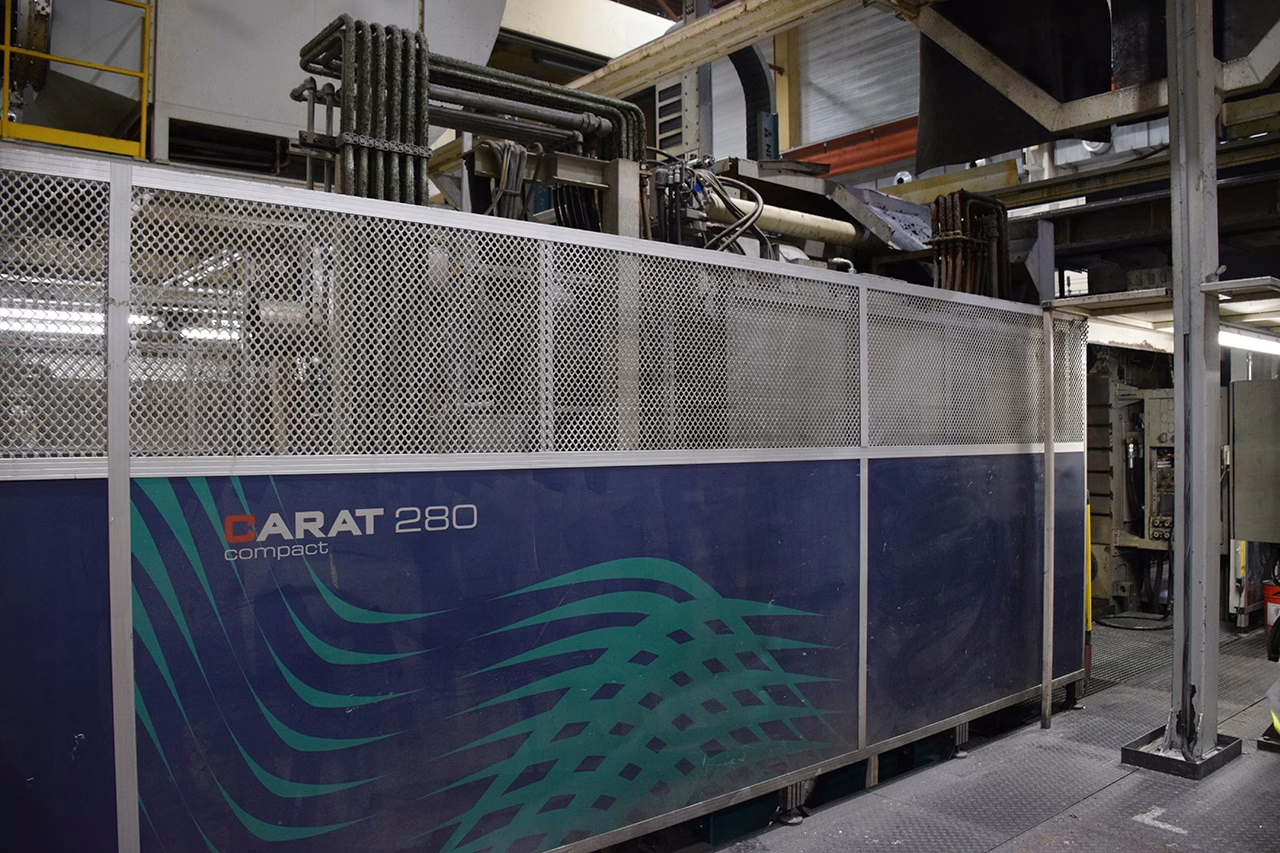
FISS Sells Two Used Bühler Carat 280 Compact Die Casting Machines to Turkey
FISS handled the international marketing, technical project planning, dismantling, documentation and transport of two identical Bühler Carat 280 compact die casting machines from Germany to Turkey.
Which die casting machines were sold to Turkey?
Two identical Bühler Carat 280 compact die casting machines were sold and relocated, including extensive automation and peripheral equipment.
The Turkish buyer planned to use the casting cells for the production of aluminium battery housings. FISS supported the project from international marketing through dismantling and relocation.
From used machine sales to complete relocation
The buyer and FISS already had a successful business relationship. The company had previously purchased additional machinery and equipment from the FISS portfolio.
Suitable die casting cells were required to expand the machine fleet for the production of large aluminium components.
International buyer search
FISS marketed the two used die casting machines on the international used machinery market.
Technical project support
Buyer and seller received support with technical coordination and planning of the machine relocation.
Dismantling and transport
Following the contract, FISS coordinated dismantling, packaging and international transport.
The Bühler Carat 280 compact at a glance
The Carat series is designed as a two-platen die casting machine for producing large and complex aluminium components.
Two identical Carat 280 compact machines
The two machines formed the centre of the complete die casting cells.
- Two-platen machine concept
- Suitable for large aluminium castings
- Identical machine configuration
- Demanding dismantling and transport requirements
Automated casting cells
Automation and peripheral equipment were dismantled before the main machines.
- KMA extraction systems
- Temperature control units
- Dosing furnaces
- Additional automation equipment
Aluminium battery housings
The used casting cells were purchased to expand the Turkish aluminium production operation.
- Large aluminium components
- Complex geometries
- Applications for electromobility
- Expansion of existing production capacity
Two machines, two dismantling phases and one shared strategy
Because both machines were still integrated into ongoing production, the relocation was carried out in two separate phases.
Project planning
An individual dismantling and transport strategy was developed for each casting cell.
First dismantling phase
Dismantling of the first die casting cell began in August 2021.
Documentation
Components were labelled and photographed, while complex work steps were additionally documented on video.
Second dismantling phase
The second casting cell was dismantled from November 2021 and packaged for transport at the beginning of December.
Transport
The machine assemblies were transported to Turkey by truck, heavy-load transport and sea freight.
How were the heavy components removed from the third floor?
The heavy components could not be removed through a conventional factory exit. A special platform solution on the third floor therefore had to be included in the project plan.
The heaviest individual machine component weighed 43 tonnes. Lifting equipment, slings, load distribution and transfer to the heavy-load transport vehicle had to be coordinated precisely.
Removal via the third floor
A suitable transfer point was prepared on a platform for the heavy machine assemblies.
Up to 43 tonnes per component
The lifting and transport equipment was dimensioned according to the heaviest individual component.
Seamless transfer to transport
Dismantling, removal, crane operations and heavy-load transport had to be coordinated closely.
How was the dismantling of the two casting cells organised?
Approximately 30 employees were involved during each dismantling phase. The work was carried out by several teams working in shifts.
- Approximately 30 employees per dismantling phase
- Work carried out in several shifts
- Operations on Saturdays and Sundays
- Several installation teams working in parallel
- Automation dismantled before the main machine
- Disconnection of electrical and hydraulic systems
- Preparation of heavy machine assemblies
- Close coordination with the Turkish customer
Why were components photographed and work steps recorded on video?
Complete documentation is essential for the subsequent reassembly of complex die casting cells.
In addition to labelling the individual components, installation situations were photographed and particularly complex procedures were recorded on video.
Clear component allocation
Machine assemblies, cables, lines and connections were labelled in a traceable manner.
Recording installation situations
Photographs documented positions, interfaces and the condition of the components.
Reproducing complex procedures
Particularly demanding work stages were recorded on video to support later reassembly.
Customer kept informed
The Turkish buyer received regular progress updates throughout the dismantling process.
How were the Bühler Carat 280 compact machines transported?
Most of the equipment was transported to Turkey by road. Particularly heavy and oversized components were additionally shipped by sea.
For standard machine assemblies, automation, peripheral equipment and accessories.
For heavy and oversized main components of the die casting cell.
Selected components were shipped by RoRo or in suitable transport crates.
International machine relocation from Germany to Turkey
The individual transport units were in transit for approximately one week. In addition to the technical requirements, the legal transport regulations of the destination country had to be considered in advance.
Why did the machines have to be stored before reassembly?
Before reassembly, the Turkish customer first had to create the required production area and carry out extensive modifications within the foundry.
Space for two complete casting cells
Hall areas, foundations and media connections had to be prepared for the new machines.
Secure storage of transport units
All transport and packaging units were stored until the production area was completed.
Customer-led work with FISS support
The customer planned to carry out reassembly and commissioning independently, with technical support from Germany when required.
How did FISS support the customer during reassembly?
Due to the coronavirus restrictions at the time and for cost reasons, the customer intended to carry out the reassembly independently.
FISS provided technical support from Germany and assisted with questions including the positioning of automation equipment and calculation of the required cooling capacity.
- Technical support from Germany
- Support with machine positioning
- Advice on automation layout
- Calculation of required cooling capacity
- Use of dismantling documentation
- Support with technical questions
- Assistance through to planned commissioning
- One central contact
Sales, dismantling and transport from a single source
In this project, FISS combined international used machinery marketing with technical project planning and complete machine relocation.
- Over 40 years of experience in foundry technology
- International marketing of used machinery
- Worldwide network of potential buyers
- Technical consulting before the sale
- Individual dismantling planning
- Professional project and photographic documentation
- Coordination of heavy-load transport
- Organisation of road and sea freight
- Support with reassembly
- One contact for the complete project
Further services for used die casting machines
Sell a used machine
Professional evaluation, marketing and processing when selling used industrial machinery.
DismantlingProfessional machine dismantling
Professional dismantling, labelling and preparation of complete machines and production systems.
TransportInternational machine transport
Coordination of loading, heavy-load transport, sea freight and delivery to the new location.
Questions about the sale of the Bühler Carat 280 compact machines
Which die casting machines were sold?
What were the machines intended to produce?
Why was dismantling carried out in two phases?
How heavy was the largest individual component?
How large was the dismantling team?
How many transport vehicles were required?
Which components were shipped by sea?
Did FISS support the subsequent reassembly?
Are you planning to sell, purchase or transport a die casting machine internationally?
Send FISS the manufacturer, model, year of manufacture, machine location, technical documentation and available photos. Our team will assess the requirements and discuss the appropriate procedure with you.
Telephone: +49 (0)7181 60696-0 · Email: info@fiss-machines.com


