




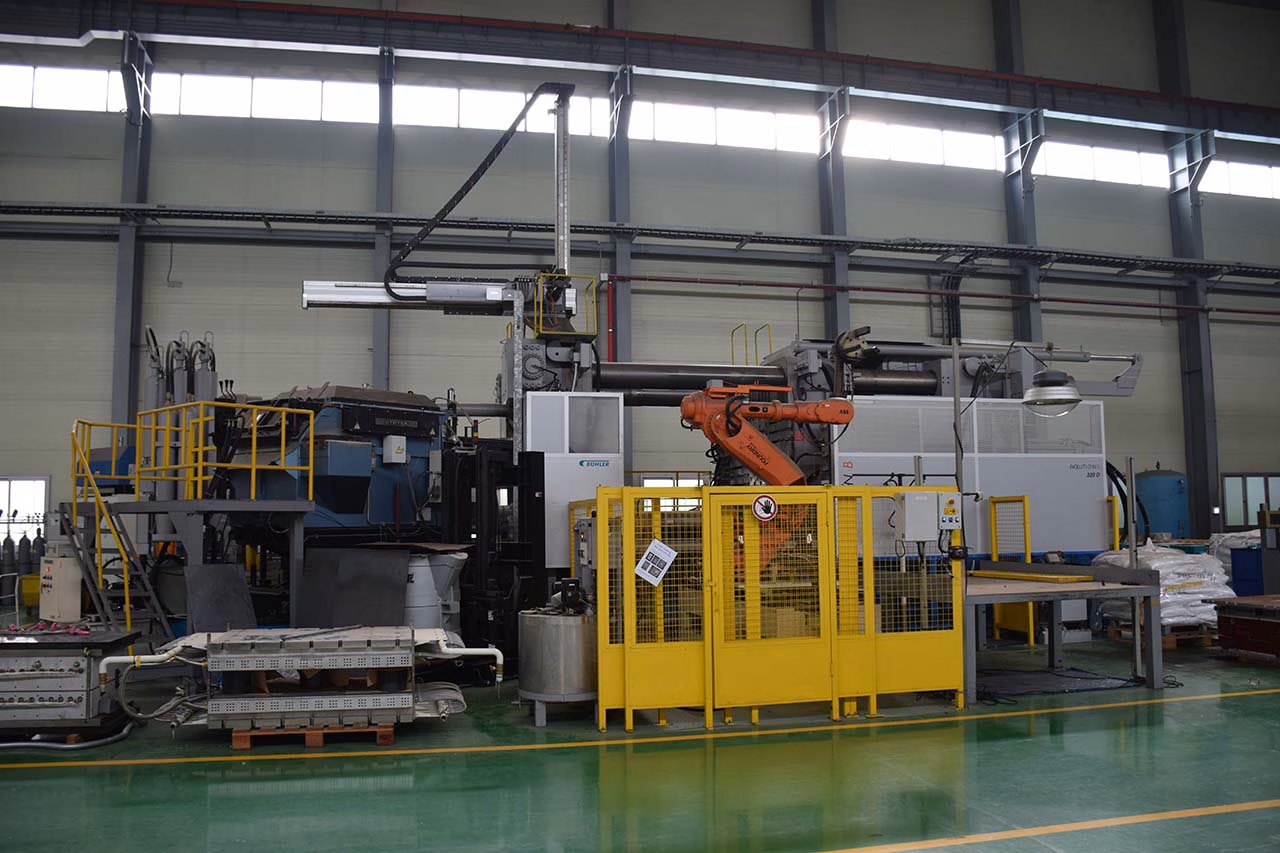
FISS Exports a Bühler Evolution 320 D Die Casting Machine from Korea to Germany
FISS carried out the professional dismantling, seaworthy packaging and international transport of a Bühler Evolution 320 D die casting machine from Korea to Germany. The machine has a locking force of 32,000 kN and a total weight of approximately 210 tonnes.
Which die casting machine was exported from Korea to Germany?
The project involved a Bühler Evolution 320 D die casting machine with a locking force of 32,000 kN and a total weight of approximately 210 tonnes.
The project included professional dismantling at the production site in Korea, cataloguing of the components, customised seaworthy packaging, loading onto flatracks and into open-top containers, as well as subsequent transport to Germany.
Complex export of a 210-tonne die casting machine
The international transport of a large die casting machine requires considerably more than simply organising a transport vehicle.
Heavy machine assemblies, sensitive components and large individual dimensions must already be considered during dismantling and coordinated with the subsequent sea freight process.
210 tonnes total machine weight
The high total weight required precise planning of dismantling, lifting equipment, load distribution and transport equipment.
Large machine assemblies
Platen assemblies, the cylinder plate and other large components had to be handled separately and secured on suitable flatracks.
Intercontinental transport
The long route from Korea to Germany placed high demands on packaging, load securing and logistical coordination.
The Bühler Evolution 320 D at a glance
The die casting machine was dismantled into several large and smaller assemblies for international transport.
Bühler Evolution 320 D
A large cold-chamber die casting machine for demanding industrial casting processes.
- Locking force of 32,000 kN
- Total weight of approximately 210 tonnes
- Massive machine construction
- Several heavy main assemblies
Platens and cylinder plate
The largest components included the fixed and moving platens as well as the cylinder plate.
- Very high individual weights
- Large external dimensions
- Loading onto suitable flatracks
- Defined load handling and securing
Components in open-top containers
Smaller machine components were grouped, packaged securely for transport and loaded into open-top containers.
- Structured allocation of components
- Protection against moisture and damage
- Secure container loading
- Preparation for reassembly
From dismantling in Korea to delivery in Germany
The individual work stages were coordinated precisely so that all components could arrive safely and completely at the new location.
Project planning
Machine scope, dismantling sequence, individual weights, packaging requirements and transport routes were coordinated in advance.
Dismantling
The machine was professionally dismantled into transportable assemblies at the site in Korea.
Cataloguing
All components were recorded and catalogued clearly to support the later reassembly process.
Packaging and loading
Large components were secured on flatracks, while smaller components were placed in open-top containers.
Sea and land transport
Following sea transport, the machine was transported by road to its final destination in Germany.
Why is cataloguing machine components important?
With a complex die casting machine, not only the large machine assemblies but also cables, connections, fasteners and smaller components must be assigned clearly.
Structured cataloguing simplifies inspection after arrival and reduces the time and effort required for subsequent machine reassembly.
- Documentation of machine assemblies
- Clear labelling of components
- Allocation of cables and lines
- Recording of fasteners
- Preparation for reassembly
- Reduction of possible allocation errors
- Completeness checks
- Traceable transport documentation
How were the sensitive components protected for sea transport?
Packaging tailored to the machine components was used for the long transport route by sea.
Protection against moisture
Sensitive surfaces and technical components had to be protected against moisture and the conditions encountered during sea transport.
Securing against impact and movement
Packaging and securing prevented components from shifting or damaging each other during the sea voyage.
Transport of large machine plates
The fixed and moving platens, cylinder plate and other large components were placed on suitable flatracks.
Open-top containers for smaller assemblies
Smaller machine components were packaged securely and loaded into open-top containers for sea transport.
International machine transport from Korea to Germany
Following dismantling, packaging and loading, the Bühler Evolution 320 D was transported to Germany by sea and then moved by road to its final destination.
What must be considered when exporting a large die casting machine?
Has the complete scope been recorded?
The machine, peripheral equipment, control cabinets, accessories and fasteners must be documented completely.
Are all weights known?
Individual weights and centres of gravity determine lifting equipment, flatracks, containers and load securing.
Is the packaging suitable for sea freight?
Components require suitable protection against moisture, movement and mechanical stress.
Are all components assigned clearly?
Systematic labelling simplifies inspection, unloading and reassembly.
Have suitable flatracks and containers been selected?
Size, weight and component design determine the appropriate transport and loading concept.
Are all project partners coordinated?
Dismantling, packaging, loading, sea freight and road transport must be scheduled to work together.
One contact for the complete machine export project
International machine relocation projects require technical experience, careful preparation and reliable coordination of all project partners.
FISS supports foundries and industrial companies with the dismantling, packaging and international transport of used die casting machines.
- Over 40 years of experience in foundry technology
- Technical planning of complex machine exports
- Professional dismantling on site
- Cataloguing of machine components
- Customised seaworthy packaging
- Flatrack and container loading
- Coordination of international sea freight
- Organisation of road transport
- Support with reassembly
- One central contact for the complete project
Further services for used die casting machines
Professional machine dismantling
Professional dismantling, labelling and preparation of machines and production systems.
TransportInternational machine transport
Coordination of loading, heavy-load transport, sea freight and delivery to the new location.
Used machinesUsed die casting machines
Available cold-chamber and hot-chamber machines as well as complete die casting cells.
Questions about the export of the Bühler Evolution 320 D
Which die casting machine was exported?
What locking force does the machine have?
What was the total weight?
Why were the components catalogued?
How were the large machine components transported?
Where were the smaller components stored?
How was the machine transported after arriving in Germany?
Does FISS support complete international machine export projects?
Are you planning the international transport of a die casting machine or production system?
Send FISS the manufacturer, model, current location, destination, equipment scope, weights, technical documentation and available photos. Our team will assess the requirements and discuss the appropriate procedure with you.
Telephone: +49 (0)7181 60696-0 · Email: info@fiss-machines.com


