




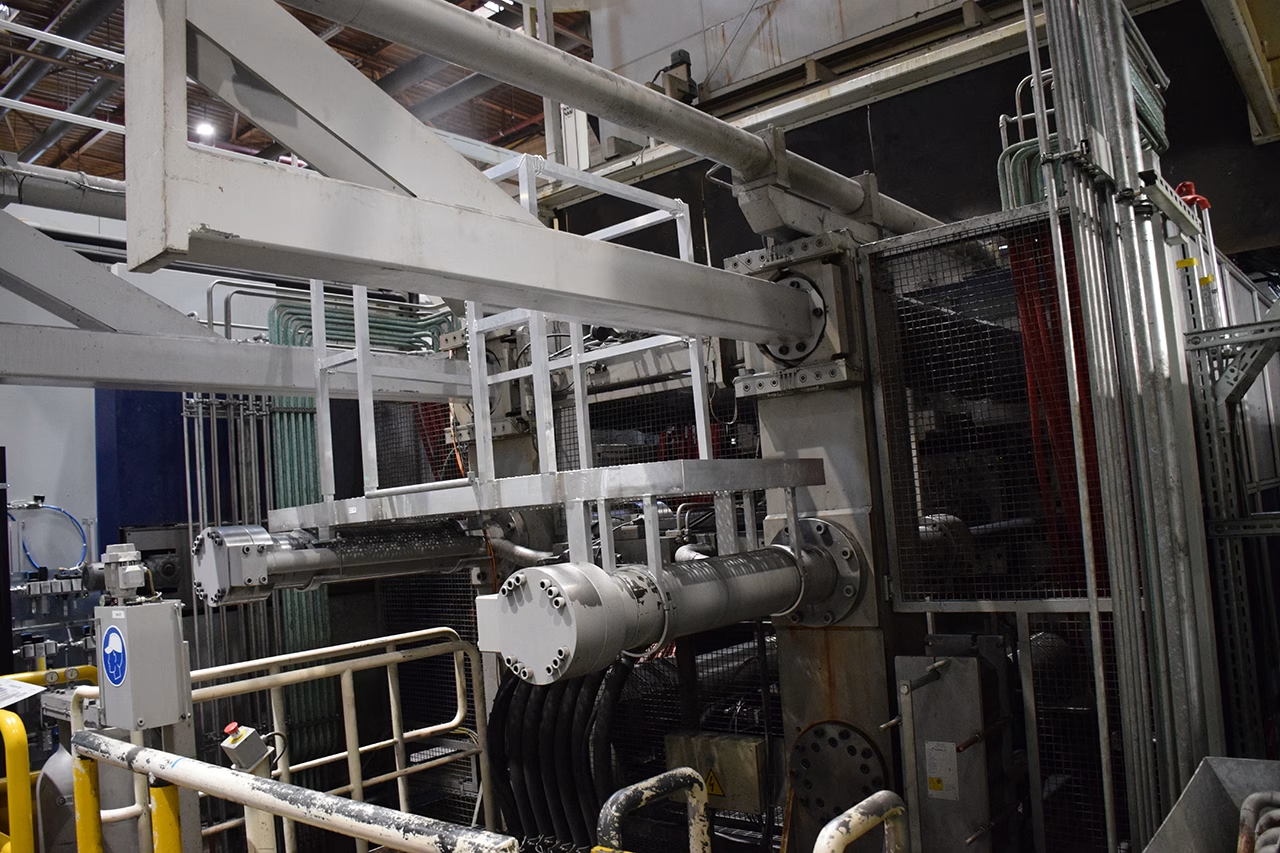
Successful Sale, Dismantling and Transport of an Italpresse TF 2700 Die Casting Cell
FISS successfully arranged the sale of an Italpresse TF 2700 die casting cell and subsequently handled the professional dismantling and international relocation over a distance of approximately 6,000 km. The used casting cell was selected for the production of aluminium escalator steps.
Which Italpresse die casting cell was sold and relocated?
FISS arranged the sale of an Italpresse TF 2700 die casting cell with 2,900 tonnes of clamping force. The customer was looking for a suitable casting cell for the production of aluminium escalator steps.
In addition to machinery brokerage, FISS acted as project partner for planning the dismantling, documentation, packaging, loading and coordination of the international machinery logistics.
The right casting cell for a specific production requirement
The project began with the search for a suitable casting cell for manufacturing aluminium escalator steps.
Through its international used-machinery network, FISS was able to identify a suitable Italpresse TF 2700 and support the customer with the technical selection of the machine.
Analyse the production task
The customer required a large die casting cell for the economical production of aluminium escalator steps.
Find a suitable used machine
The Italpresse TF 2700 was identified as a suitable technical solution for the planned application.
Coordinate the complete project
After the sale, FISS coordinated dismantling, packaging, loading and international transport logistics.
Italpresse TF 2700 with toggle-free clamping unit
The Italpresse TF 2700 is a large cold-chamber die casting machine with toggle-free clamping technology and a clamping force of 2,900 tonnes.
Toggle-free machine concept
The machine operates without a conventional toggle system and is designed for large and demanding die casting applications.
- 2,900 t clamping force
- Toggle-free clamping technology
- For large die casting dies
- For industrial series production
Flexibility for changing dies
The machine concept is particularly suitable for production environments with complex castings and regularly changing dies.
- Different die configurations
- Complex casting requirements
- Flexible production
- Large component geometries
Large-format aluminium die casting
The TF series can be used for a wide range of large aluminium die-cast components.
- Automotive components
- Escalator steps
- Chassis components
- Technical industrial components
From machinery brokerage to international transport
Relocating a complete die casting cell requires precise coordination between technical work, personnel, packaging and transport logistics.
Machine selection
FISS identified the TF 2700 as a suitable used machine for the production requirement.
Dismantling planning
Sequence, personnel, lifting equipment, removal and packaging were planned before the project started.
Dismantling
Automation, peripheral equipment and subsequently the die casting machine were systematically dismantled.
Documentation
Components were labelled and photographed, while complex work steps were additionally documented.
Transport
Standard and heavy components were transported to the new location by road and sea freight.
Around 30 employees involved in dismantling the die casting cell
Dismantling began in October 2021. At certain stages, around 30 employees were involved in the work. The dismantling was carried out in multiple shifts and partly at weekends.
Automation and peripherals first, main machine afterwards
When dismantling a complete casting cell, the sequence must be adapted to the spatial conditions and the technical dependencies between the individual systems.
Automation and peripheral equipment were removed first. This was followed by the spraying and extraction systems and finally the Italpresse TF 2700 itself.
Dismantle supply and auxiliary systems
The first systems dismantled included KMA exhaust systems, temperature control units and dosing furnaces.
Dismantle spraying and extraction portals
The Wollin spraying portal and extraction portal were then dismantled in a controlled manner.
Dismantle the Italpresse TF 2700
Finally, the die casting machine was separated into transportable assemblies.
Labelling and documentation for subsequent reassembly
Structured documentation makes it easier to identify components and supports subsequent reassembly at the new machine location.
- Labelling of dismantled machine parts
- Photographic documentation of components
- Documentation of connections and interfaces
- Video recordings of complex work steps
- Structured assignment of individual assemblies
- Ongoing project information for the customer
- Traceable dismantling sequence
- Support for subsequent reassembly
Special removal via a platform on the third floor
A particular technical challenge was the removal of the heavy machine components. A project-specific solution using a platform on the third floor had to be planned.
Plan removal at an early stage
Weight, dimensions, building conditions and available lifting equipment had to be considered before dismantling started.
Move heavy assemblies in a controlled manner
The machine components had to be safely moved from the production area to the designated loading position.
Adapt the transport route to the site
The spatial conditions required a project-specific solution for removing the machine components.
Integrate dismantling and logistics
The dismantling sequence was coordinated with the subsequent movement and loading of the components.
Approximately 6,000 kilometres to the new production site
The relocation required a combination of standard truck transport, heavy-duty transport and sea freight.
Trucks
Part of the machine components was transported by road using standard trucks.
Heavy-duty transporters
Large and heavy components required specialised heavy-duty transport vehicles.
Special cargo units
Five special cargo units were shipped from Germany by RoRo or in crates.
Weeks in transit
Depending on route and cargo, the transport vehicles were in transit for approximately two to three weeks.
Kilometres
The complete relocation covered a distance of approximately 6,000 kilometres.
Coordinate routes, permits and transport equipment
International machinery transport requires early assessment of weights, dimensions, transport routes and country-specific regulations.
Additional permits may be required for heavy-duty transport. In the Italpresse TF 2700 project, transport of the heaviest casting unit was delayed due to the required transport permit.
- Record weights and dimensions
- Define suitable transport routes
- Match transport equipment to the components
- Coordinate heavy-duty transport permits
- Prepare road transport
- Organise sea freight
- Prepare special cargo units
- Coordinate the schedule with dismantling
Production of large and complex aluminium die-cast parts
The Italpresse TF 2700 can be used for a range of large-format and technically demanding aluminium die-cast products.
Automotive industry
Applications can include engine blocks, transmission housings or oil pans.
Escalator steps
In this project, the machine was specifically selected for the production of aluminium escalator steps.
Industrial components
Chassis parts, radiators and other technical large components can also represent potential applications.
Electrical engineering
Further applications can include components for electrical equipment, telecommunications and electric motors.
Technical support after transport
In this specific project, the customer carried out reassembly and commissioning independently due to cost considerations and project conditions. FISS provided the required technical support from Germany.
Reuse dismantling information
Labels, photographs and project documentation support component identification during reassembly.
Position machine components precisely
During reassembly, the individual assemblies must be positioned and coordinated with each other.
Reconnect mechanical and utility systems
Electrical, pneumatic and other utility connections are restored after positioning.
Check equipment functions
After reassembly and reconnection, machine and peripheral functions can be systematically tested.
One contact for complex machinery relocations
FISS supports companies with the purchase, sale and international relocation of used die casting machines, casting cells and complete foundry systems.
- Long-standing experience with die casting machines
- International brokerage of used casting cells
- Technical consulting for machine selection
- Site and dismantling planning
- Mechanical and electrical dismantling
- Labelling and documentation of components
- Professional machinery packaging
- Coordination of lifting and heavy-duty transport equipment
- International machinery logistics
- Support with reassembly and commissioning
From a used casting cell to international site relocation
Particularly for large die casting systems, machinery sales, dismantling and logistics must be planned as one coordinated project.
Broker a suitable used machine
FISS supports the search, technical assessment and marketing of die casting machines and complete casting cells.
Dismantle systems in a structured manner
Mechanical, electrical, automation and peripheral equipment is prepared for relocation according to the project requirements.
Coordinate transport routes and heavy-duty transport
Depending on component, weight and destination, road transport, heavy-duty transport and sea freight can be combined.
Technical support at the destination
Depending on the project, FISS can also support reassembly, alignment, reconnection and commissioning.
Further solutions for die casting machines and equipment relocations
Buy die casting machines
Used cold-chamber and hot-chamber die casting machines as well as complete casting cells.
DismantlingProfessionally dismantle casting cells
Planning, dismantling, documentation, packaging and preparation of complete systems for relocation.
TransportInternational machinery logistics
Organisation of road transport, heavy-duty transport, sea freight and complete site relocation.
Questions about the Italpresse TF 2700 and the relocation project
Which die casting machine was sold?
What clamping force does the Italpresse TF 2700 have?
What product was the machine purchased for?
How far was the equipment relocated?
How many employees were involved in dismantling?
Which peripheral equipment was dismantled?
How was the dismantling documented?
How was the die casting cell transported?
How many vehicles were used for transport?
Did FISS also carry out the reassembly?
Can FISS relocate complete die casting cells internationally?
Are you planning to buy, sell or internationally relocate a die casting cell?
Send FISS the manufacturer, model, year of manufacture, clamping force, machine location, destination, scope of equipment, available peripheral equipment, technical documentation and photos. Our team will review the requirements and support you with machinery purchase, sale, dismantling, documentation, packaging, loading and international transport logistics.
Telephone: +49 (0)7181 60696-0 · Email: info@fiss-machines.com


