




Manufacturer · Low-pressure and gravity casting · Germany
Used Kurtz low-pressure casting machines Low-pressure, gravity and tilt casting
Kurtz GmbH & Co. KG, part of the Kurtz Ersa group, built foundry machines from 1983: FSC, SC, TC and SR low-pressure casting machines, AK10 and AK01 gravity and tilt casting machines, and trimming presses. In April 2026 Kurtz Ersa agreed to sell its foundry machinery business to the Austrian company Fill, which is to take over service for Kurtz equipment as well. This page lists the used Kurtz machines currently at FISS, with the data you need to compare them.
- since 1983foundry machines at Kurtz
- FSC · SC · TC · SRlow-pressure series
- 2026sale to Fill agreed
Machine you need not listed? Send FISS a search request
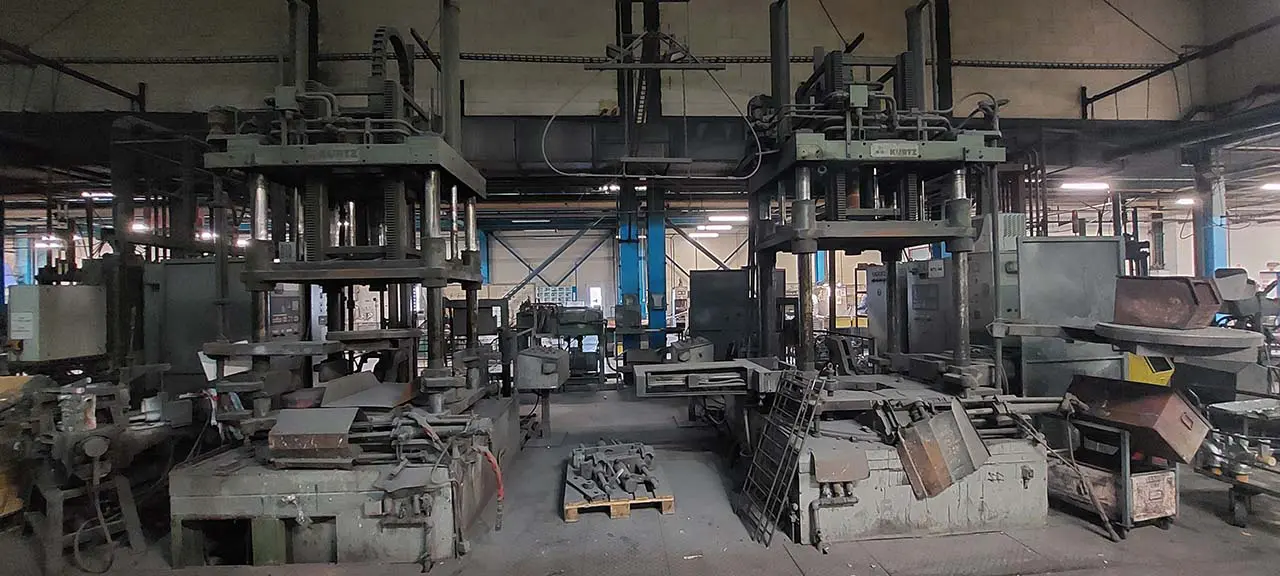
Kurtz Al 10-7TC (offer ND1346) · Photo: FISS
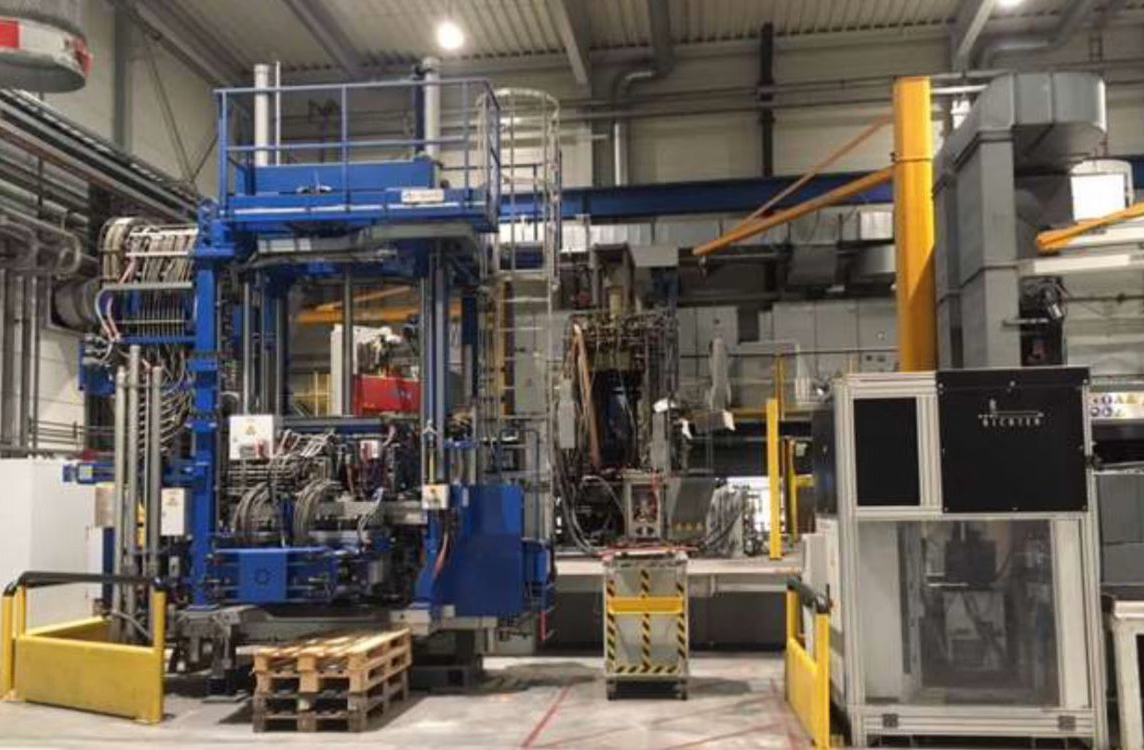

 Details
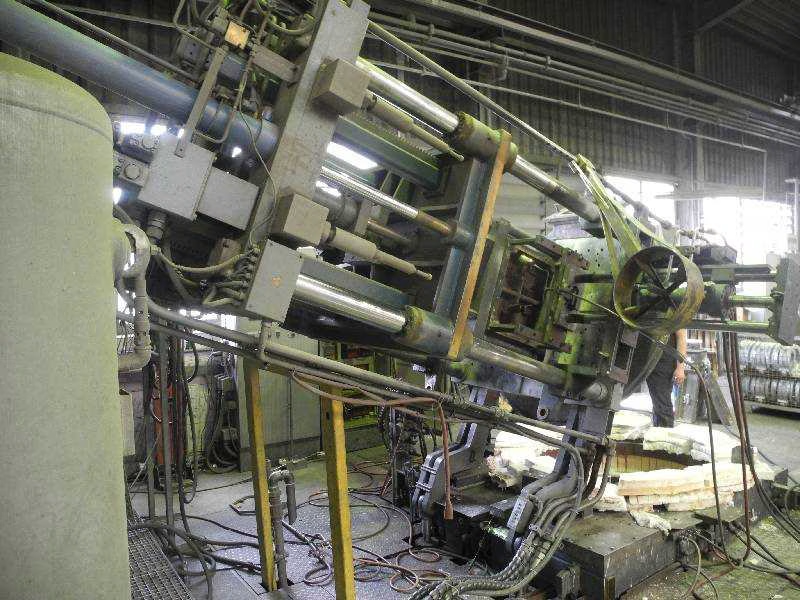
Knowledge · Kurtz
Buying a used Kurtz: series, furnace concept and service
With a used Kurtz low-pressure machine, the furnace concept matters more than the clamping force: a shuttle furnace (FSC), a retractable exchange furnace (SC) or a fixed crucible furnace with a tilting closing unit (TC). The numbers in a type such as AL 10-7 TC describe the platen size. Buyers should also know that in April 2026 Kurtz Ersa agreed to sell the business to Fill. This guide explains the series using the manufacturer's data and shows what to check before you buy.
01 · Overview
Kurtz at a glance
- Manufacturer
- Kurtz GmbH & Co. KG, part of the Kurtz Ersa group, headquartered in Kreuzwertheim-Wiebelbach, Germany
- Origins
- 1779 in Hasloch in the Spessart region; own grey iron foundry from 1852, machine building from 1860
- Foundry machines
- added to the range in 1983 as part of a complete foundry programme, according to the company history
- Low-pressure
- FSC, SC, TC and SR series for permanent mould casting in aluminium or magnesium alloys, plus machines for sand, ceramic and plaster moulds
- Gravity and tilt casting
- AK10 (gravity, maximum clamping surface 1,000 × 800 mm) and AK01 (tilt)
- Trimming presses
- KPS500 to KPS3000 column presses with 500–3,000 kN press force, also with sliding-tilting table
- Responsibility today
- asset deal with Fill Gesellschaft m.b.H., Gurten, Austria, signed on 20 April 2026; Fill takes over know-how, patents and worldwide service for Kurtz foundry equipment
How to read Kurtz type designations
According to Kurtz data sheets, the number pair roughly gives the mould mounting area between the columns in decimetres: 10-7 means 1,020 × 740 mm, 13-13 1,350 × 1,350 mm and 18-16 1,800 × 1,680 mm.
The letters identify the series and therefore the furnace concept: FSC with furnace shuttle, SC with stationary closing unit and exchange furnace, TC with tilting closing unit and fixed crucible furnace, and SR as the entry-level model.
Older designations such as AK 96 or ND-GM also appear on the used market. For these, rely on the rating plate and the machine documents.
02 · Series
Kurtz series: FSC, SC, TC and AK
Every Kurtz low-pressure machine has a holding furnace below the die, from which the melt is pushed through riser tubes into the permanent mould. The series differ mainly in how the furnace is changed and maintained. Melt quality still decides the result; see Aluminium melt quality: degassing and filtration.
Low-pressure · furnace shuttle
Kurtz FSC
1,020 × 740 to 1,800 × 1,680 mm mould mounting area
- 10-7
- 13-13
- 16-13
- 18-16
- Furnace shuttle with exchange in parallel with production: one furnace casts while the second is prepared outside the machine
- Clear width 1,805–2,600 mm, closing plate stroke 1,100–1,800 mm
- Used, according to Kurtz, for chassis and structural parts such as axle carriers, wheel carriers, wishbones and battery housings
Special versions such as AL18-12FSC and AL28-18-18FSC for engine blocks and large parts
Low-pressure · exchange furnace
Kurtz SC
300–1,500 kg crucible exchange furnace (AL13-13SC)
- AL13-13SC
- Stationary closing unit; the furnace is changed by crane, with centring devices and multi-couplings to speed up the swap
- 1 to 5 riser tubes via the Kurtz DOM system; casting weight up to 700 kg depending on furnace
- Available as a 2-in-1 version for permanent moulds and sand core packages, sand moulds up to 1,250 × 1,500 × 1,500 mm
Described by Kurtz as the classic low-pressure machine in its range
Low-pressure · crucible furnace
Kurtz TC
1,020 × 740 to 1,380 × 1,330 mm mould mounting area
- 10-7
- 13-13
- Tilting closing unit for quick riser tube changes and easy access to the furnace
- Fixed crucible furnace, suited to frequent alloy changes and buildings with limited headroom
- Size 13-13 in two versions: 1,350 × 1,350 mm with 1,100 mm stroke, or 1,380 × 1,330 mm with 1,800 mm stroke
Found on the used market as e.g. AL 10-7 TC; so is the SR entry-level model, e.g. AL 16-12 SR
Permanent mould · gravity and tilt
Kurtz AK10 and AK01
1,000 × 800 mm max. clamping surface (AK10)
- AK10
- AK01
- AK10 for gravity casting, AK01 for tilt casting; maximum clear width 1,660 mm (AK10)
- Modular system: closing units, ejectors and core pulls are interchangeable, including between the two types
- Manual lever hydraulics or a freely programmable control with recipe management
Specification varies widely: list core pulls and extra closing units one by one
03 · Comparison
Kurtz FSC and TC compared
| Feature | FSC (furnace shuttle) | TC (crucible furnace) |
|---|---|---|
| Furnace concept | FSC (furnace shuttle)exchange furnace on a shuttle, swapped while production continues | TC (crucible furnace)fixed crucible furnace |
| Closing unit | FSC (furnace shuttle)fixed, the furnace moves out | TC (crucible furnace)tilts for riser tube changes and furnace maintenance |
| Sizes per data sheet | FSC (furnace shuttle)10-7, 13-13, 16-13, 18-16 | TC (crucible furnace)10-7, 13-13 (two versions) |
| Clear width | FSC (furnace shuttle)1,805–2,600 mm | TC (crucible furnace)1,805–2,300 mm |
| Closing plate stroke | FSC (furnace shuttle)1,100–1,800 mm | TC (crucible furnace)1,100–1,800 mm |
| Typical use according to Kurtz | FSC (furnace shuttle)series parts for chassis and structure | TC (crucible furnace)jobbing foundries, frequent alloy changes, low headroom |
Sources: Kurtz product pages for FSC and TC (archived April 2026). For a used machine, its rating plate and data sheet take precedence.
04 · Buying guide
Checklist: inspecting a used Kurtz machine
On Kurtz low-pressure machines the main risks sit in the furnace, the riser tube connection and the pressure control. Clarify these points before you buy.
- Identify series and size
Use the rating plate to confirm whether you have an FSC, SC, TC or SR machine and which size. The TC 13-13 exists with 1,100 mm or 1,800 mm stroke, which limits the maximum die height.
- Holding furnace
Kurtz uses resistance furnaces with thyristor control. Inspect heating elements, thyristor units, crucible or refractory lining and furnace cover, and ask for the furnace capacity and the date of the last relining.
- Riser tube and furnace connection
Depending on the die, Kurtz machines run 1 to 5 riser tubes on the DOM system. Check sealing faces, riser tube holders, spare riser tubes and whether the connection suits your dies.
- Furnace change on FSC and SC
Inspect the shuttle or travel drive, centring devices and multi-couplings. Confirm whether a second furnace is included, because only then can the furnace be changed while production continues.
- Low-pressure control
Pressure control governs filling and holding pressure. Ask to see pressure curves and recipes, and check valves, pressure sensors and the automatic pre-pressure compensation for the falling bath level.
- Closing unit and cooling
Kurtz closing units guide the platen on 4 columns with 2 cylinders. Check guide bushes, platen parallelism and, on TC machines, the tilting mechanism. Count the cooling circuits and multi-couplings to the die.
- Water-glycol hydraulics
According to the data sheet, Kurtz uses a water-glycol based hydraulic fluid. Have the water content and fluid condition tested and look for leaks and worn seals. On AK10 and AK01 gravity machines, add core pulls and ejectors to the list.
- Control, documents and service
Record the PLC version, visualisation and stored recipes. Hydraulic and electrical diagrams matter, because service for Kurtz foundry equipment is to move to Fill under the 2026 agreement. If needed, plan reconditioning at the same time.
05 · Services
Services for used Kurtz machines
FISS supports the purchase and sale of used Kurtz low-pressure and gravity casting machines, from choosing the right machine to dismantling, transport, recommissioning and reconditioning of low-pressure casting machines.
Practical guide to relocation: Relocation: dismantling and transport
06 · FAQ
Frequently asked questions about used Kurtz casting machines
Who looks after Kurtz foundry machines today?
Kurtz Ersa sold its foundry machinery business to Fill Gesellschaft m.b.H. of Gurten, Austria, in an asset deal. The contract was signed on 20 April 2026, with completion planned for 1 July 2026. Under the agreement, Fill takes over the patents and know-how for low-pressure casting machines and worldwide service for Kurtz foundry equipment.
What do the numbers in Kurtz AL 10-7 TC mean?
They roughly give the mould mounting area between the columns in decimetres. According to Kurtz, size 10-7 has a mounting area of 1,020 × 740 mm. TC is the series with a tilting closing unit and a fixed crucible furnace.
How do Kurtz FSC, SC and TC differ?
In the furnace concept. FSC uses a furnace shuttle and changes the furnace while production continues. SC has a stationary closing unit and an exchange furnace swapped by crane. TC has a fixed crucible furnace and a tilting closing unit and suits frequent alloy changes.
Which alloys and moulds are Kurtz low-pressure machines built for?
Kurtz names low-pressure permanent mould casting in aluminium or magnesium alloys, and casting in lost moulds made of sand, ceramic or plaster. The AL13-13SC is offered as a 2-in-1 solution for permanent moulds and sand core packages, with casting weights up to 700 kg.
What is the difference between the Kurtz AK10 and AK01?
The AK10 is a gravity casting machine; the AK01 is a tilt casting machine designed for controlled mould filling. Kurtz gives the AK10 a maximum clamping surface of 1,000 × 800 mm; closing units, ejectors and core pulls can be swapped between them. See gravity casting machines for used equipment.
Can I sell my Kurtz machine to FISS?
Yes. Send the series, size, year of manufacture, furnace equipment and photos via the purchase page. FISS assesses single machines as well as complete low-pressure cells with furnaces, trimming press and peripherals.
07 · Read more
More manufacturers and low-pressure casting know-how
Contact
Looking for a Kurtz machine, or selling one?
Tell us the series, size and furnace concept. We will come back with suitable machines or an assessment of your Kurtz equipment.
As of November 2026. Technical data from public information published by the Kurtz Ersa group (product pages archived 2025/2026, Kurtz Ersa Magazine) and the press release on the sale to Fill; the rating plate and documents of each individual machine take precedence. Sources:
- pressetext: Fill übernimmt Kurtz-Ersa-Gießereimaschinenbau (28.04.2026)
- Kurtz Ersa: Unternehmen und Geschichte
- Kurtz: Low Pressure Casting, Übersicht (Archivstand 16.05.2026)
- Kurtz: FSC Low Pressure Casting Machines with furnace shuttle system (Archivstand 17.04.2026)
- Kurtz: TC Low Pressure Casting Machine (Archivstand 16.04.2026)
- Kurtz Ersa Magazin 60: 2-in-1 low pressure casting machine for permanent and sand mold
- Kurtz: AK10 Gravity Casting Machine (Archivstand 15.06.2026)
- Kurtz: KPS Series Column Trimming Presses (Archivstand 17.04.2025)
