




Manufacturer · Cold chamber die casting · Switzerland
Used Bühler Die Casting Machines Carat and Evolution
Bühler of Uzwil, Switzerland, has built die casting machines since 1927. Its current range covers cold chamber die casting of aluminium and magnesium, from the Evolution toggle machine at 2,600 kN to the Carat two-platen machine at 92,000 kN locking force. This page lists the used Bühler machines, controls and components FISS currently offers.
- 2,600–9,000 kNEvolution · toggle
- 10,500–92,000 kNCarat · two-platen
- since 1927die casting from Uzwil
Size you need not listed? Send FISS a search request
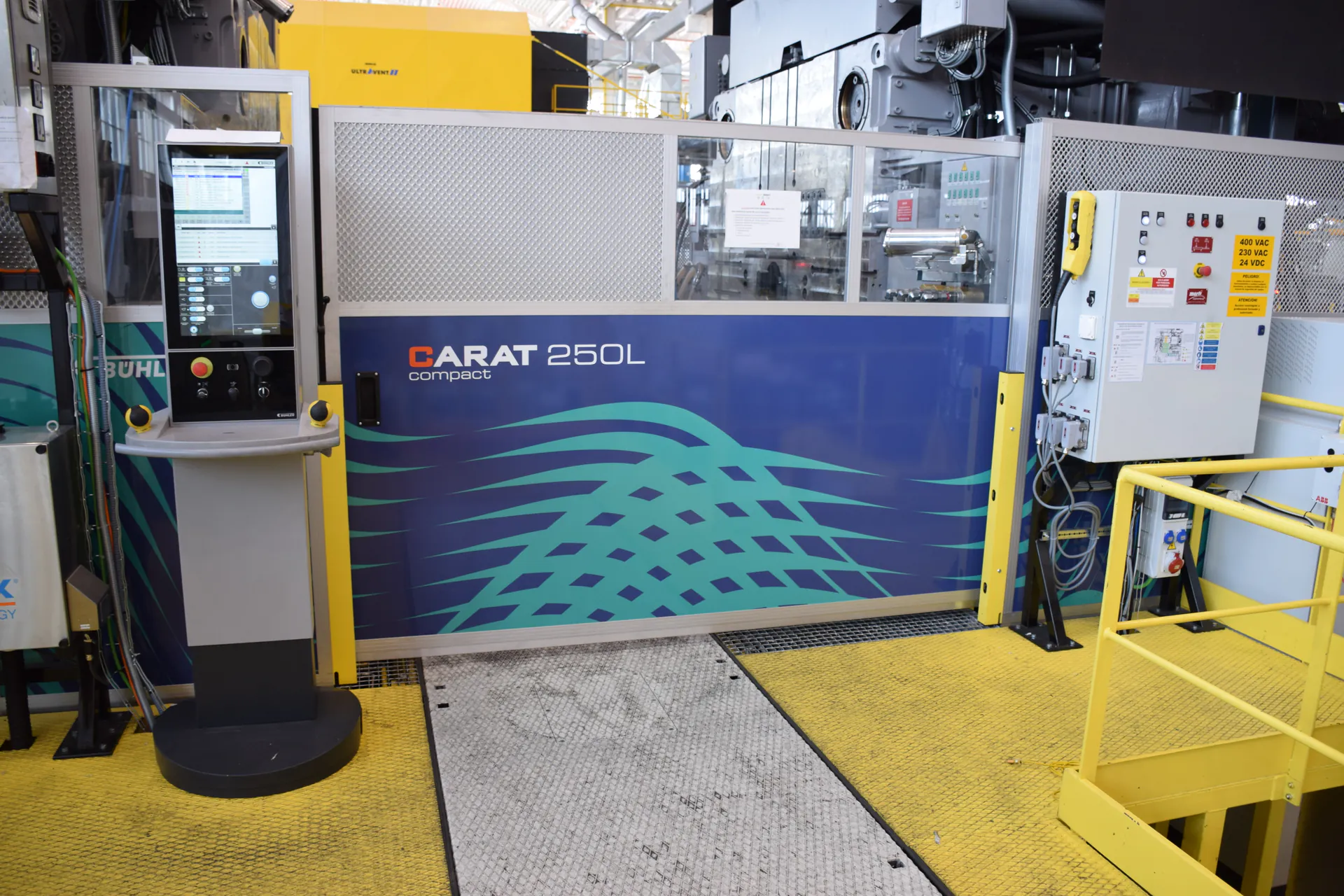
Bühler Carat 250 L compact · Photo: FISS

 Details
Knowledge · Bühler die casting
Buying a used Bühler die casting machine: series, technology, criteria
Bühler is one of the best-known makers of cold chamber die casting machines. With a used machine, what matters most is the exact series, size and version, and the condition of the clamping unit, shot end and control system. This overview summarises the manufacturer's published data and shows what to check before you buy.
01 · Overview
Bühler at a glance
- Manufacturer
- Bühler AG, Uzwil (Switzerland)
- Die casting since
- 1927: first die casting machine built in Uzwil
- Process
- Cold chamber die casting of aluminium and magnesium
- Current series
- Evolution, Ecoline DS (three-platen toggle), Carat (two-platen)
- Locking force
- 2,600 kN (Evolution 26) to 92,000 kN (Carat 920)
- Shot control
- Real-time closed-loop control (Bühler “SC”, shot control)
- Control system
- DataView today; older machines often have DataNet
- Typical parts
- Powertrain, e-mobility, structural parts, megacasting, white goods, 3C housings
How to read the type designation
For Carat and Evolution, the number in the type designation is the maximum locking force in units of 100 kN: an Evolution 66 has 6,600 kN, a Carat 140 has 14,000 kN.
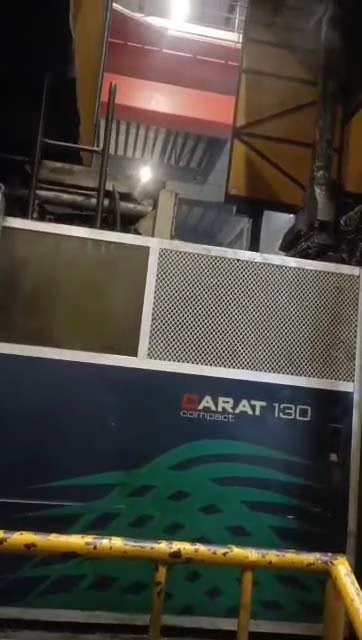
Many sizes come in Lean, Compact and Extended versions. Bühler's data sheets give different technical values for each version of the same size. The full designation on the type plate, such as “Carat 130 compact”, is what counts.
On the used market you will also find older Bühler generations with designations such as SC, H or GFU. For these machines the machine-specific documentation matters most.
02 · Series
Bühler Evolution and Carat: series and technology
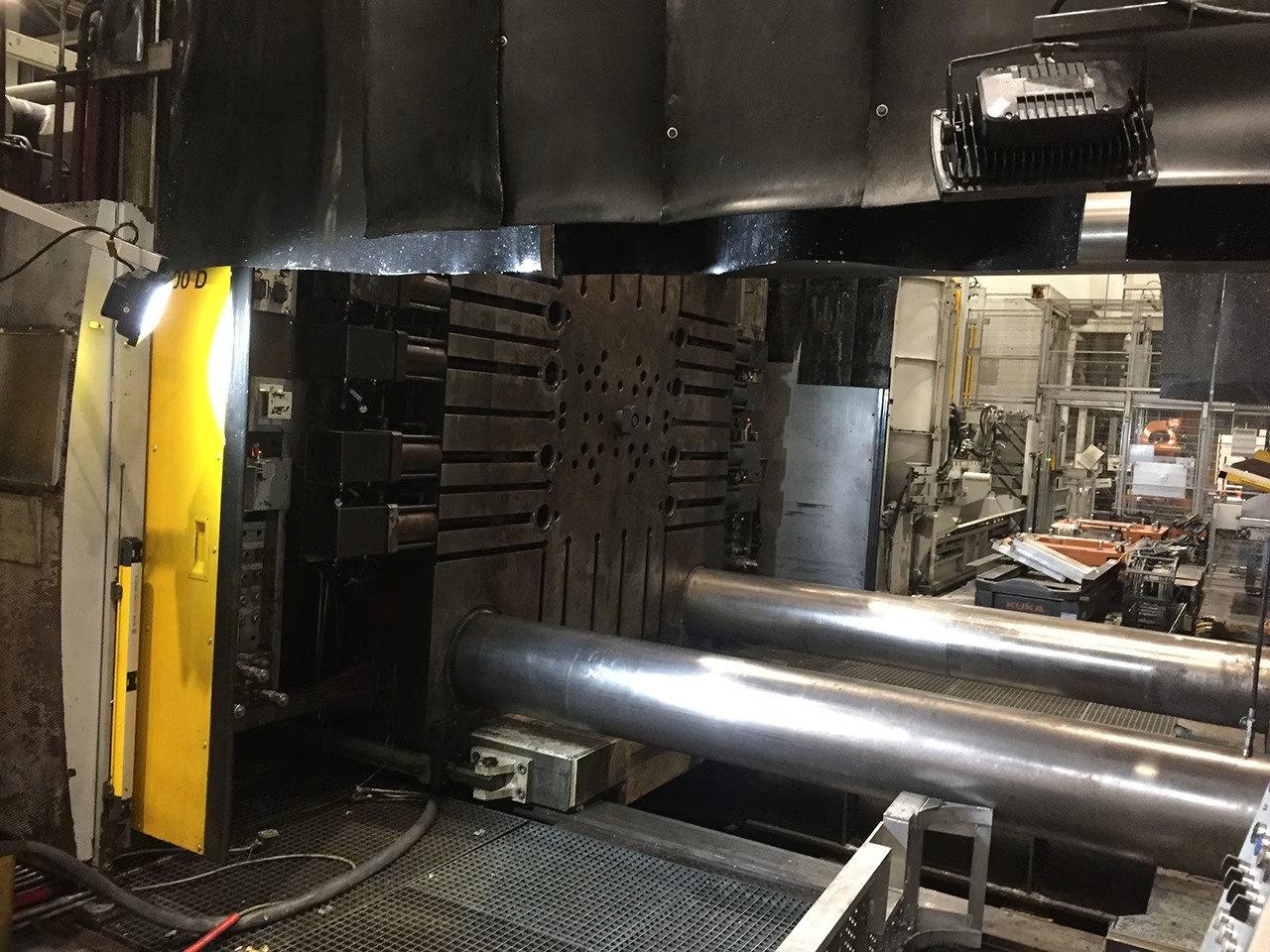
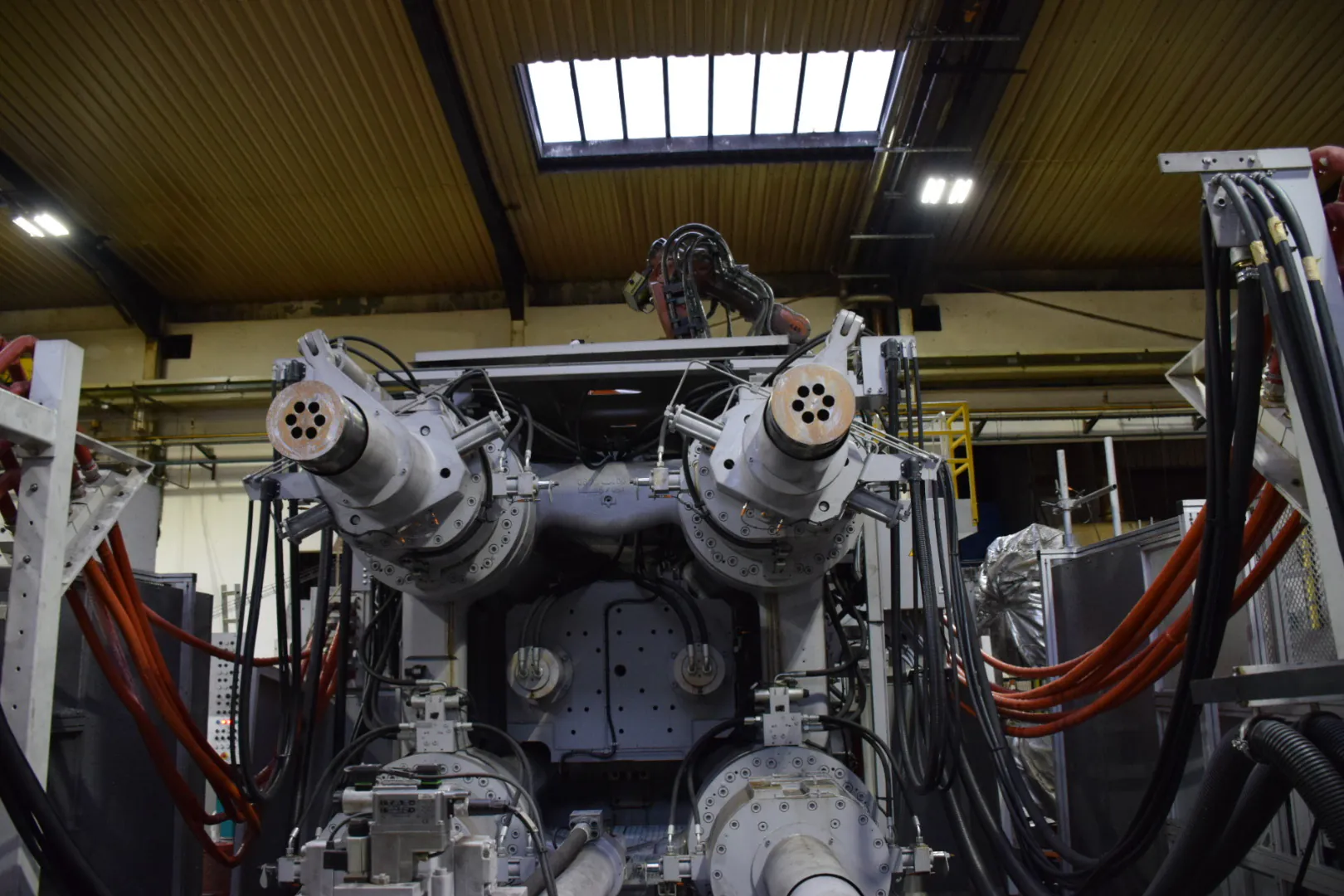
Bühler covers cold chamber die casting with two design principles. Up to 9,000 kN, Evolution and Ecoline DS use three platens with a toggle clamping system. From 10,500 kN, the Carat uses a hydraulic two-platen clamping unit. Our article toggle vs. two-platen clamping explains how the two systems differ.
Three-platen · toggle
Bühler Evolution
2,600–9,000 kN locking force
- 26
- 34
- 42
- 53
- 66
- 84
- 90
- Proven three-platen toggle system; Bühler cites high stability and rapid movements
- Shot end with SC real-time shot control and three performance levels
- Typical parts: transmission and powertrain, e-mobility, two-wheeler, white goods, electronics
Example: Evolution 66 = 6,600 kN · Lean / Compact / Extended versions
Two-platen · hydraulic
Bühler Carat
10,500–92,000 kN locking force
- 105
- 130
- 140
- 160
- 180
- 200
- 220
- 250
- 280
- 320
- 350
- 400
- 440
- 560
- 610
- 660
- 720
- 840
- 920
- Two-platen design without a third platen, so a shorter machine; Bühler cites 25% less platen deflection from its patented platen design
- Real-time closed-loop shot control
- Typical parts: structural parts, engine blocks and gearbox housings, e-mobility, megacasting with Carat 840 and 920
Example: Carat 140 = 14,000 kN · 19 sizes in the current brochure
Locking force ranges of the current Bühler series
Linear scale. Manufacturer data (as of 11/2026). For older or used machines, the type plate or data sheet of the specific machine applies.
03 · Comparison
Technical comparison: Evolution and Carat
| Feature | Bühler Evolution | Bühler Carat |
|---|---|---|
| Clamping unit | EvolutionThree-platen with toggle | CaratTwo-platen, hydraulic |
| Locking force | Evolution2,600–9,000 kN | Carat10,500–92,000 kN |
| Sizes | Evolution26, 34, 42, 53, 66, 84, 90 | Carat105 to 920 (19 sizes) |
| Type key | EvolutionEvolution 66 = 6,600 kN | CaratCarat 140 = 14,000 kN |
| Shot control | EvolutionReal-time, closed loop (SC) | CaratReal-time, closed loop |
| Control system (current) | EvolutionDataView with touch screen | CaratDataView |
| Manufacturer highlights | EvolutionRobust, fast toggle mechanism; shot end in three performance levels | Carat25% less platen deflection; shorter design without third platen |
| Typical applications | EvolutionPowertrain, e-mobility, two-wheeler, white goods, 3C | CaratStructural parts, powertrain, e-mobility, megacasting |
Sources: Bühler product pages for Evolution and Carat, "Evolution" and "Carat" brochures (accessed 6 Nov 2026). Manufacturer data, not a guarantee for any individual used machine.
04 · Buying guide
Buying a used Bühler die casting machine: what to check
A used Bühler machine is only as good as its condition and documentation. Clarify these points before you buy, ideally during an inspection while the machine is running.
- Type plate and version
Series, size, version (Lean, Compact, Extended) and year. Together they define die mounting dimensions, tie bar distance and shot end.
- Clamping unit
Evolution: check toggle joints, pins and bushings for play. Carat: check platens, tie bars and locking cylinders for wear and leaks.
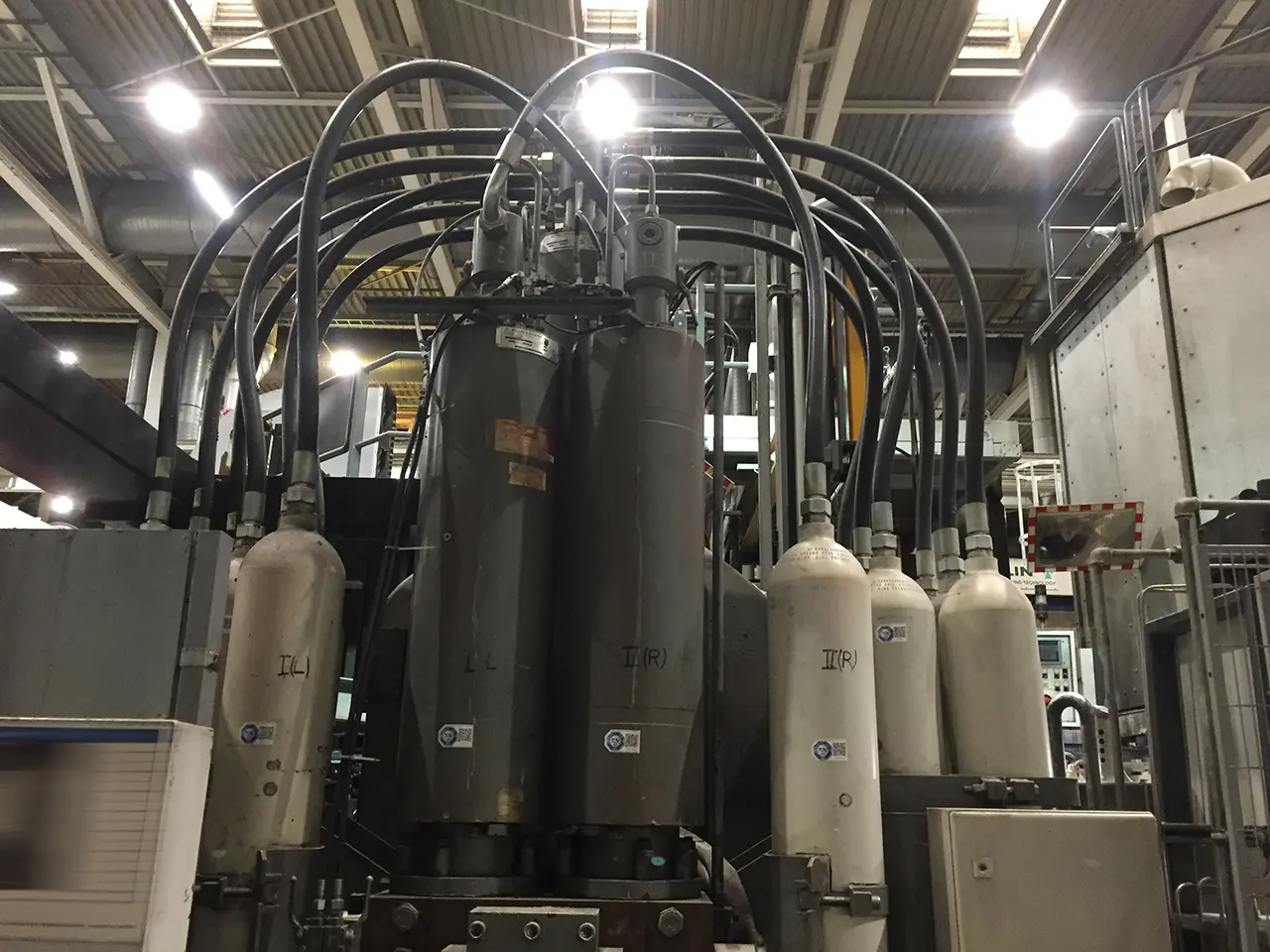
- Shot end and accumulators
Shot sleeve, plunger and shot cylinder, plus the accumulators and their pressure vessel inspection records.
- Control system and software
Control generation (DataView, DataNet or older), spare parts supply, and backups of casting programs and shot curves.
- Hydraulics
Pumps, valves, leaks, oil condition and oil analysis, and the hydraulic maintenance history.
- Operating history
Shot count or operating hours, alloy cast (aluminium or magnesium), maintenance and repair records.
- Cell and peripherals
Which spraying, dosing and extraction equipment, temperature control units and trimming presses are included?
- Safety and documentation
Guarding, wiring diagrams, operating manual and CE status for the new location. See our article on CE marking of used die casting machines.
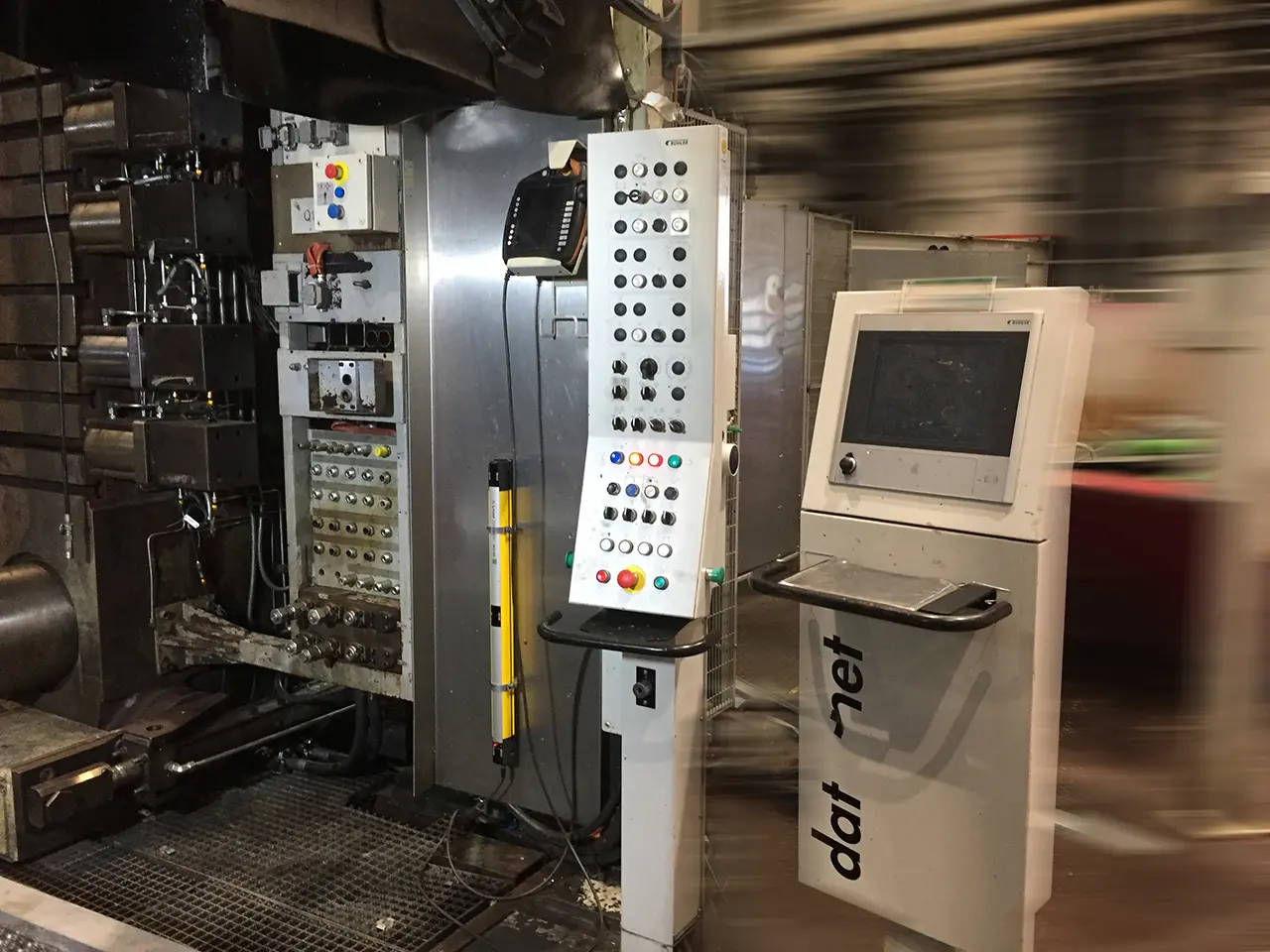
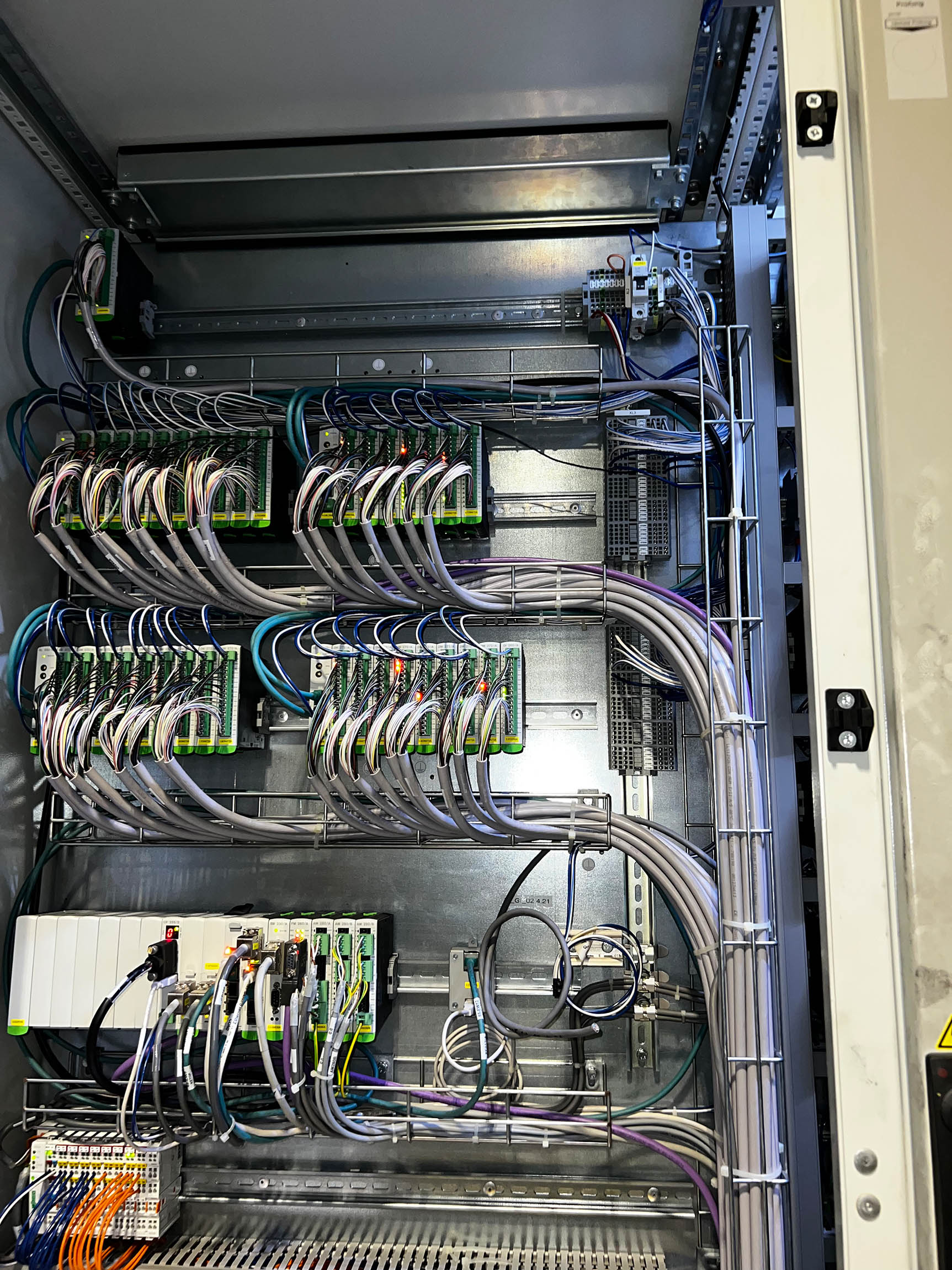
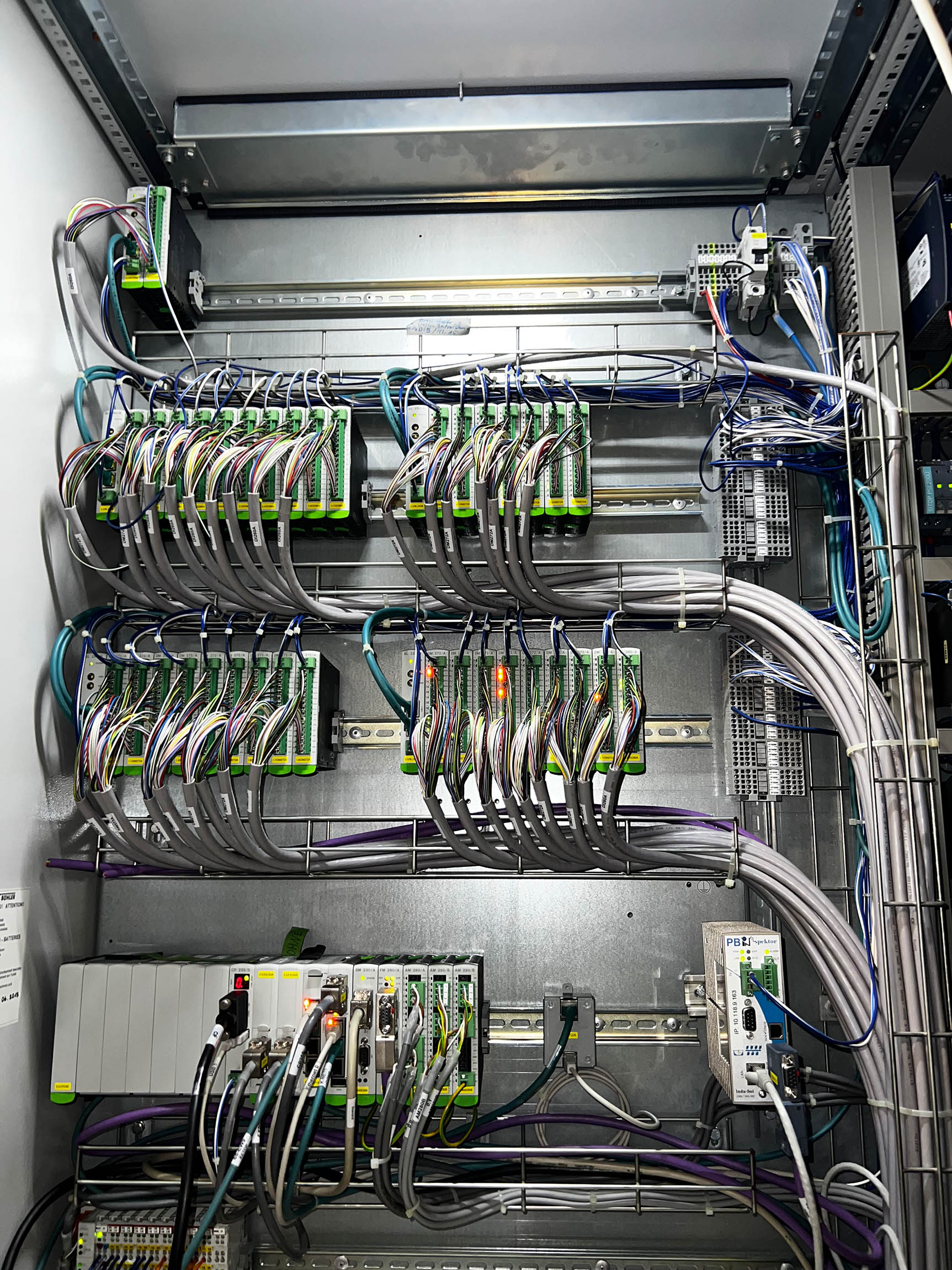
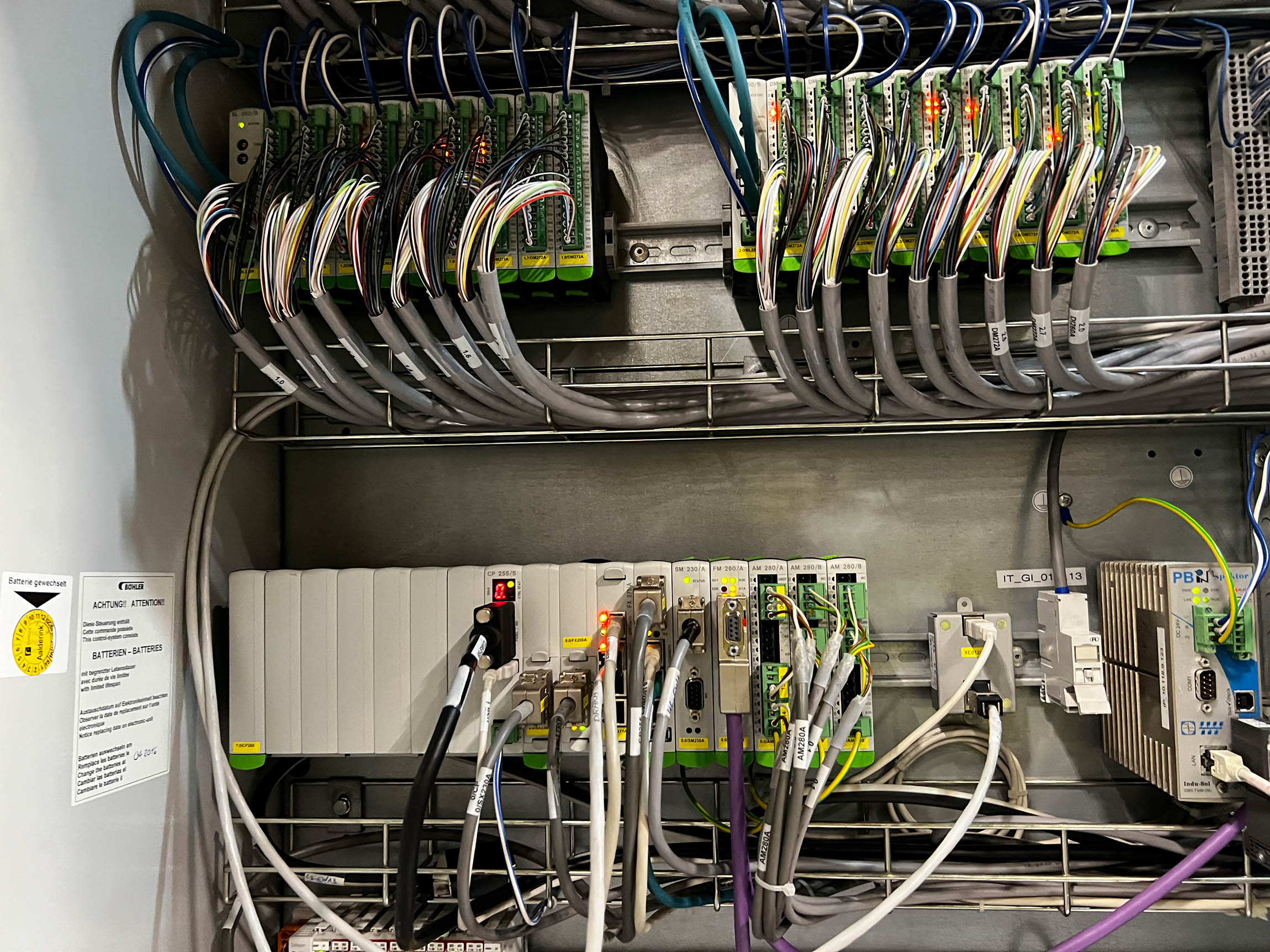
Operator panel with DataNet control on a used Bühler machine · Photo: FISS
05 · Services
FISS services for Bühler machines
With a die casting cell, dismantling, transport and start-up matter as much as the machine itself. FISS offers these services:
Practical guide to relocation: Relocating a die casting machine: dismantling and transport
06 · FAQ
Frequently asked questions about Bühler die casting machines
What is the difference between Bühler Evolution and Carat?
The Evolution is a three-platen machine with a toggle clamping system for 2,600 to 9,000 kN. The Carat uses a hydraulic two-platen clamping unit and covers 10,500 to 92,000 kN, up to megacasting parts.
What does the number in “Carat 140” or “Evolution 66” mean?
It stands for the maximum locking force in units of 100 kN: Carat 140 means 14,000 kN, Evolution 66 means 6,600 kN. The version (Lean, Compact, Extended) identifies the exact variant.
Are Bühler machines hot chamber or cold chamber machines?
The Evolution, Ecoline DS and Carat series are cold chamber die casting machines for aluminium and magnesium alloys. Hot chamber machines for zinc or magnesium are made by other manufacturers, for example Frech.
Which documents should I ask for with a used Bühler machine?
Type plate data, wiring and hydraulic diagrams, operating manual, maintenance records, accumulator inspection records, and a backup of the control and casting programs.
Can older Bühler machines with DataNet control still be run?
That depends on spare parts availability for the specific control. Check which components are available before you buy. If FISS has used Bühler controls or monitors available, they appear in the list above.
Does FISS buy used Bühler machines?
Yes. Use the offer page to submit single machines or complete die casting cells. FISS reviews each offer individually.
07 · Read more
Related manufacturers and categories
Contact
Looking for a Bühler machine, or selling one?
Tell us the series, size and the part you cast. FISS will come back with suitable machines from stock or take up your offer for purchase.
As of November 2026. Technical data from the manufacturer's public information; the data for a specific used machine is in its offer. Sources:
