




Manufacturer · Hot and cold chamber die casting · Germany
Used Frech die casting machines Hot chamber and cold chamber
Oskar Frech GmbH + Co. KG, based in Schorndorf near Stuttgart, has built die casting technology since 1949. Its range covers both processes: W-Series hot chamber machines for zinc and magnesium from 90 to 6,500 kN, and K- and GDK-Series cold chamber machines from 3,800 to 48,000 kN locking force. Older types such as DAW and DAK are common on the used market. This page lists the used Frech machines currently at FISS, with the key data to compare them.
- since 1949founded in Schorndorf
- 90–48,000 kNlocking force, current series
- W · K · GDKcurrent series
Machine you need not listed? Send FISS a search request
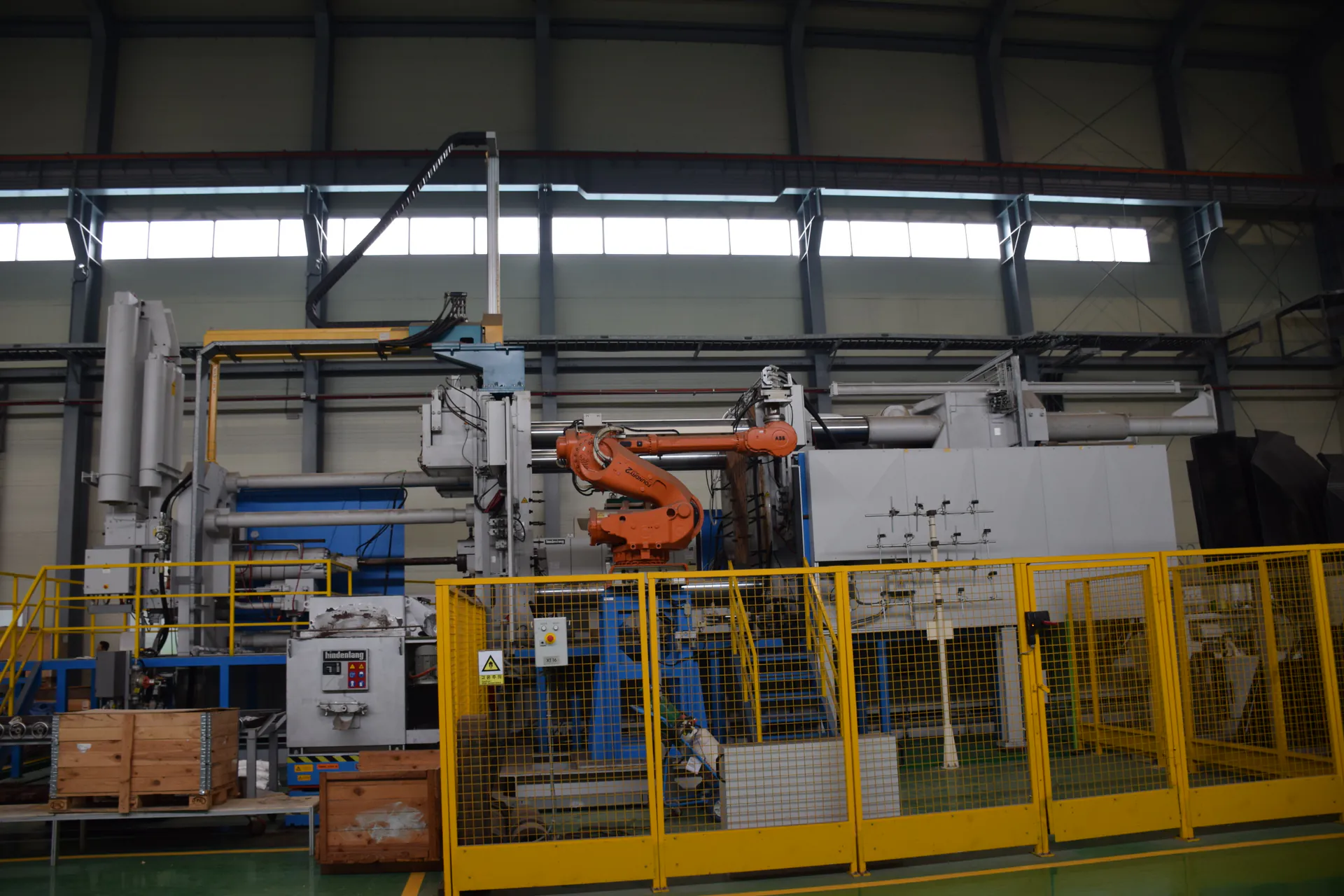
Frech GDK 4100-185S die casting cell · Photo: FISS
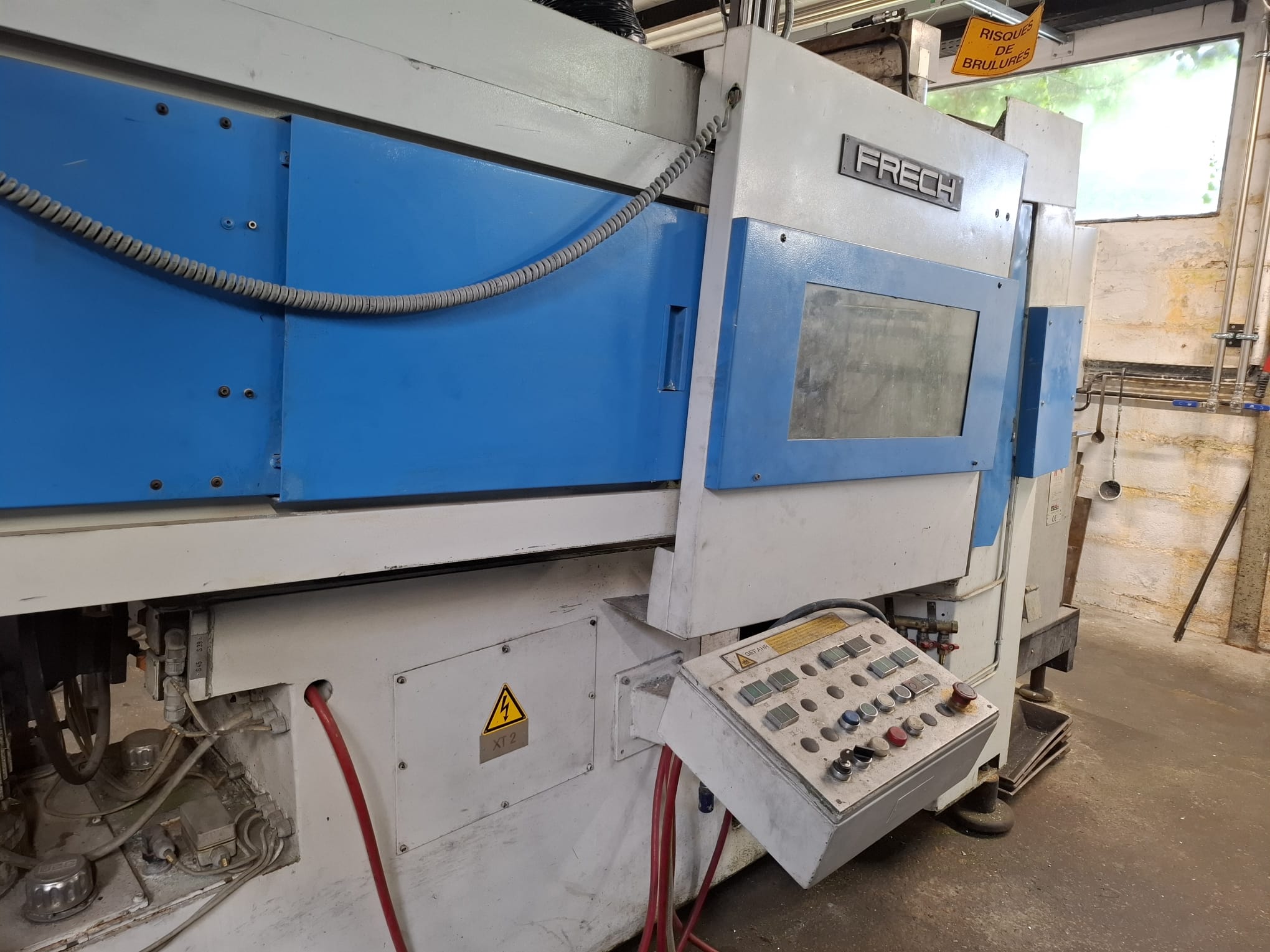

 Details


Knowledge · Frech
Buying a used Frech: identify the type, read the data, check what matters
Frech supplies both hot chamber and cold chamber die casting machines, so the name covers a very wide spread of equipment: from a compact 90 kN zinc hot chamber machine to a 48,000 kN cold chamber cell. What decides a purchase is the series, the size, the shot end option, the control generation and the condition of the process-specific assemblies. This guide explains current and older Frech designations using the manufacturer's own data.
01 · Overview
Frech at a glance
- Manufacturer
- Oskar Frech GmbH + Co. KG, Schorndorf-Weiler, Baden-Württemberg, Germany
- Founded
- 1949 by Oskar Frech, initially making die casting and injection moulding dies
- Machine history
- automatic hot chamber machine in 1959; DAK 315 cold chamber machine in 1979 (company history)
- Hot chamber
- W-Series zinc 90–6,500 kN; W-Series magnesium 900–6,500 kN
- Cold chamber
- K-Series 3,800–19,000 kN; GDK-Series 22,000–48,000 kN; mechanical three-platen clamping unit
- Controls
- including Statamat, SBC1/2/4, DATAMAT, DATAVARIO, DATACONTROL, DATADIALOG, DATALOGIC 4
- Frech Group
- includes Robamat (temperature control), Meltec (furnaces and dosing), Spesima (automation), VDS (vacuum)
How to read Frech type designations
On the W-Series, the number is a size name rather than an exact force: according to the data sheet a W80 Zn has 900 kN, a W200 Zn 2,200 kN and a W500 Zn 5,800 kN. Zn or Mg shows which alloy the machine is built for.
On the K-Series, the first number is the locking force in tens of kilonewtons (K 640 = 6,400 kN). The number after the hyphen identifies the shot end option: a K 640-62 is rated at 623 kN maximum casting force, a K 640-40 at 409 kN.
Older machines carry names such as DAW (hot chamber), DAM (magnesium hot chamber) or DAK (cold chamber), often with suffixes such as S or RC. For these, rely on the rating plate and the machine's own data sheet.
02 · Series
Frech series: W, K, GDK and earlier types
Frech's current data sheets (December 2024) divide the range into three series. In the hot chamber process the shot end sits in the molten metal; our article Hot chamber: gooseneck, nozzle, plunger covers the parts that wear. The K- and GDK-Series use a mechanical three-platen clamping unit; see Toggle vs. two-platen clamping systems for the background.
Hot chamber · zinc and magnesium
Frech W-Series
90–6,500 kN locking force
- W20/5
- W20
- W50
- W80
- W125
- W200
- W315
- W315/400 Mg
- W500
- W600
- Zinc version in 9 sizes (90–6,500 kN), magnesium version in 7 sizes (900–6,500 kN)
- Maximum casting force 15–182 kN (Zn) or 78–212 kN (Mg); plunger diameters 36–110 mm
- Integrated furnace system according to the brochure; example parts include housings, gearbox housings, socket frames and steering wheel locks
Example: W125 Zn = 1,250 kN · tie bar spacing 250 × 250 to 700 × 700 mm
Cold chamber · three-platen
Frech K-Series
3,800–19,000 kN locking force
- 380
- 510
- 640
- 830
- 1050
- 1320
- 1680
- 1900
- Up to three shot end options per size, maximum casting force 409–1,330 kN
- Patented casting unit without a central check valve and self-optimising switchover to the intensification phase, according to Frech
- Closing stroke 600–1,200 mm, die height up to 1,450 mm
Example: K 830-71 = 8,300 kN with 713 kN maximum casting force
Cold chamber · large machines
Frech GDK-Series
22,000–48,000 kN locking force
- 2200
- 2600
- 2800
- 3200
- 3500
- 4100
- 4400
- 4800
- Maximum casting force 1,350–3,200 kN, plunger diameters 90–240 mm
- Tie bar spacing 1,400–1,750 mm, die height up to 2,100 mm
- Also found on the used market as a complete die casting cell, e.g. GDK 4100-185
Example: GDK 2800-185 = 28,000 kN with 1,850 kN maximum casting force
Earlier generations
DAW, DAM and DAK
- DAW 20
- DAW 50
- DAW 80
- DAW 125
- DAW 200
- DAK 315
- DAK 580
- DAK 1250
- Company history: DAK 315 introduced in 1979, DAK 800 S and DAM 800 S in 1994
- Common on the used market, often with suffixes such as S, F, DV or RC; DAK names may also carry a shot end code (e.g. DAK 580-62)
- Build year and control vary widely; Frech offers conversion paths for older controls
Take force values from the rating plate or data sheet, not from the type number
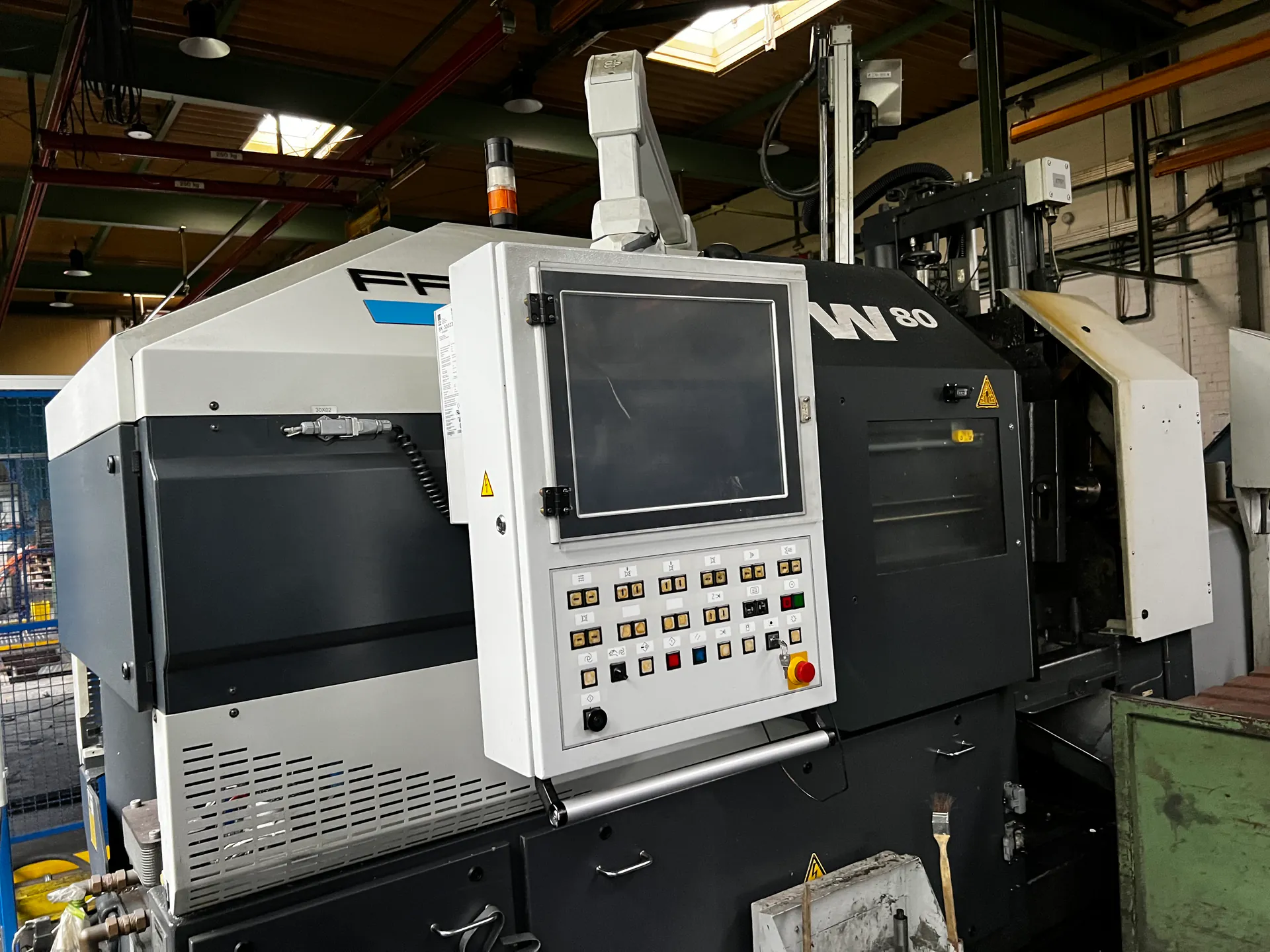
Frech W80 · hot chamber · Photo: FISS
Locking force ranges of the current Frech series
Linear scale. Values from Frech data sheets dated December 2024. For a used machine, the rating plate and its own data sheet apply.
03 · Comparison
Frech hot chamber and cold chamber compared
| Feature | W-Series (hot chamber) | K- and GDK-Series (cold chamber) |
|---|---|---|
| Alloys per data sheet | W-Series (hot chamber)separate zinc (Zn) and magnesium (Mg) versions | K- and GDK-Series (cold chamber)cold chamber process for light alloys such as aluminium |
| Locking force | W-Series (hot chamber)90–6,500 kN | K- and GDK-Series (cold chamber)3,800–48,000 kN |
| Sizes | W-Series (hot chamber)9 (Zn) + 7 (Mg) | K- and GDK-Series (cold chamber)8 (K) + 8 (GDK) |
| Max. casting force | W-Series (hot chamber)15–212 kN | K- and GDK-Series (cold chamber)409–3,200 kN |
| Plunger diameter | W-Series (hot chamber)36–110 mm | K- and GDK-Series (cold chamber)40–240 mm |
| Specific injection pressure | W-Series (hot chamber)150–473 bar | K- and GDK-Series (cold chamber)up to 2,646 bar |
| Closing stroke | W-Series (hot chamber)180–680 mm | K- and GDK-Series (cold chamber)600–1,800 mm |
| Type code | W-Series (hot chamber)W125 Zn = 1,250 kN (size name) | K- and GDK-Series (cold chamber)K 640-62 = 6,400 kN, 623 kN shot end |
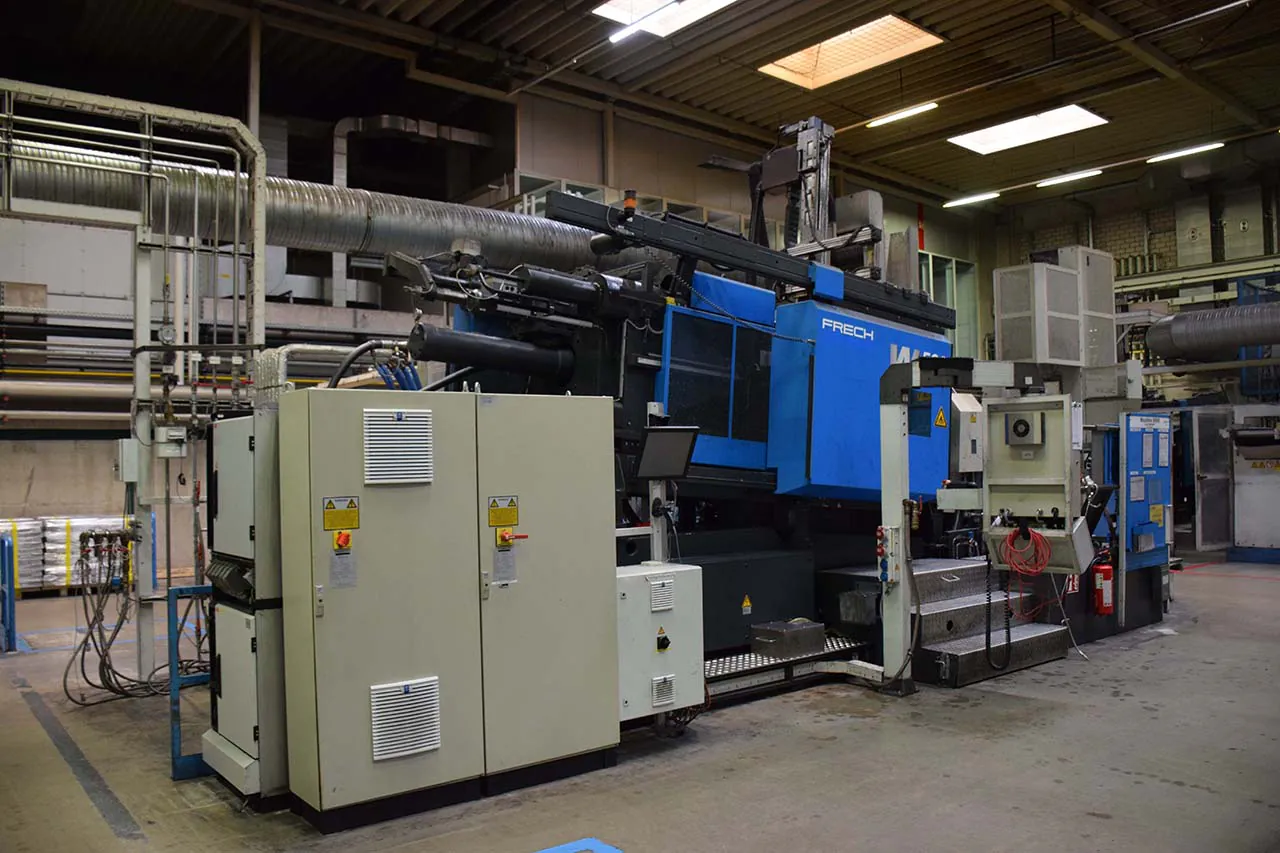
Frech W500 · hot chamber · Photo: FISS
Sources: Frech technical data, hot chamber and cold chamber (DIN 24480), December 2024.
04 · Buying guide
Checklist: inspecting a used Frech machine
With Frech, generations, alloy versions and shot ends differ considerably, so these checks tell you the most.
- Rating plate and generation
Establish whether you are looking at a W, K or GDK machine or an older DAW, DAM or DAK type. Always take locking and casting force from the rating plate or data sheet rather than inferring them from the type number.
- Zinc or magnesium build
Frech lists Zn and Mg hot chamber machines as separate versions with their own casting forces and plunger sizes. Confirm which alloy the shot end and furnace were built for.
- Hot chamber casting set
Gooseneck, nozzle, plunger and piston rings are wear parts. Ask for replacement intervals, spare sets supplied with the machine and the plunger diameter fitted.
- Shot end option on K and GDK
The code after the hyphen (e.g. -54 or -62) sets casting force, plunger diameter and shot volume, and must suit your part weight. Check accumulators, valves and recorded shot curves.
- Control generation
Frech machines run anything from Statamat and SBC through DATAMAT, DATAVARIO and DATACONTROL to DATADIALOG and DATALOGIC 4. Frech names upgrade paths (SBC4 for SBC1/2, DATALOGIC 4 for DATACONTROL); check the software version and spare parts situation.
- Three-platen clamping unit
On K, GDK and DAK machines, check play in the toggle joints and pins, tie bars, platen parallelism and die height adjustment. Frech states that it supplies replacement locking units for hot chamber machines up to 125 t.
- Furnace and peripherals
Hot chamber cells often include furnace, temperature control and automation. Agree which components are included and whether they come from the Frech Group, such as Robamat, Meltec or Spesima.
- Documentation and safety
Hydraulic and electrical diagrams plus the data sheet make diagnosis and restart far easier. Review the guarding and the CE marking requirements at the new site.
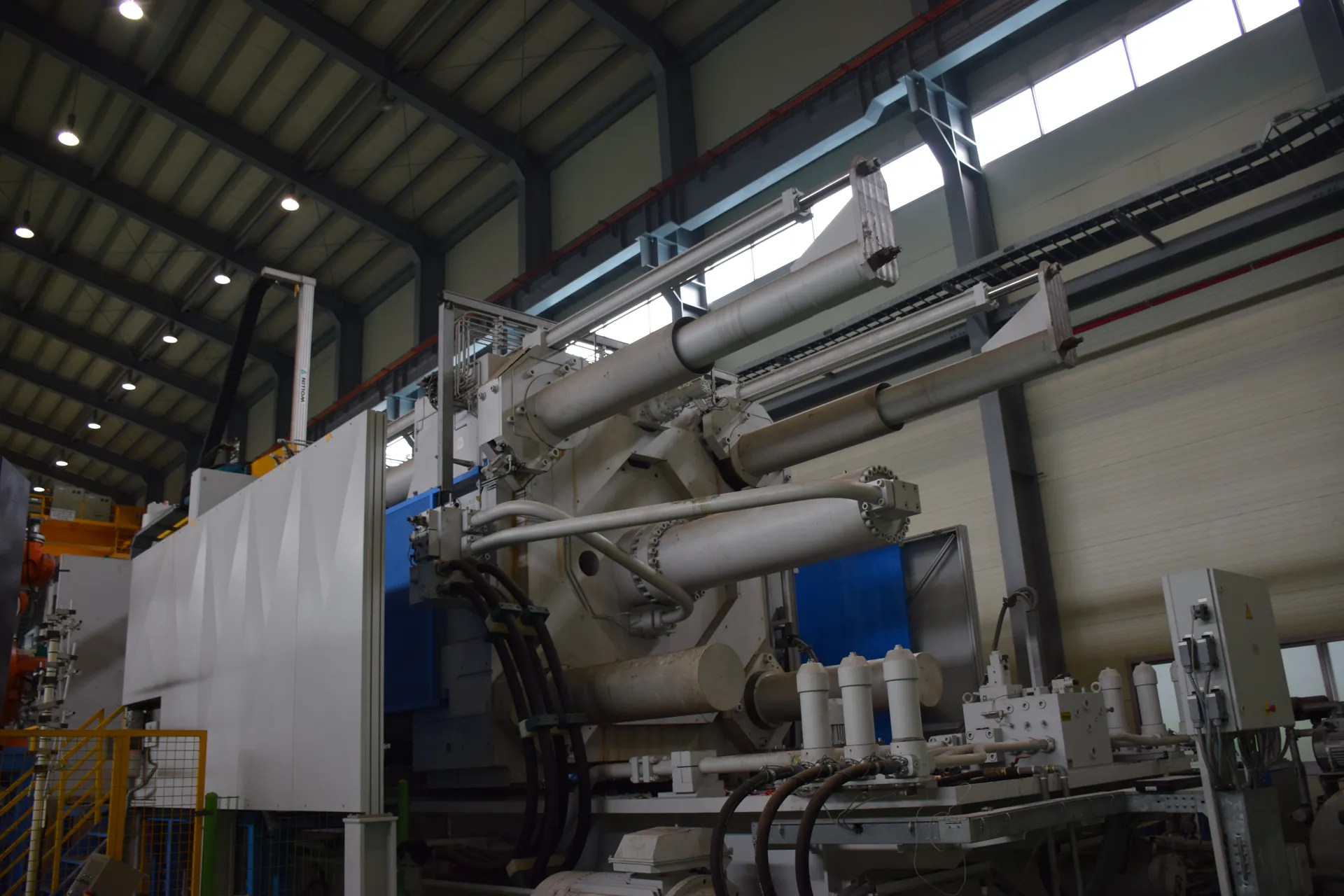
Frech GDK 4100-185S · clamping unit · Photo: FISS
05 · Services
Services for used Frech machines
FISS supports the purchase and sale of used Frech die casting machines and cells, from choosing the right machine to dismantling at the current site, transport and recommissioning.
Practical guide to relocation: Relocation: dismantling and transport
06 · FAQ
Frequently asked questions about used Frech die casting machines
What locking force does a Frech W80 Zn have?
900 kN according to Frech's current data sheet. W numbers are size names: the W20 Zn has 240 kN, the W125 Zn 1,250 kN, the W200 Zn 2,200 kN and the W600 Zn 6,500 kN.
What does the second number in Frech K 640-62 or DAK 580-62 mean?
On the K-Series it identifies the shot end option. In the data sheet, -62 stands for a maximum casting force of 623 kN, -40 for 409 kN and -112 for 1,120 kN. The first number is the locking force in tens of kilonewtons.
How does a Frech DAW differ from the W-Series?
DAW is an earlier designation for Frech hot chamber machines and is common on the used market. Frech's current data sheets list its hot chamber range as the W-Series in zinc and magnesium versions. For a DAW, take the technical values from the rating plate and machine documentation.
Can older Frech controls be upgraded?
Frech describes two routes: Statamat, SBC1 and SBC2 controls can be replaced by SBC4, and DATAMAT, DATAVARIO and DATACONTROL can be converted to DATALOGIC 4, which is based on DATADIALOG. Frech states this applies to machines without hydraulic or mechanical defects.
Which alloys are Frech hot chamber machines built for?
The W-Series comes in zinc and magnesium versions. Zinc machines run from 90 to 6,500 kN; magnesium starts with the W80 Mg at 900 kN and goes up to 6,500 kN. Aluminium is cast on the K and GDK cold chamber series.
Can I sell my Frech die casting machine to FISS?
Yes. Send the type, year of manufacture, control and photos via the purchase page. FISS assesses single machines as well as complete hot or cold chamber cells with peripherals.
07 · Read more
More manufacturers and die casting know-how
Contact
Looking for a Frech machine, or selling one?
Tell us the series, locking force and alloy. We will come back with suitable machines or an assessment of your Frech equipment.
As of November 2026. Technical data from public information published by Oskar Frech GmbH + Co. KG (data sheets dated December 2024) and the trade press; the rating plate and documents of each individual machine take precedence. Sources:
- FRECH: Warmkammer-Druckguss (Hot Chamber Diecasting)
- FRECH: Kaltkammer-Druckgießmaschinen
- FRECH: Technische Daten Warmkammer, W-Series Zinc und Magnesium (Stand 12.2024)
- FRECH: Technische Daten Kaltkammer, K-Series und GDK-Series (Stand 12.2024)
- FRECH: Geschichte
- FRECH: Überholungen (Overhauls)
- FRECH: Prospekt Warmkammer-Druckgießtechnologie W-Series
- Foundry-Planet: FRECH casting unit has revolutionized the cold chamber diecasting process (08.09.2025)
